 Tampa Window
 Building New in Valrico? Get the Windows Right the First Time
When a home is going up in Valrico, the windows are one of the few components that get exactly one shot at being installed correctly before the walls close around them. Once stucco, siding, and interior finishes go on, a poorly flashed or undersized window becomes a hidden problem instead of a fixable one. Homeowners and builders in this part of Hillsborough County are working against a specific set of conditions: sustained summer humidity, hurricane-season wind loads, punishing UV exposure nearly year-round, and wind-driven rain that finds every gap a standard installation leaves behind. New-construction windows have to be selected and installed with all of that in mind from day one, not retrofitted later.
This page covers what a correct new-construction window job looks like for a Valrico build specifically: what the climate demands, how Florida Building Code requirements shape your choices, what separates a proper new-construction install from a replacement job, and what to expect when you work with a crew that already knows this market.
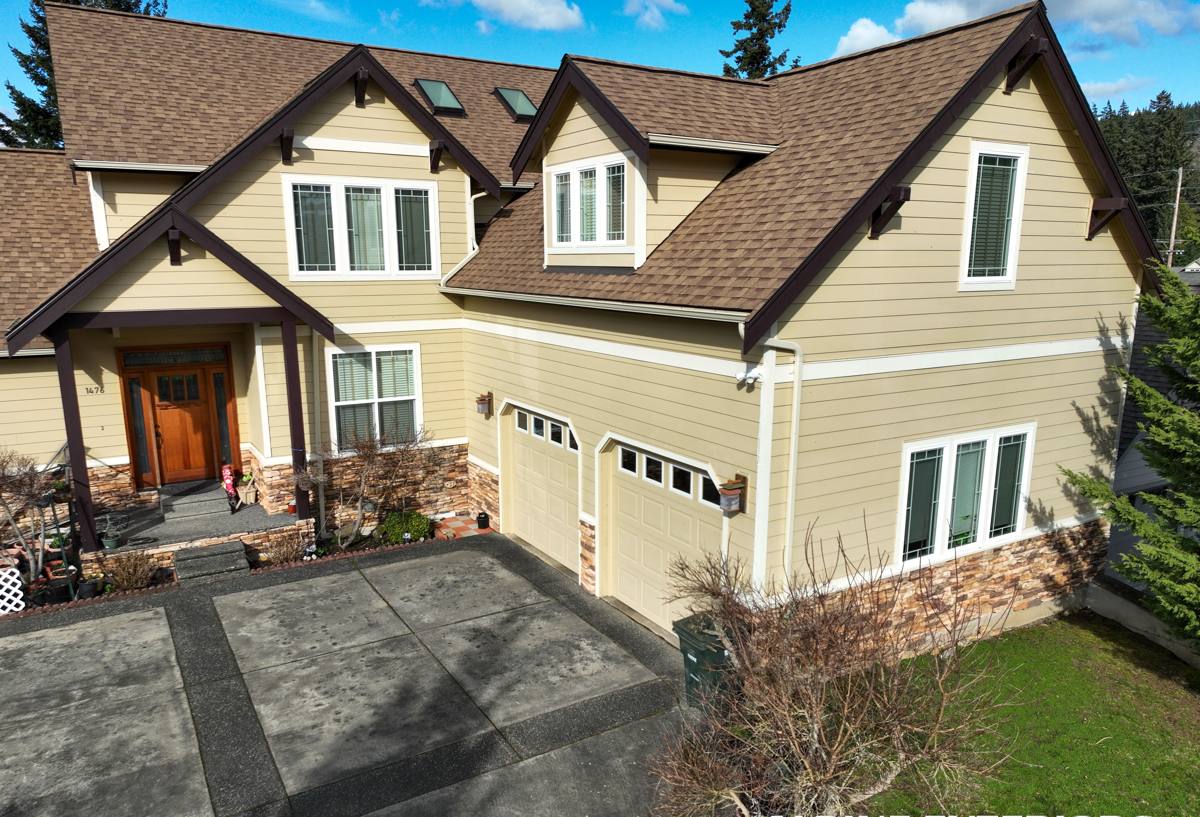
What Hillsborough County's Climate Demands From New-Construction Windows
Hurricane-Force Wind and Wind-Borne Debris
Valrico sits inland from Tampa Bay, but inland does not mean exempt. Every home built in Hillsborough County still falls under Florida Building Code wind provisions, and every window opening has to be engineered for the wind loads that apply to that specific lot and structure height. New-construction windows need documented product approval for the wind zone they're going into, and the installation itself, not just the window unit, has to be able to transfer that wind load into the surrounding framing. A window can carry the right rating on paper and still fail in the field if the rough opening, anchoring, and flashing weren't done to match it.
Year-Round UV Exposure
Central Florida sun is intense for most of the year, and new-construction windows spend decades facing it. Frame materials and glass coatings that aren't suited to sustained UV exposure fade, chalk, or lose seal integrity faster than homeowners expect. This matters more on a new build than a replacement project, because the window choice is locked in for the life of the house rather than a decade-old system being swapped out on its own timeline.
Wind-Driven Rain
Afternoon storms in this part of Florida rarely fall straight down. Wind pushes rain sideways and up under trim, sills, and poorly lapped flashing. On a new build, this is entirely a flashing and sequencing issue: the window has to be integrated into the water-resistive barrier in the correct order, with sill pans and head flashing that shed water outward, not into the wall cavity. Get the sequence wrong and you won't see the consequence until years later, as rot or interior staining, long after the crew that installed it is gone.
Salt Air, Even This Far Inland
Valrico is not oceanfront, but Tampa Bay's salt air still travels well inland on prevailing winds, and it accelerates corrosion on hardware, fasteners, and lower-grade metal components over time. It's a slower factor than wind or UV, but it's part of why hardware quality and frame material selection matter even for homes that aren't within sight of the water.
New-Construction Windows vs. Replacement Windows: Why the Method Matters
New-construction windows use a nailing fin (or flange) that gets fastened directly to the framing and integrated into the house wrap and flashing system before exterior finishes go on. Replacement windows, by contrast, are typically inserted into an existing opening after the exterior is already finished, without disturbing the surrounding wall. The two methods solve different problems and are not interchangeable.
Building new gives you the advantage of doing this correctly the first time: the opening can be framed to the exact rough opening size the window manufacturer specifies, flashing can be layered in the correct shingle-style sequence with the house wrap, and there's no old caulk, old framing, or a prior installer's shortcuts to work around. The tradeoff is that there's also no margin for error hidden behind a finished wall. A mistake in a new-construction install gets sealed in for the life of the house.
Florida Building Code Basics for a Valrico Build
Every new home in Hillsborough County has to meet current Florida Building Code requirements for wind load and, depending on the wind-borne debris region the lot falls in, either impact-rated glazing or an approved impact protection system for every opening. Hillsborough County is not part of the state's High-Velocity Hurricane Zone, which applies to Miami-Dade and Broward counties, but the requirements here are still substantial and get more demanding with each code cycle, not less.
- Every window installed has to carry documented Florida product approval for the wind pressures and debris impact requirements that apply to that specific job, not a generic rating.
- The permit and inspection process checks both the product approval paperwork and the physical installation, including anchoring and flashing.
- Window sizing, egress requirements for bedrooms, and energy code compliance (air infiltration, U-factor, solar heat gain coefficient) all get reviewed alongside wind performance, not separately.
- A window that's correct for a coastal lot isn't automatically correct for a Valrico lot, and vice versa — the engineering has to match the actual site conditions and code jurisdiction.
Choosing the Right Window Product
Frame material, glass package, and hardware all affect how a new-construction window performs over 20-plus years in this climate. There's no single right answer for every home, but the tradeoffs are consistent.
| Frame Material | How It Performs Here | What to Watch For |
|---|---|---|
| Vinyl | Won't corrode from salt air, low maintenance, good insulator | Quality varies widely between manufacturers; thinner profiles can warp under sustained heat |
| Aluminum | Strong, slim sightlines, holds up structurally | Needs a thermal break to control condensation and heat transfer; lower-grade aluminum is prone to corrosion over time |
| Fiberglass | Very stable through heat and humidity swings, holds paint well, strong | Higher upfront cost; fewer stock color and style options than vinyl |
On the glass side, impact-rated laminated glass is the more resilient choice where wind-borne debris protection is required, since it stays intact under impact rather than relying on a removable shutter system that depends on someone being home to deploy it. Low-E coatings tuned for Florida's solar heat gain, not a northern-climate coating, make a real difference in cooling costs given how much direct sun this region gets most of the year.
As a matter of professional standard, we steer builds away from thin-gauge aluminum without a thermal break and from off-brand vinyl systems with unproven long-term seal performance in humid climates. Both can look fine on day one; the problems show up later as condensation, seal failure, or frame distortion, and by then it's the homeowner's problem to fix, not the installer's.
Our New-Construction Window Process in Valrico
- Plan review. We review the architectural plans and the wind-borne debris requirements for the specific lot before a single window is ordered, so the product approval matches the actual site conditions.
- Rough opening verification. Framers work from plans, but tolerances vary. We verify every rough opening against the window schedule before installation, since a mismatch is far cheaper to correct at this stage than after finishes go on.
- Flashing and weather barrier integration. Sill pans, jamb flashing, and head flashing get layered with the house wrap in the correct water-shedding sequence, every opening, every time.
- Installation and anchoring. Windows get anchored per the manufacturer's engineering and the approved installation instructions for the applicable wind zone, not a generic fastening pattern.
- Inspection-ready documentation. We keep product approval and installation records organized so the job passes county inspection without delays that hold up the rest of the build schedule.
- Final check. Every unit gets operated, checked for square, and inspected for a clean, consistent reveal before we sign off.
What New-Construction Windows Cost in Valrico: The Real Cost Factors
Pricing on a new build depends on far more than the number of openings. The factors below move the number more than most homeowners expect.
| Cost Factor | Why It Matters |
|---|---|
| Impact-rated vs. non-impact glazing | Impact laminated glass costs more than standard glass but removes the need for separate shutter systems and reduces long-term maintenance |
| Frame material | Fiberglass typically costs more than vinyl; aluminum pricing depends heavily on thermal break quality and finish |
| Window size and quantity | Larger openings and whole-house window packages carry more engineering and material cost per unit |
| Energy performance package | Higher-performance Low-E coatings and gas fills add upfront cost but lower long-term cooling bills in this climate |
| Site-specific engineering | Corner lots, taller wall heights, and unusual window shapes can require additional engineering review |
Getting an accurate number means walking the actual plans, not applying a flat per-window estimate. We'll always tell you which of these factors is driving the cost on your specific job rather than quoting a number that doesn't hold up once the real scope is known.
Why Hire a Crew That Already Works in Valrico
Hillsborough County's permitting and inspection process has its own rhythm, and a crew that works this area regularly already knows what inspectors look for, how long approvals typically take, and how to keep a window package from becoming the item that holds up the rest of the build schedule. That familiarity matters just as much as the installation itself. A crew unfamiliar with the local process can order the wrong product approval for the site's wind zone, misjudge inspection timing, or run into avoidable delays that a local crew would have caught before they became a problem.
Working regularly in this market also means staying current on Florida Building Code updates as they roll out, rather than relearning requirements on a job-by-job basis. Code cycles change, and what was compliant on the last house isn't automatically compliant on the next one.
Protecting Your Investment After Move-In
A correct new-construction install sets the window up to perform for decades, but a little homeowner attention keeps it performing that way.
- Rinse accumulated dust and salt residue off frames and glass every few months, more often if the home is closer to the bay.
- Check weep holes at the base of each frame periodically to make sure they're clear and draining, especially after storms.
- Inspect exterior sealant lines once a year and have any cracked or separated caulk addressed before the next rainy season.
- Operate every window a few times a year, even ones rarely opened, to keep hardware and weatherstripping functioning correctly.
- Watch for soft spots, staining, or bubbling paint near window trim, which can be early signs of a flashing issue worth having checked.
If you're building in Valrico and want windows that are engineered, ordered, and installed correctly the first time, we're happy to walk your plans with you. Reach out for a free, no-pressure estimate using the form below.