 Tampa Window
 Siding Installation Built for Town 'n' Country Homes
Town 'n' Country sits far enough inland from Tampa Bay to avoid the worst of direct salt spray, but it still takes the full brunt of everything else West Central Florida throws at a house: hurricane-force wind gusts, months of intense subtropical UV, and heavy wind-driven rain that finds every gap in a building envelope. The neighborhood's housing stock spans decades of construction — 1960s and 70s block homes with old wood or aluminum siding on additions, 1980s-90s builder-grade construction, and newer infill — which means the siding problems we run into here are just as varied. What doesn't vary is what correct siding installation needs to accomplish: keep water out, hold up to wind load, and survive the sun without turning into a maintenance chore.
We install James Hardie fiber cement siding exclusively, and we've done enough of it in Hillsborough County to know which details matter on a Town 'n' Country house specifically — soffit and fascia condition on older homes, how additions were tied into original framing, and how much direct west and south afternoon sun a given elevation actually takes.
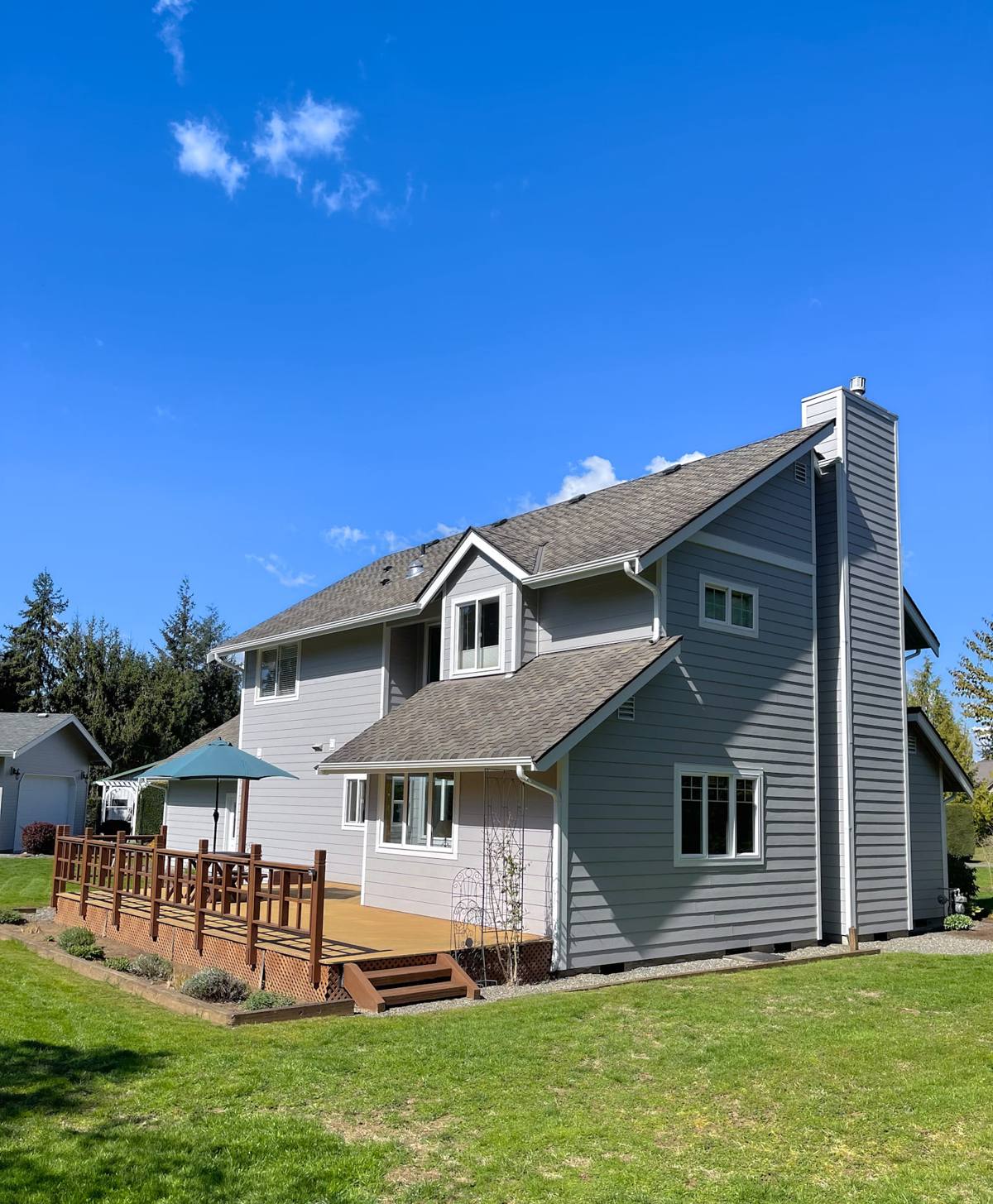
What Tampa's Climate Actually Does to Siding
Wind
Hillsborough County sits in a wind-borne debris region under Florida's building code, which means siding attachment isn't just about looking good — it has to meet fastening schedules engineered for sustained tropical-storm and hurricane wind loads. Siding installed with the wrong nail pattern, spacing, or fastener type can pass casual inspection and still fail in a storm, when panels lift, crack at fastener points, or peel away from a corner.
UV exposure
Tampa gets sun nearly year-round, and it's not gentle sun. Unprotected wood siding and cheap paint jobs chalk, fade, and check within a few years under this kind of exposure. Any siding product on a Town 'n' Country home needs a finish that's actually engineered to hold color and resist UV breakdown, not just painted at a hardware store and hoped for.
Wind-driven rain
Florida's rain doesn't fall straight down — thunderstorm cells push it sideways into walls, and hurricanes drive it horizontally for hours at a time. Siding systems depend on correct water-resistive barrier work, flashing, and overlap behind the visible panel just as much as the panel itself. A beautiful siding job with weak flashing behind it will still let water into the wall cavity.
Humidity and moisture cycling
Even away from the coast, Tampa's humidity keeps wall assemblies damp longer than drier climates allow. Materials that absorb moisture and swell, or that trap moisture behind them, degrade faster here than the same product would in a dry inland state.
Why We Only Install James Hardie in This Market
We get asked why we don't offer vinyl or wood siding options, and the honest answer is that we've made a professional call based on what actually holds up under Tampa conditions long-term.
- Non-combustible: James Hardie fiber cement doesn't feed a fire the way wood siding can, which matters for insurance and safety alike.
- Won't rot or swell with moisture: unlike wood, it doesn't absorb water and expand, so Tampa's humidity cycles don't slowly destroy it from the inside.
- Factory-applied ColorPlus finish: baked-on and warranted against fading, rather than a field-applied paint job that starts chalking under Florida sun within a few years.
- Engineered for this climate: Hardie's HZ10 product line is specifically formulated for high-humidity, high-moisture climate zones, which includes Hillsborough County.
- Wind performance: fiber cement's density and Hardie's engineered fastening specs hold up to wind-borne debris region requirements when installed correctly.
Vinyl siding can look fine on day one, but it softens and can warp under sustained heat, and it's a poor match for a region with this kind of wind exposure. Wood siding, even well-maintained, needs a repaint and caulk cycle that most homeowners don't want to keep up with in this climate. We'd rather install one product correctly than offer three and cut corners on any of them.
What a Correct Siding Installation Involves
The panel itself is maybe half the job. The parts nobody sees are what determine whether the siding lasts 10 years or 40.
Tear-off and substrate inspection
We remove the existing siding down to the sheathing and inspect for rot, insect damage, or water staining — common on Town 'n' Country homes with older additions or long-neglected paint. Any compromised sheathing gets replaced before anything new goes up; covering damaged substrate just hides a problem that gets worse.
Water-resistive barrier
A code-compliant weather barrier goes over the sheathing, lapped correctly (upper courses over lower) so water sheds outward instead of working its way behind the barrier.
Flashing at every penetration
Windows, doors, hose bibs, vents, and electrical penetrations all need proper flashing integration with the water-resistive barrier. This is the single most common place we find prior installation shortcuts on Tampa-area homes, and it's usually the reason a house develops hidden water damage years after a siding job that looked fine.
Fastening to spec
Hardie panels have specific nail type, size, spacing, and embedment requirements — and in a wind-borne debris county, meeting that spec isn't optional. We follow manufacturer fastening schedules to the letter, not "close enough."
Trim, corners, and caulking
Corner boards, trim, and joints get sealed with a high-quality, paintable, siding-rated sealant. Skipping this step or using the wrong sealant is a fast track to water intrusion at the seams.
Final inspection and cleanup
We walk every elevation before calling a job done, checking for flush panels, tight seams, and consistent reveal lines, then clean the site.
Our Process for Town 'n' Country Homeowners
- Free on-site assessment — we look at your current siding, substrate condition, and any problem areas (older additions, past water intrusion, sun-damaged elevations).
- Written estimate — a clear scope of work, product line and color, and total cost — no vague allowances.
- Material order — James Hardie products are ordered to your home's exact measurements and chosen finish.
- Tear-off and substrate repair — old siding removed, sheathing inspected and repaired as needed.
- Weather barrier and flashing — installed before a single piece of visible siding goes up.
- Hardie installation — panels, trim, and corners installed to manufacturer and code fastening specs.
- Final walkthrough — we review the finished job with you and address anything you flag before we consider it complete.
Why Local Experience in Town 'n' Country Matters
A crew that already works this part of Hillsborough County knows things a general contractor coming in from another market doesn't: how older Town 'n' Country homes were typically framed, what condition to expect behind decades-old siding, and which permitting requirements apply for exterior work in unincorporated Hillsborough County versus the City of Tampa. That local familiarity shortens the assessment phase and avoids surprises mid-project — because we've usually already seen the version of the problem your house has.
Cost Factors for Siding Installation
| Factor | Why It Affects Cost |
|---|---|
| Home size and number of stories | More square footage and elevation height means more material and labor, plus added equipment for two-story work. |
| Substrate condition | Rotted or water-damaged sheathing found during tear-off requires repair before new siding goes on. |
| Existing siding type | Removing old wood, aluminum, or vinyl siding takes more labor than working over previously bare or freshly stripped walls. |
| Trim and architectural detail | Homes with more corners, gables, dormers, or trim work require more cutting, fitting, and finishing time. |
| Product line and finish | Hardie's plank profiles, textures (smooth vs. cedar-shake style), and ColorPlus color selections vary in material cost. |
| Access and site conditions | Tight lot lines, fencing, landscaping, or limited driveway access can add setup time. |
Signs Your Town 'n' Country Home Needs New Siding
- Visible warping, buckling, or gaps between siding panels
- Soft or spongy spots when you press on the siding, suggesting moisture damage behind it
- Paint that's chalking, peeling, or fading unevenly across sun-exposed elevations
- Cracks or holes from wind-driven debris during storm season
- Rising cooling bills, which can point to a compromised building envelope
- Visible mold, mildew, or staining at seams and corners
- Siding older than 20-25 years, especially wood or older vinyl products
If your home shows any of these signs, waiting usually means the substrate damage gets worse and the eventual repair gets more expensive — moisture behind siding doesn't announce itself until the damage is already significant.
Get a Straight Answer About Your Siding
If you're weighing a siding replacement in Town 'n' Country, we'll come take a real look at your home, tell you honestly what condition your substrate is in, and give you a clear, written estimate for James Hardie installation — no pressure, no inflated urgency. Reach out below to schedule a free assessment.