 Tampa Window
 Building a Deck That Can Actually Handle a Tampa Backyard
A deck in Seminole Heights has to do more than look good for a season. It has to survive Hillsborough County's version of outdoor living: months of intense UV that bakes finishes and dries out wood, wind-driven rain that finds every gap in flashing and fasteners, tropical humidity that never really lets lumber dry out between storms, and the occasional hurricane-force wind event that tests every connection point in the structure. A deck built the way it might be built in a drier, milder climate simply won't hold up here the same way.
We build custom decks for homeowners throughout Seminole Heights with that reality in mind from the first conversation. That means the right material for the exposure, the right hardware below the decking where nobody sees it, and framing detailed to handle wind uplift and moisture instead of just weight. It's a different set of priorities than a generic deck build, and it's why decks put together without local experience tend to show problems — cupping boards, rusted fasteners, soft framing — years before they should.
What Makes Seminole Heights Different
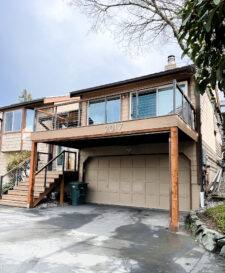
Seminole Heights is one of Tampa's older, established neighborhoods, with a mix of bungalow, craftsman, and mid-century homes on lots that are often smaller and more shaded than newer subdivisions further out. That combination changes how a deck should be designed. Mature tree canopy common to the area means more organic debris landing on deck surfaces and less direct sun in some yards but harsher, more concentrated UV exposure in others where the canopy has been thinned. Older homes also mean older attachment points — ledger boards tying into existing structures that need to be evaluated carefully, not just bolted into without checking what's actually behind the siding.
Like most of the Tampa area, the soil under a Seminole Heights yard tends to be sandy and fast-draining, which is good for footings in one sense but means post and footing depth still has to be sized correctly rather than guessed at. We treat every site as its own project — what works on one lot a few blocks away doesn't automatically transfer to the next.
Choosing a Decking Material That Won't Fight the Climate
Wood Decking
Pressure-treated pine is still the most affordable option and, when properly sealed and maintained, performs fine in Florida. The trade-off is honest: it needs re-sealing on a regular schedule, it will gray and check under sustained UV if neglected, and in a humid climate with heavy rain it's more prone to warping if the boards weren't dried and installed correctly. Tropical hardwoods like ipe hold up beautifully to sun and moisture but cost significantly more and require specific fasteners and pre-drilling to install correctly.
Composite and PVC Decking
Capped composite and PVC decking have become popular in this climate for good reason — they don't absorb moisture the way wood does, they resist UV fading better over the long run, and they don't need annual sealing. The trade-offs are a higher upfront cost and, on some products, a plastic feel underfoot in direct sun. We install composite and PVC decking, but we're honest that it's not automatically the "better" choice for every budget or every homeowner's preference — it's a different maintenance profile, not a magic material.
| Material | Upfront Cost | Maintenance | Typical Lifespan Here |
|---|---|---|---|
| Pressure-treated wood | Lowest | Re-sealing every 1-2 years | 10-15 years with upkeep |
| Tropical hardwood | High | Periodic oiling | 20-25+ years |
| Capped composite | Mid-high | Occasional cleaning | 25-30 years |
| PVC decking | Highest | Minimal | 25-30+ years |
What a Correctly Built Deck Involves
The decking surface is the part everyone sees, but the structure underneath is what determines whether the deck is still solid and safe in ten years. In a hurricane-prone area like Tampa, that structure needs specific attention:
- Footings sized and set to the depth the local soil and load actually require, not a one-size-fits-all guess
- Hurricane ties and structural connectors at key framing joints to resist wind uplift, not just gravity-load fasteners
- Stainless steel or coated, corrosion-resistant hardware throughout — standard fasteners rust quickly in salt-influenced, humid air even well inland from the coast
- Properly flashed ledger board connections where the deck ties into the house, so wind-driven rain can't work its way behind siding or into the rim joist
- Joist spacing and beam sizing matched to the decking material chosen, since composite and PVC often have different span requirements than wood
- Proper drainage and airflow underneath the deck so moisture doesn't sit and accelerate rot or corrosion
Skipping any of these doesn't show up on day one. It shows up two or three years later as a soft spot, a rust stain, or a railing that's gone wobbly — problems that are far more expensive to fix than to build correctly the first time.
Permits and Code in Hillsborough County
Most custom deck projects in the City of Tampa and unincorporated Hillsborough County require a building permit, and decks attached to the house or built above a certain height typically need engineered plans that account for Florida Building Code wind load requirements. This isn't paperwork for its own sake — it's the mechanism that makes sure the framing, connectors, and footings are actually sized for what a Florida storm can throw at them. We handle the permitting process as part of the job rather than treating it as the homeowner's problem to sort out, and we build to pass inspection the first time.
How Our Process Works
- On-site assessment — we look at your yard, existing structure, sun and shade exposure, drainage, and how you actually plan to use the space.
- Design and material selection — we walk through the honest trade-offs between wood, composite, and PVC based on your budget and how much upkeep you want to do.
- Permitting and engineering — we prepare and file what Hillsborough County or the City of Tampa requires before any construction starts.
- Construction — footings, framing, decking, and railings built in that order, with hardware and flashing details that hold up to Florida conditions.
- Final walkthrough — we go over the finished deck with you, including how to maintain it, before we consider the job done.
Keeping Your Deck Ready for Florida Weather
A well-built deck still needs some basic seasonal attention in this climate. None of it is complicated, but skipping it long-term shortens the life of even a correctly built structure:
- Sweep off leaves, pine needles, and organic debris regularly — trapped moisture under debris is what starts rot and staining
- Rinse salt residue and general grime off the surface periodically, especially after storms with onshore wind
- Check railings and stair connections once or twice a year for looseness — wind and temperature cycling can work fasteners over time
- Re-seal or re-stain wood decking on the schedule the product actually calls for, not just when it looks faded
- Confirm gutters and downspouts aren't dumping extra water directly onto or under the deck
- After a major storm, do a quick visual check of footings and support posts for shifting or exposure
What Affects the Cost of a Custom Deck
Every deck is priced around the same handful of variables. Broad ranges below are meant to help you think through the decision, not as a quote for your specific yard.
| Factor | Why It Matters |
|---|---|
| Size and shape | Square footage and design complexity (multi-level, curves, built-in seating) directly drive material and labor |
| Material choice | Wood costs less upfront; composite and PVC cost more but need less ongoing maintenance |
| Height and footings | Elevated decks need deeper footings, taller posts, and often guardrails, which adds engineering and labor |
| Railing style | Basic wood or composite railing costs less than aluminum, cable, or glass systems |
| Roof or cover | Adding a pergola or roof structure over the deck is a separate scope with its own permitting |
| Permit and engineering | Required for most attached or elevated decks; cost varies by project size and complexity |
Why Hire a Crew That Already Works in Seminole Heights
A contractor who builds decks all over the region but rarely works in a specific neighborhood is guessing at things a local crew already knows — how older Seminole Heights homes are typically framed, what the soil and drainage tend to look like on smaller established lots, and how to tie new construction into an existing structure without creating problems down the road. That local familiarity shows up in fewer surprises during construction and a deck that's actually detailed for the site it's built on, not a generic plan dropped onto your yard.
It also matters for permitting. Working regularly within Hillsborough County and the City of Tampa's permitting process means fewer delays and fewer avoidable back-and-forths with the inspector, because the plans are prepared correctly the first time.
If you're thinking about a custom deck for your Seminole Heights property, we're happy to come take a look, walk the yard with you, and talk through honest options for your budget. There's no pressure and no obligation — just a straightforward conversation about what a deck built for your home and this climate should actually involve. Fill out the form below to request a free estimate.