 Tampa Window
 What New Tampa's Climate Actually Does to an Outdoor Deck
New Tampa sits in the northern part of Hillsborough County, well inland from the immediate Tampa Bay shoreline, but that doesn't mean the climate here goes easy on an outdoor structure. A deck in this part of the county still spends its life under intense, nearly year-round Florida sun, gets tested by hurricane-season wind at least once most years, and takes on the wind-driven rain and daily summer thunderstorms that come with living in this part of the state. Decks fail here for the same underlying reasons they fail anywhere in West Central Florida — the details just get overlooked more often because New Tampa isn't a beachfront community, and it's easy to assume that means the weather doesn't matter as much. It still does.
Sun and Heat, Nearly Every Month
Florida's UV exposure is among the highest in the country, and a deck has no roofline or wall to shade it — it takes direct sun most of the day, most of the year. On wood, that UV load dries out the surface fibers and breaks down finishes faster than a homeowner expects, leading to checking, graying, and splinter-prone boards if a deck isn't refinished on schedule. On composite decking, UV fades color and, on lower-quality or uncapped boards, can degrade the surface itself over time. Darker boards of any material also run noticeably hotter underfoot in a New Tampa summer, which is worth factoring into the material and color decision up front.
Hurricane-Season Wind and the Load a Deck Actually Carries
Hillsborough County sees real hurricane and tropical storm wind at least occasionally most seasons, and the Florida Building Code's wind provisions apply to deck construction here the same as they do to any other structural addition. A deck isn't just holding up the weight of people standing on it — the framing, the ledger connection to the house, and the railing and post attachments all need to be sized for wind loads, not just static weight. That's a structural engineering question as much as a carpentry one, and it's one of the places a deck gets built wrong without it being obvious until a storm actually tests it.
Wind-Driven Rain, Afternoon Storms, and Humidity
New Tampa gets the same near-daily summer thunderstorm pattern as the rest of the Tampa Bay area, and that rain doesn't always fall straight down — wind pushes it under railings, along ledger flashing, and into any gap that wasn't detailed correctly. Combine that with Florida's humidity, which keeps wood assemblies damp longer after a storm than a drier climate would, and you get conditions that speed up rot at hidden connections if the framing and flashing weren't done right the first time.
Salt Air — Lower Here Than at the Beach, But Not Absent
Being honest about this one: New Tampa isn't a waterfront community, and the salt load here is genuinely lower than what a deck faces in Clearwater or on Tampa Bay's immediate shoreline. But Tampa Bay's onshore breeze still carries fine salt well inland, and combined with the area's humidity, it accelerates corrosion on standard-grade fasteners and hardware over years — just more slowly than it would at the coast. It's a real factor in fastener choice, just not the dominant one it would be on a barrier island.
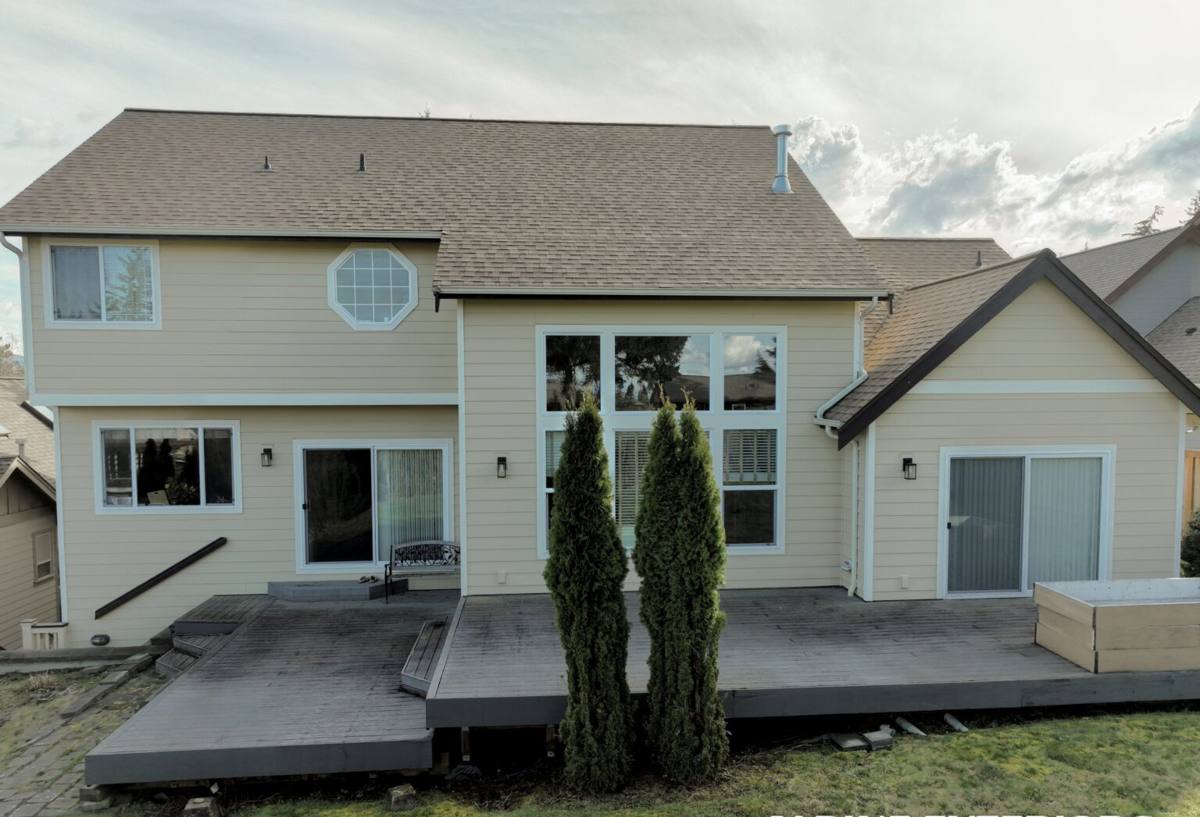
What a Correctly Built Deck Needs to Include Here
A deck can look finished and still be built wrong underneath, and the parts that matter most for New Tampa's climate are usually the parts nobody sees once the project is done. A build done right includes:
- Footings poured to the depth and bearing capacity the soil and load actually require, not sized off a rough guess
- A ledger board that's properly flashed and lag-bolted or through-bolted into the home's structural framing, not just fastened to siding or trim
- Joist hangers and structural connectors rated for the load, installed with the specific fasteners the hanger manufacturer calls for
- Corrosion-resistant fasteners throughout — hot-dip galvanized or stainless steel, not standard hardware-store fasteners that will streak and weaken over time
- Beam and post sizing calculated for the actual span and load of the specific deck, not copied from a table built for a different design
- Guardrail and baluster spacing and attachment strong enough to meet code and hold up under real lateral load, not just look sturdy
- Correct board gapping for drainage and for the material's natural expansion and contraction
- Grading and drainage beneath the deck so water sheds away from footings and posts instead of sitting against them
None of these show up as a problem on day one. They show up two, five, or ten years later, as a soft spot in the framing, a railing post with some give in it, or rust stains bleeding out around a fastener that should never have been used there.
Choosing a Decking Material for New Tampa's Climate
The framing underneath is what keeps a deck safe, but the surface material is what determines how much upkeep you're signing up for and how the deck holds up to sun and moisture over time. There's no single right answer — it depends on budget, how the space will be used, and how much maintenance you actually want to do.
| Material | How It Handles Sun & Humidity Here | Maintenance | Typical Lifespan Here |
|---|---|---|---|
| Pressure-treated wood | Adequate if sealed on schedule; UV and humidity break down an unsealed finish quickly | Sealing or staining every 1–2 years | Shorter without consistent upkeep |
| Tropical hardwood | Naturally dense and durable, but still grays and checks without periodic finish care | Periodic oiling to prevent graying and checking | Long if maintained; degrades faster if neglected |
| Capped composite | Strong — cap layer resists UV fade, staining, and moisture absorption | Occasional washing; no sealing or staining | Long-term, typically backed by a manufacturer warranty |
| Cellular PVC | Excellent — no wood fiber to absorb moisture; consistent color retention | Occasional washing; no sealing or staining | Long-term, generally at a higher upfront cost |
| Uncapped composite | Moderate — absorbs some moisture, more prone to fading in constant sun | Periodic cleaning to manage fading and mold | Shorter than capped products in this climate |
We'll walk through the real trade-offs for a specific project rather than pushing whatever has the best margin — a shaded deck used a few evenings a week has different needs than a full-sun deck around a pool that gets used every day.
Permits, Codes, and New Tampa's Planned Communities
A new deck attached to a home, or any deck built above a certain height, requires a permit in Hillsborough County, with inspections typically required at the footing, framing, and final stages. That process exists because a deck is a structural addition, not a cosmetic one, and skipping it — or having a contractor skip it on your behalf — can turn into a real problem at resale or with insurance later.
New Tampa also has a lot of planned communities with active homeowners' associations, and many of those HOAs have their own design review for anything visible from the street or a neighboring yard, including decks — covering things like material, color, and railing style, separate from the county's structural permit. We handle the county or city permitting as part of the job, and we're used to working within an HOA's review timeline as well, so the paperwork side doesn't hold up the build any longer than it has to.
How Our Process Works
We start with a site visit to look at the actual conditions — existing structure if it's a replacement, the yard's drainage and grade, how much direct sun the space gets through the day, and how the deck will realistically be used. From there we talk through material and layout options that fit the budget and that use case, rather than starting from a default design and working backward.
Once the design and material are settled, we handle the permitting — county or city, plus HOA submission where one applies — before any work starts. The build itself follows the sequence that actually matters for durability here: footings and posts first, then framing sized and fastened for the load and local wind requirements, then the decking surface, then railing and any trim. We finish with a walkthrough covering exactly what the material you chose needs going forward, since that's different for a composite deck than for a wood one.
Common Problems We See in Decks Built the Wrong Way Here
Most of the deck problems we get called out to look at trace back to a handful of shortcuts, and they're rarely visible until the deck has been in place for a while:
- An unflashed or poorly flashed ledger board, which lets water get behind the band board and rot the framing from the inside out
- Undersized or improperly poured footings, which shows up as a deck that rocks slightly or has started to settle unevenly
- Standard hardware-store fasteners used instead of corrosion-resistant ones, leading to rust streaks and weakened connections within a few years
- Posts set with lumber that isn't rated for ground contact, which rots at grade well before the rest of the structure shows wear
- Work done without a permit or final inspection, which can surface as a real problem when the home is sold or when an insurance claim gets filed
Maintenance a New Tampa Deck Still Needs
Even a well-built deck needs some ongoing attention in this climate — the material just determines how much:
- Reseal or restain wood decking on the schedule the finish actually requires, not whenever it happens to come to mind
- Wash composite or PVC decking periodically to clear pollen, mildew, and organic buildup before it stains the surface
- Check railing posts, hardware, and structural connectors at least once a year, especially heading into or coming out of hurricane season
- Keep mulch, dense planting, or standing water from sitting against posts or footings
- Look underneath the deck after major storms for pooling water or debris that's blocking drainage
- Address any soft framing or loose connections immediately — that's structural, not cosmetic, and it doesn't improve with time
Why Hiring a Crew That Already Works New Tampa Matters
A contractor who mostly builds elsewhere in the region can still frame a deck competently, but New Tampa's specific mix of Hillsborough County permitting requirements, active HOA design review, and Florida Building Code wind provisions is easier to get right when you've already worked through it on other projects nearby. We're not learning the county's inspection expectations or a given community's HOA process on your job — we've already been through both, which keeps the paperwork moving and avoids the delays that come from a permit getting kicked back over something that could have been caught up front.
That familiarity also shows up in the build itself: knowing which fastener grade actually holds up here, which composite lines perform well under Florida sun over years rather than months, and being straightforward with you about what your deck genuinely needs versus what's just an add-on.
If you're planning a new deck, replacing one that's showing its age, or just want a straight answer about what your project would involve, we're happy to walk the site with you. Reach out below for a free, no-pressure estimate.