 Tampa Window
 Building Decks That Actually Hold Up in Hyde Park
Hyde Park is one of Tampa's oldest and most walkable neighborhoods, with a mix of historic bungalows, Mediterranean Revival homes, and newer infill construction sitting close to the water on Hillsborough Bay. That proximity to the bay is part of what makes the neighborhood desirable — and part of what makes deck building here different from a subdivision twenty miles inland. Salt-laden air moves through the neighborhood daily, afternoon humidity is constant for most of the year, and every structure sitting outside has to survive Hillsborough County's wind and rain events without warning.
A deck built to a generic national spec will often look fine for the first year or two. The problems show up later: fasteners bleeding rust through the decking, ledger boards trapping moisture against the house, railings that loosen because the posts were never properly anchored for wind uplift. Building correctly for this climate from day one costs a little more in materials and labor up front and saves a full rebuild ten years down the road.
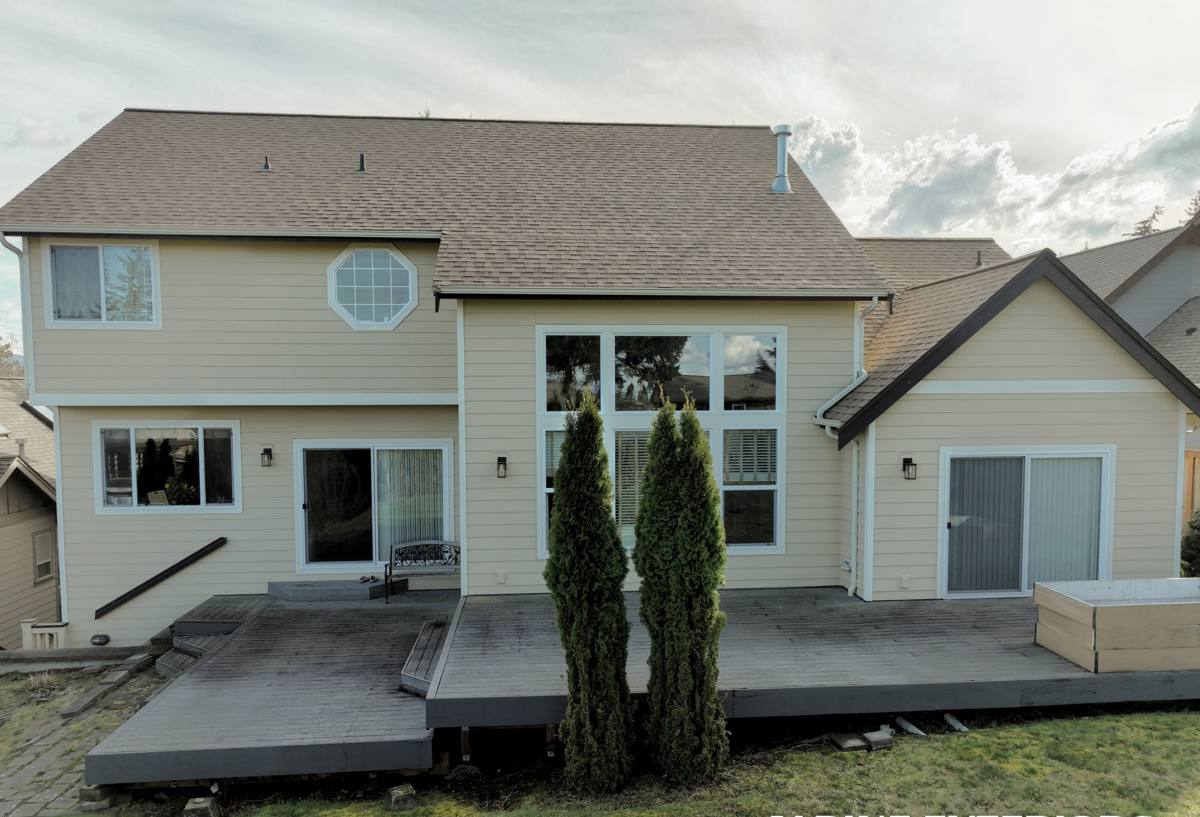
What Tampa Bay's Climate Actually Does to a Deck
Wind and Storm Load
Hillsborough County requires decks to be engineered or built to code for regional wind speeds, not just general residential framing tables. That means proper hold-downs at the ledger, correctly sized and spaced footings, and hardware rated for uplift and lateral load — not just enough nails to hold the boards down on a calm day.
UV Exposure
Tampa gets strong, direct sun nearly year-round. UV breaks down the surface fibers of untreated or poorly finished wood, fades color, and dries out sealants faster than in most of the country. Whatever decking material you choose, the finish and fastening system need to be chosen with that sun exposure in mind, not just the shade-side sample board at a supply store.
Wind-Driven Rain and Humidity
Rain in this area rarely falls straight down — it comes in sideways during storms, which means water gets forced into joints, under ledger flashing, and into end grain that a dry-climate deck would never expose to standing moisture. Combined with Tampa's baseline humidity, this is the single biggest cause of rot and hardware corrosion in decks that weren't detailed correctly.
Salt Air
Hyde Park's location near the bay means a steady low-level salt content in the air, even blocks away from open water. Salt accelerates corrosion in fasteners, brackets, and any exposed metal hardware. It's a slower process than a direct-oceanfront property, but it adds up over years and is a real factor in what hardware and coatings we specify.
Hyde Park's Older Homes Bring Their Own Considerations
A lot of the housing stock in Hyde Park predates modern deck-building norms. Older bungalow and Craftsman-style homes often have lower floor heights, narrower lot setbacks, and foundation types that weren't designed with an attached deck ledger in mind. Some properties fall within locally recognized historic districts, which can mean additional review of exterior changes depending on visibility from the street and the scope of the project.
None of this makes a deck project harder to get approved — it just means the design work has to account for it early. We look at how a new deck ties into the existing structure, whether it should be ledger-attached or freestanding to avoid loading an older foundation wall, and whether the style and railing details should echo the age of the home rather than looking like a modern addition bolted onto a century-old porch.
Choosing the Right Decking Material for This Climate
There's no single "best" decking material — there's a best material for your budget, your maintenance tolerance, and how close your home sits to the bay. Here's how the common options actually perform under Tampa Bay conditions:
| Material | Upfront Cost | Maintenance | Performance in Salt Air & Humidity | Typical Lifespan |
|---|---|---|---|---|
| Pressure-treated pine | Lowest | Re-sealing every 1-2 years | Fair — needs consistent sealing to resist moisture and salt exposure | 10-15 years with upkeep |
| Composite decking | Mid-to-high | Occasional washing, no sealing | Good — resists rot and doesn't corrode, but hardware still needs to be rated for the coast | 20-25+ years |
| PVC/cellular decking | High | Very low | Very good — fully synthetic, doesn't absorb moisture | 25+ years |
| Tropical hardwood (ipe and similar) | Highest | Periodic oiling to maintain color | Very good structurally, but installation sensitivity is high and fastening must be precise | 25-40 years |
We don't push one product line over another as a matter of house policy — we walk through the trade-offs honestly. Composite and PVC decking cost more up front but remove most of the maintenance burden, which matters if you don't want to be resealing a deck every spring. Pressure-treated wood is a legitimate choice if you're comfortable with the upkeep and want the lower entry cost. Hardwoods look excellent and last a long time but are unforgiving to install poorly — gaps, fastener choice, and drainage all have to be exactly right, which is a labor cost, not a material cost.
What a Correctly Built Deck Involves
Regardless of the decking material on top, the structure underneath is what determines whether a deck survives storm season after storm season. A correct build in this area includes:
- Footings sized and depth-set to Hillsborough County code, not just "deep enough" by eye
- Ledger board properly flashed and sealed against the house to stop water intrusion at the attachment point
- Joist hangers, hold-downs, and structural connectors rated for coastal/high-corrosion environments
- Stainless steel or coated fasteners suited to the decking material, not generic hardware-store screws
- Post bases set to keep wood off standing water and off direct soil contact
- Railing posts anchored to resist lateral load, not just toe-nailed into the rim joist
- Proper board spacing for drainage and airflow underneath the deck surface
Skipping any one of these doesn't usually cause an immediate problem. It shows up two, five, or eight years later as a soft spot near the house, a wobbly railing, or rust streaks bleeding through composite boards — all things that are far more expensive to fix after the fact than to build correctly the first time.
Permitting in Tampa and Hillsborough County
Most deck projects in the city and county require a building permit, and inspections typically occur at the footing stage and again at final completion. Decks are also reviewed for wind load requirements specific to this region, which affects footing depth, post sizing, and connector hardware. If your property falls within a recognized historic district, exterior changes visible from the street may also go through an additional design review before the building permit is issued.
Skipping the permit process is a real risk here — beyond the legal exposure, an unpermitted deck can complicate a home sale down the road and won't have had an inspector verify the structural connections that matter most in a storm. We handle the permit submission and inspection scheduling as part of the project rather than leaving that step to the homeowner.
Our Process for Hyde Park Deck Projects
1. On-Site Assessment
We look at your home's existing structure, lot layout, drainage, and how the home was originally built, since that affects whether the new deck should attach to the house or stand independently.
2. Design and Material Selection
We walk through decking and railing options against your budget and maintenance preference, and design the layout to fit the home's style and your intended use of the space.
3. Permitting
We prepare and submit the permit package to the appropriate local office and schedule the required inspections, including any additional historic district review if applicable.
4. Construction
Footings and framing go in first and get inspected before decking begins. We use fasteners and hardware selected for this specific climate, not a one-size-fits-all national spec.
5. Final Walkthrough
Once the final inspection passes, we walk the finished deck with you, cover basic care for the material you chose, and address any punch-list items before calling the job done.
Keeping Your Deck in Good Shape After It's Built
Whatever material you choose, a little seasonal attention goes a long way in this climate. A basic yearly routine looks like this:
- Rinse off salt residue and pollen buildup a few times a year, especially after storms
- Check railing posts and stair connections for looseness at least once a year
- Inspect fasteners for early rust staining, which usually means a coating has worn through
- Re-seal or re-oil wood decking on the schedule recommended for that specific product
- Clear leaves and debris from between boards so water can drain instead of pooling
- Look underneath the deck occasionally for signs of moisture trapped near the ledger or posts
Why a Crew That Already Works in Hyde Park Matters
A contractor who builds decks all over the greater Tampa area but rarely works in Hyde Park specifically may not think twice about the historic review process, the tighter lot setbacks common in this neighborhood, or the extra corrosion resistance worth specifying this close to the bay. A crew that already works these streets knows what the local permitting office expects to see, knows which hardware actually holds up a few blocks from Hillsborough Bay, and isn't learning those lessons on your project. That familiarity shows up as fewer surprises, fewer permit delays, and a deck that's built for the neighborhood it's actually sitting in.
If you're considering a new deck or need an older one evaluated for storm-season readiness, we're happy to take a look and give you a straightforward, no-pressure estimate — just fill out the form below.