 Tampa Window
 Building a Deck That Belongs on Davis Islands
Davis Islands is one of the more distinctive places to build a deck in the Tampa area. It's a waterfront community, which means most decks here sit closer to open water and salt spray than a typical inland Hillsborough County lot, and they take a harder beating from sun, humidity, and wind because of it. A deck that would hold up fine in a shaded backyard a few miles inland can start showing corrosion, fading, and fastener failure within a couple of years on an island lot exposed to the bay. Building correctly here isn't about upgrading for the sake of it — it's about matching the materials and construction details to what the location actually does to a structure over time.
This page covers what we've learned building and repairing decks in this kind of environment: what the climate does to different materials, how we frame and fasten a deck to hold up to it, what the permitting side looks like, and what ongoing care actually matters versus what's just marketing.
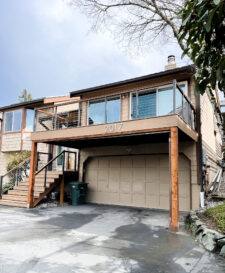
What Tampa Bay's Climate Does to a Deck
Four conditions do most of the damage to a waterfront deck, and they compound each other rather than acting alone.
Salt Air and Corrosion
Airborne salt from the bay settles on every exposed surface, including metal that isn't directly rained on. Standard zinc-coated fasteners and hardware corrode faster near the water than they would a few miles inland, and once a fastener starts rusting, it weakens the connection long before the wood or decking around it shows any sign of a problem. This is the single most common cause of a deck that "looks fine" but isn't structurally sound underneath.
Year-Round UV Exposure
Florida sun doesn't take an off-season. UV breaks down the surface fibers of wood decking and the resin binders in some composite products, leading to graying, splintering, or chalking well before the structure itself is worn out. Materials and finishes rated for northern climates often underperform here simply because they weren't tested against this much sustained sun.
Wind-Driven Rain and Moisture Cycling
Afternoon storms don't just rain down — wind pushes water sideways into ledger boards, joist connections, and any gap where two materials meet. Combined with Tampa's humidity, decks here go through constant wet-dry cycling. That cycling is what causes rot at connection points and warping in materials that aren't dimensionally stable, even when the wood or composite itself is a good product.
Hurricane-Force Wind Loads
Decks attached to a house have to resist uplift and lateral load during storm-force wind, not just support weight straight down. A deck that was only built to carry people and furniture, without engineering for wind, is the kind that separates from the house or racks sideways in a bad storm.
Choosing the Right Decking Material for a Waterfront Lot
There's no single "best" decking material — there's a best material for this specific exposure and this specific budget. Here's how the common options actually perform near the water in Tampa Bay.
| Material | How It Handles Salt Air & UV | Maintenance | Typical Lifespan Here |
|---|---|---|---|
| Pressure-treated pine | Needs sealing/staining regularly or UV and moisture take a visible toll | High — annual inspection, periodic sealing | Shorter without diligent upkeep |
| Tropical hardwood (e.g., ipe-type species) | Naturally dense and rot-resistant, holds up well to sun and moisture | Moderate — periodic oiling to maintain color, though it's fine left to weather gray | Long-lasting when properly fastened |
| Capped composite | Good UV and moisture resistance from the cap layer; quality varies by brand | Low — no sealing or staining | Long-lasting, but heat retention underfoot is a real factor in Florida sun |
| PVC decking | Fully synthetic, doesn't absorb moisture, handles salt exposure well | Low | Long-lasting; higher upfront cost |
We steer most Davis Islands clients toward capped composite or PVC for the field of the deck, because they don't rely on the homeowner keeping up with a sealing schedule to stay protected — and in a coastal environment, a missed maintenance year does more damage than it would inland. That said, hardwood and even well-maintained treated lumber both have a place, especially where a client wants a specific look or a lower upfront cost and is willing to keep up with the care it requires. We'll walk through the honest trade-offs for your project rather than push one product.
Framing and Fasteners: The Part You Don't See But Matters Most
Ledger Attachment
Where the deck attaches to the house is the single most important connection on the structure, and it's also the connection most exposed to wind-driven rain running down the wall. Proper flashing, a moisture barrier behind the ledger, and corrosion-resistant fasteners rated for the exposure are non-negotiable here — this is the detail that fails first when a deck is built to a lower standard.
Joist Hangers and Hardware Grade
Near open water, we use hardware rated for coastal or salt-water-adjacent exposure rather than standard galvanized product. It costs more up front and it's invisible once the decking is down, but it's the difference between hardware that's still sound in ten years and hardware that's rusting through in three.
Post and Footing Design
Wind uplift resistance starts at the footing. Post-to-beam and post-to-footing connections need hardware and embedment sized for wind load, not just vertical support — this is a place where a deck built to minimum spec and a deck built to actually hold up in a storm look identical until conditions test them.
Permitting and Building Requirements
New decks and significant deck rebuilds on Davis Islands go through the same permitting process as elsewhere in the City of Tampa and Hillsborough County, and a few factors specific to a waterfront lot commonly come into play:
- Wind load design must meet current Florida Building Code requirements for the coastal wind zone
- Waterfront and low-lying lots may fall in a flood zone that affects allowable construction methods and elevation
- Setback requirements from property lines and, where applicable, the water
- Guardrail and stair code requirements based on deck height
- Inspection sign-off at framing and final stages before the deck is considered complete
We pull the permit, handle the plan submission, and schedule inspections as part of the job — you shouldn't have to manage that process yourself, and skipping it isn't a shortcut worth taking on a structure attached to your home.
Our Deck Building Process, Start to Finish
- On-site assessment. We look at the existing structure (if any), the exposure of the lot, drainage, and how the deck ties into the house.
- Design and material selection. We talk through layout, decking material, railing style, and how the deck will actually be used, with honest input on what holds up in this environment.
- Permitting. We prepare and submit the permit package and handle the engineering documentation the wind-load requirements call for.
- Demolition and prep, if applicable. Old decking, damaged framing, and any compromised ledger connections are removed and the substrate is inspected before new framing goes up.
- Framing. Ledger, posts, beams, and joists go in first, using coastal-rated hardware and fasteners throughout.
- Inspection. Framing is inspected before it's covered by decking, per code.
- Decking, railing, and finish work. Decking boards, railing, stairs, and any lighting or finish details are installed.
- Final inspection and walkthrough. We walk the finished deck with you, cover care and maintenance specific to your material choice, and close out the permit.
Maintenance That Actually Extends a Davis Islands Deck's Life
Maintenance needs vary by material, but a few habits matter regardless of what's underfoot in a salt-air environment:
- Rinse the deck surface and railing periodically to clear salt residue before it accumulates
- Inspect fastener heads and hardware for early rust staining, especially near the ledger and posts
- Keep gutters and drainage clear so water isn't sheeting onto the deck or ledger area
- Reseal or oil wood decking on the schedule the product actually requires — skipping a year does more damage here than inland
- Check railing connections annually; they take direct wind load and loosen over time
- Address any soft spots, popped fasteners, or discoloration promptly rather than waiting for a full season
Cost Factors to Expect
Every deck is different, but the same handful of variables drive most of the cost difference between projects. We'll give you a firm, itemized number after seeing the site — but this is what tends to move the price:
| Factor | Why It Affects Cost |
|---|---|
| Decking material | Treated lumber, hardwood, composite, and PVC all sit at different price points and installation labor |
| Deck size and height | Larger decks and multi-level or elevated decks require more framing, footings, and stair/railing work |
| Structural condition | Rebuilding on failed footings or a compromised ledger adds work a straightforward new build doesn't need |
| Railing and finish choices | Cable rail, glass panels, and built-in lighting cost more than standard baluster railing |
| Permitting and engineering | Coastal wind-load engineering and flood zone considerations can add design and review time |
As a broad range, most residential deck projects in this area fall somewhere between a modest repair-and-replace job and a full custom multi-level build with premium materials — the honest answer is that we can't give you a real number without seeing your lot and hearing what you want, which is exactly what the estimate visit is for.
Why Local Experience on Davis Islands Matters
A contractor who mostly builds decks inland, in yards shaded from wind and salt spray, is going to spec a deck differently than one who builds them a few blocks from open water. The framing hardware, the fastener grade, the ledger flashing detail, and even the decking material recommendation all shift once salt air and hurricane wind load are part of the daily reality for the structure — not just a once-a-decade storm event. We build to that standard on every waterfront and near-waterfront project in the Tampa area, because a deck that only has to survive an inland backyard isn't the same job as one that has to survive Davis Islands.
If you're planning a new deck, a rebuild, or just want an honest read on whether your current deck's framing and hardware are holding up, we'll come take a look. The estimate is free, there's no pressure attached to it, and you'll get a straight answer about what your project actually needs — just fill out the form below to get started.