 Tampa Window
 Why Carrollwood Siding Takes a Different Kind of Beating
Carrollwood is one of the older, more established residential areas on the north side of the Tampa market, and that history shows up in the siding stock. Homes here span several decades of construction, which means we run into everything from aging wood and hardboard siding installed decades ago to newer vinyl and fiber cement from more recent remodels. Each of those materials fails in a different way, and each one is being tested constantly by the same Hillsborough County climate: hurricane-force wind events, punishing year-round UV, wind-driven rain that finds every gap in a wall system, and salt-laden air that drifts inland off Tampa Bay even though Carrollwood isn't waterfront.
Add in the mature tree canopy that gives much of the neighborhood its character, and you get a second layer of wear that homes in newer, more exposed subdivisions don't deal with as much: shaded walls that stay damp longer after a storm, organic staining and mildew growth on north-facing elevations, and occasional impact damage from falling limbs during high wind. None of this means Carrollwood homes need more repairs than anywhere else in Tampa — it means the repairs need to account for a specific mix of sun, moisture, and impact stress that a generic patch job often misses.
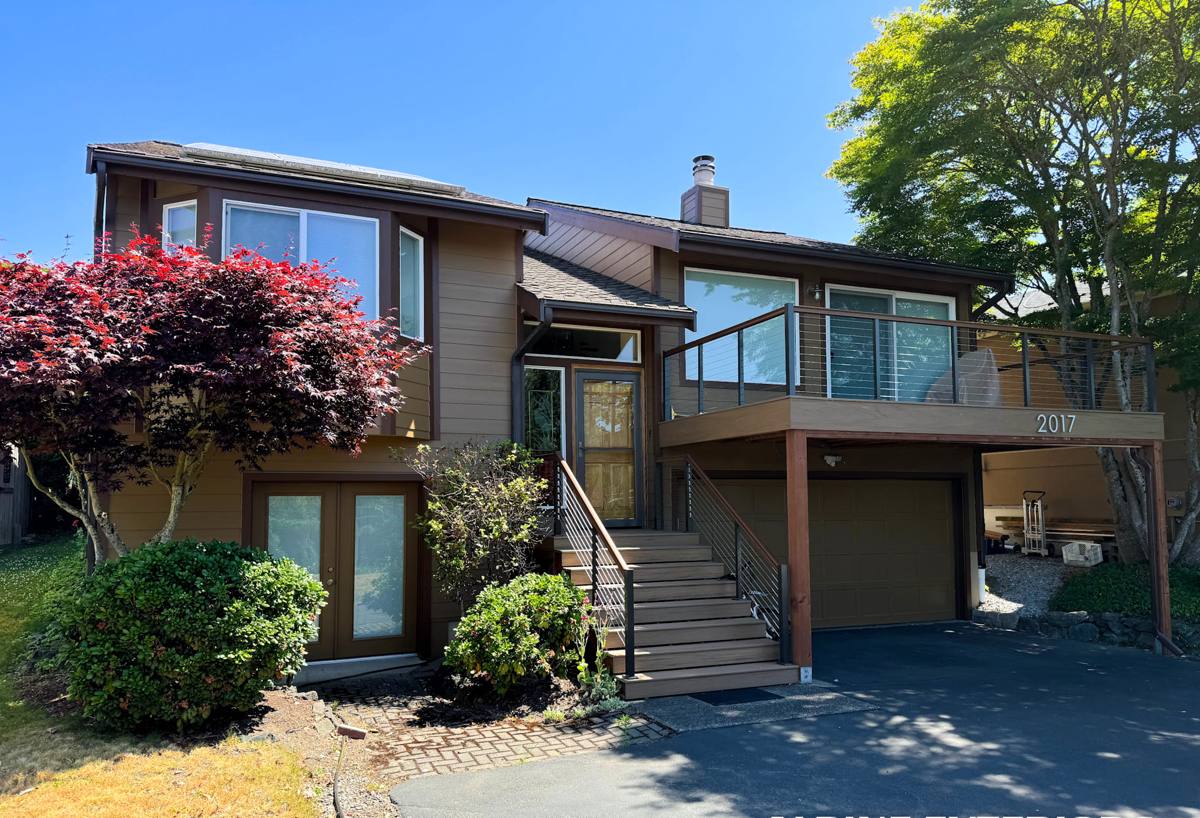
Common Siding Problems We See in Carrollwood Homes
Storm and Wind Damage
Wind gusts during Florida's storm season don't just tear siding off in dramatic fashion — more often they loosen fasteners, pop panels out of alignment, or crack boards at the edges where they're most vulnerable. That damage can look minor from the ground and still be letting water behind the wall every time it rains.
Sun and UV Fading or Cracking
Florida gets more direct sun exposure than almost anywhere else in the country, and siding on south- and west-facing walls takes the worst of it. Paint chalks and fades unevenly, caulk joints dry out and split, and lower-grade materials can become brittle over time, cracking under normal thermal expansion and contraction.
Moisture, Rot, and Hidden Damage
This is the category that costs homeowners the most if it's ignored. Wind-driven rain pushes moisture into seams, corners, and anywhere flashing was installed poorly or has failed. Wood and hardboard siding absorb that moisture and soften or rot from behind, which means the visible damage is often smaller than the real problem underneath.
Organic Growth and Staining
Shaded, humid walls under tree canopy grow mildew and algae faster than exposed ones. It's usually cosmetic on its own, but it's also a signal that a section of wall is staying wet longer than it should, which is worth checking rather than just pressure washing away.
| Symptom | Likely Cause | Urgency |
|---|---|---|
| Loose, warped, or missing panels | Wind uplift, failed fasteners | High — repair before next storm |
| Cracked or split boards at edges | UV brittleness, impact, thermal movement | Moderate |
| Soft or spongy spots | Trapped moisture, rot behind the surface | High — often more extensive than it looks |
| Peeling paint, chalky surface | UV exposure, coating failure | Low to moderate |
| Dark streaking, green or black growth | Shade, humidity, poor drainage | Low, but worth inspecting further |
What a Correct Siding Repair Actually Involves
A repair that just covers the visible damage is a repair that fails again. Doing it correctly means treating every damaged section as a chance to check the parts of the wall system you can't see once the siding goes back on.
Diagnose Before You Patch
Before replacing a single board, a correct repair starts with pulling back enough surrounding material to check the house wrap, flashing, and sheathing underneath. Damaged siding is frequently a symptom of a flashing or sealant failure somewhere nearby — replacing the board without fixing the entry point just resets the clock on the same problem.
Match Materials and Method, Not Just Color
Siding profiles, reveals, and fastening patterns vary by manufacturer and even by product generation. A patch that doesn't match the plank width, exposure, or fastening spec of the surrounding siding will telegraph as an obvious repair and can create new water paths at the seams. On older Carrollwood homes with materials that are no longer manufactured, this sometimes means replacing a full wall section rather than a single board, so the repair actually reads and performs as one continuous surface.
Restore the Water Management, Not Just the Surface
Siding is only one layer of a wall's defense against water. Proper repair reinstalls flashing, house wrap, and sealant details so water sheds the way the wall was designed to shed it — not just so the wall looks finished.
Repair vs. Replacement: How We Decide
Not every damaged section needs full replacement, and not every home is a good candidate for a spot repair. We look at a few concrete factors before recommending either path.
| Factor | Favors Repair | Favors Replacement |
|---|---|---|
| Extent of damage | Isolated to one or two sections | Spread across multiple elevations |
| Underlying sheathing condition | Dry, solid substrate found on inspection | Soft, rotted, or water-stained sheathing |
| Material availability | Matching material or close equivalent exists | Discontinued profile, poor color match possible |
| Age of existing siding | Siding is otherwise in good condition | Siding is near or past its practical service life |
| Storm exposure going forward | Low-exposure elevation | High-wind or high-sun elevation with repeat failures |
Our Repair Process
The process is the same whether we're patching a single storm-damaged section or replacing siding across an entire elevation:
- On-site inspection of the damaged area and the surrounding wall, including a check of flashing and sealant details
- Assessment of what's underneath — sheathing, house wrap, and framing — before any repair scope is finalized
- A clear, written explanation of what's actually wrong and what it will take to fix it correctly
- Removal of damaged material and any compromised underlayment or flashing
- Reinstallation using materials and fastening methods that match the performance of the surrounding wall
- Final inspection to confirm water management details are restored, not just the visible surface
Why We Repair and Replace With James Hardie Fiber Cement
When a repair calls for new material rather than a like-for-like patch, we use James Hardie fiber cement — it's the only siding product we install, on repairs and full replacements alike. We made that decision because fiber cement holds up to exactly the conditions Carrollwood homes face: it's non-combustible, it doesn't absorb and swell with moisture the way wood or hardboard does, and Hardie's ColorPlus factory finish is baked on and warranted against fading and cracking, which matters enormously under Florida's UV load. Hardie's HZ5 product line is engineered specifically for hot, humid, storm-prone climates like ours.
We won't tell a homeowner that vinyl or engineered wood siding is a bad product — plenty of it is manufactured well and serves people fine in other climates. But we've seen how those materials perform specifically under Tampa-area sun, humidity, and storm cycles over the years, and it changed what we're willing to put our name on. That's a standard we hold to on every job, including repairs, so a homeowner never ends up with a mismatched mix of materials aging at different rates on the same wall.
Why Hire a Crew That Already Works in Carrollwood
Siding repair is local work in a way a lot of home services aren't. A crew that regularly works in Carrollwood already knows the age range of the housing stock in the area, the range of siding materials likely to be found on a given home's era of construction, and the permitting expectations that come with Hillsborough County jobs. Many parts of Carrollwood also fall under deed restrictions or neighborhood associations with rules about exterior appearance and material changes — a contractor who's done work in the area is used to navigating that instead of hitting it as a surprise mid-project.
There's also a practical scheduling benefit: a company that already has crews and material stocked for this part of Tampa can usually respond faster after a storm event, which matters when the difference between a same-week repair and a month-long wait is how much additional water damage a home takes on in the meantime.
Maintaining Your Siding After a Repair
A correct repair should last, but a little regular attention extends that lifespan significantly in this climate. A few habits worth building into a yearly routine:
- Walk the exterior after any major storm and look for loose, cracked, or displaced panels
- Keep tree limbs and heavy landscaping trimmed back from siding to reduce impact and trapped moisture
- Rinse off mildew, algae, or salt residue with a gentle wash rather than a high-pressure blast that can force water behind seams
- Check and refresh caulking at trim, corners, and penetrations every couple of years
- Address small cracks or soft spots as soon as they're noticed, before the next rainy season pushes water behind them
If you're seeing any of the warning signs above, or it's just been a while since your siding was checked, we're happy to take a look. We offer free, no-pressure estimates for Carrollwood homeowners — an inspection costs nothing, and it gives you a clear, honest answer on whether you're looking at a simple repair or something more.