 Tampa Window
 What Carrollwood's Climate Actually Does to Siding
Carrollwood sits in northwest Hillsborough County, an established residential area of mature tree canopy and a mix of home ages, from 1970s and '80s ranch-style construction to newer infill builds. Every one of those homes faces the same exterior stress test every year: months of intense, nearly direct-overhead UV that breaks down pigments and surface coatings, wind-driven rain that gets pushed sideways into every seam and joint during summer storms, and the periodic hurricane-force gusts that come with a full Gulf Coast storm season. During major storms, salt-laden air moving in off Tampa Bay reaches well inland, adding a corrosive edge to whatever moisture is already sitting on a wall.
Carrollwood's mature oak canopy and the many small lakes the neighborhood is built around are part of what makes it an appealing place to live, but that same shade and standing water also mean many homes here hold more humidity against exterior walls than a house in a newer, treeless subdivision. None of this is unique to one street or subdivision — it's the baseline condition for anything installed on the outside of a house in this part of Florida. But it matters a great deal when you're choosing a siding material and a crew, because products and installation methods that work fine in a mild, dry climate can fail here years ahead of schedule.
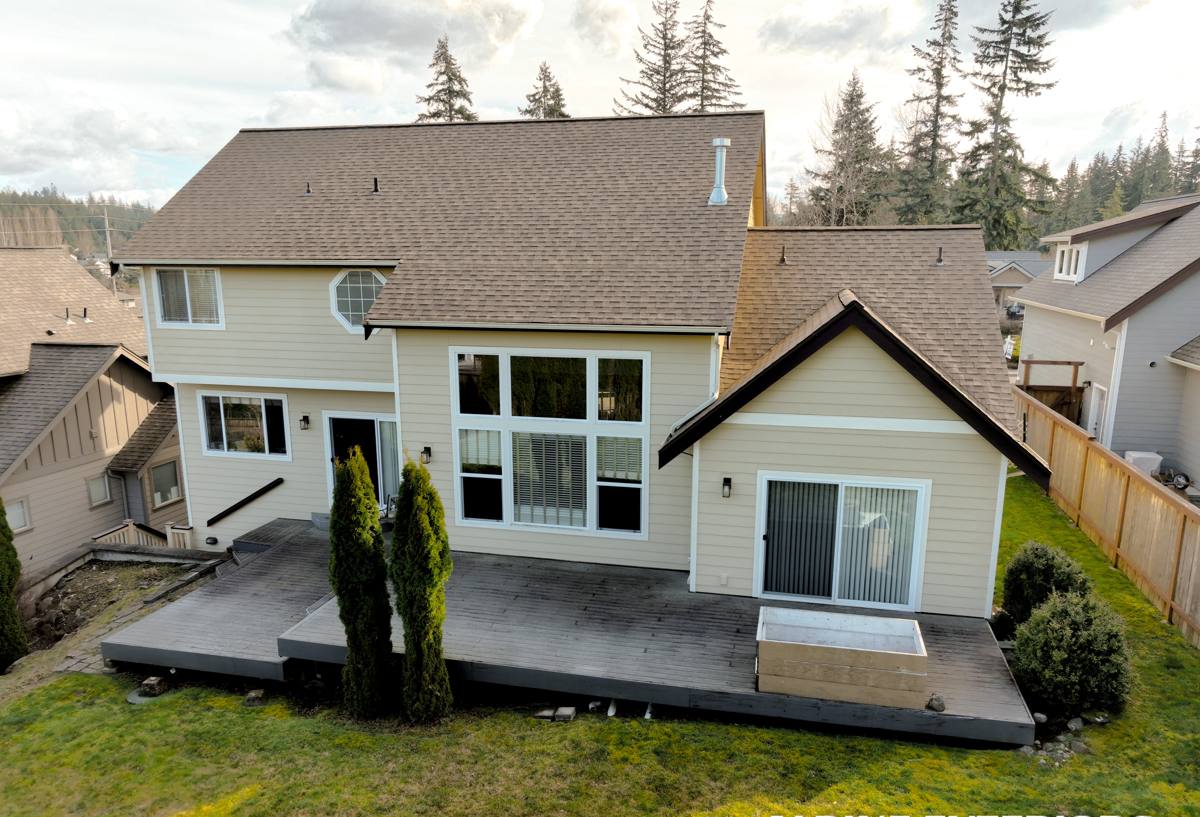
Why We Install James Hardie's HZ5 Line Here
James Hardie manufactures its siding in climate-specific formulations, and the HZ5 line is engineered for the humidity and moisture-cycling conditions found in Florida and the rest of the Gulf Coast. That's a meaningful distinction from a generic fiber cement product built to one national spec.
Moisture and Humidity Behavior
Fiber cement is inherently non-combustible and doesn't feed on moisture the way wood-based products can, but how a siding product handles repeated wetting and drying over years still varies by formulation. HZ5 is built to resist the swelling, cracking, and moisture intrusion issues that show up faster in products not engineered for high-humidity regions.
Wind and Impact Resistance
Properly installed HardiePlank and HardieShingle products carry engineering data that supports use in high-wind regions, which matters directly for Hillsborough County's wind-borne debris requirements. The material itself resists cracking and denting from wind-driven debris far better than vinyl, and it doesn't warp or buckle in sustained heat the way some other materials do.
Factory-Applied ColorPlus Finish
Rather than a field-applied paint job, ColorPlus finish is baked on in a controlled factory environment and is engineered specifically to resist UV fading — a real issue in a market that gets as much direct sun as Tampa does. That finish carries its own dedicated warranty coverage, separate from the substrate warranty, which is not something a standard field paint job on any siding material can offer.
What a Correct James Hardie Installation Actually Involves
Fiber cement siding is only as good as the installation behind it. James Hardie publishes detailed installation requirements, and skipping or shortcutting them is the single biggest reason a Hardie job underperforms or voids its warranty.
Weather-Resistive Barrier and Drainage
Correct installation starts before the first board goes up. The weather-resistive barrier behind the siding needs to be intact and properly lapped so it creates a drainage plane — that's what gives any wind-driven moisture that does get past the cladding somewhere to go besides your wall sheathing.
Clearances and Flashing
Hardie siding requires minimum clearance from grade, roofing, decks, and other abutting surfaces, plus properly integrated flashing at every window, door, and penetration. In a climate where wind-driven rain gets forced sideways during a storm, a missed flashing detail is exactly where water finds its way behind the cladding.
Fastening and Fitment
Corrosion-resistant fasteners, correct nailing patterns, and proper gaps at butt joints and trim are all specified for a reason — they let the material handle Florida's thermal movement and humidity swings without cracking the joint or pulling the board loose in high wind.
Caulking and Field-Painted Cuts
Any field cut has to be sealed and primed per manufacturer spec so the exposed edge doesn't wick moisture. This is a small step that gets skipped constantly on rushed jobs, and it's one of the fastest ways for a Hardie installation to develop problems that have nothing to do with the product itself.
What James Hardie's Warranty Actually Covers
A siding job is a long-term investment, and the warranty behind it should reflect that. James Hardie backs its fiber cement products with a non-prorated limited warranty that runs for decades when the material is installed to spec, and the ColorPlus factory finish carries its own separate coverage against fading and peeling, since a factory-cured finish behaves differently over time than a field-applied paint job.
For Carrollwood homeowners, there's a practical side to this too: James Hardie's warranty is transferable to a new owner if you sell the home within the coverage period, which can be a genuine selling point in a market where houses change hands regularly. That's a meaningful difference from a product whose maintenance and repainting cycle resets with every owner. It's also a reminder that a warranty is only as good as the installation behind it — improper installation is one of the most common reasons a claim gets denied, which is exactly why the details above matter as much as the product choice itself.
James Hardie Compared to Other Siding Options
Homeowners in Carrollwood often ask why we don't offer alternatives like vinyl or engineered wood siding. The honest answer is that each of those products comes with real trade-offs that show up faster in a hot, humid, storm-prone climate than they might elsewhere, and we'd rather stand behind one material system than sell something we know will need more attention down the road.
| Material | Behavior in Heat and UV | Wind and Storm Resistance | Typical Maintenance |
|---|---|---|---|
| James Hardie (HZ5) | ColorPlus finish resists fading; non-combustible | Engineered for high-wind regions; resists cracking | Occasional wash; no repainting for years with ColorPlus |
| Vinyl siding | Can soften, warp, or fade under sustained heat | Lower impact resistance; can crack or blow off in high gusts | Low, but replacement panels are common after storms |
| Wood or engineered wood siding | Vulnerable to moisture and UV without diligent upkeep | Moderate; joints and edges are the weak point | Regular repainting/sealing and moisture monitoring |
This is why our crews only install James Hardie. It's not that the alternatives are worthless products — it's that, after years of doing exterior work in this climate, we've standardized on the one material system that holds up with the least long-term maintenance burden for the homeowner.
Our Process for a Carrollwood Siding Project
- Free on-site inspection and estimate, including a look at your current siding, substrate, and any moisture or trim damage.
- Product line and color selection, including ColorPlus options suited to the home's style and any HOA guidelines common in established Carrollwood neighborhoods.
- Tear-off of existing siding and inspection of the sheathing underneath, since fixing hidden rot or water damage before the new siding goes on is non-negotiable.
- Installation to James Hardie's published specifications and Hillsborough County's wind-borne debris and building code requirements, including proper flashing, clearances, and fastening.
- Final walkthrough so you can see the completed work and ask questions before we consider the job done.
Why a Crew That Already Works Carrollwood Matters
Carrollwood's housing stock spans several decades, which means the substrate behind existing siding varies a lot from house to house — older plywood or board sheathing, older stucco-and-lath systems, or previous siding installations that were never properly flashed. A crew that regularly works this specific area has already seen the range of conditions typical to homes built in that timeframe and knows what to check for before the first board comes off the wall. Homes near the neighborhood's lakes and canals also tend to carry more ambient humidity and insect pressure against wall penetrations, which is one more reason correct flashing and sealing matter as much as the material choice itself.
There's also the permitting and inspection side. Hillsborough County requires permits for siding replacement, and the wind load and fastening requirements tied to those permits are not optional paperwork — they're the difference between siding that's engineered to stay on the house during a named storm and siding that isn't. A local crew that pulls these permits routinely moves through that process without it becoming a delay on your project.
Maintaining James Hardie Siding in Tampa's Climate
James Hardie siding is low-maintenance, not no-maintenance. A little seasonal attention keeps it performing the way it's designed to:
- Rinse the siding periodically to remove pollen, salt residue, and general grime, especially after a stretch of dry weather followed by storms.
- Inspect caulking around windows, doors, and trim once a year and have any cracked or missing sealant redone before rainy season.
- Walk the perimeter after any major storm and look for loose boards, damaged trim, or debris impact rather than waiting for a problem to show up inside.
- Keep sprinklers and irrigation heads from spraying directly on the siding day after day, which accelerates staining and mineral buildup.
- Trim back vegetation and tree limbs that hold moisture against the wall or that could strike the siding in high wind.
What Affects the Cost of a Carrollwood Hardie Project
Every project's price depends on the specific condition and layout of the house, but a few factors consistently move the number the most:
| Cost Factor | Why It Matters |
|---|---|
| Home size and wall complexity | More square footage and more corners, gables, and dormers mean more material and labor |
| Removal of existing siding | Tear-off and disposal of old material adds labor, especially with multiple layers |
| Substrate repair | Rotted sheathing or water damage found during tear-off has to be fixed before new siding goes on |
| Product line and profile | Lap siding, shingle-style, and panel systems carry different material and labor costs |
| Color and finish | Standard ColorPlus colors versus custom field-painted options affect price and lead time |
Every Carrollwood home is different, and the only way to get real numbers is to have a crew look at your specific house. If you're considering James Hardie siding for your home, we're happy to walk the exterior with you, answer questions honestly, and put together a free, no-pressure estimate.