 Tampa Window
 Westchase Siding Takes a Different Kind of Beating
Westchase sits inland from the Gulf compared to some Tampa Bay neighborhoods, but "inland" in Hillsborough County still means full exposure to everything Florida's climate throws at exterior siding. Afternoon thunderstorms roll through most of the summer, tropical systems push wind-driven rain sideways against west- and south-facing walls, and the sun is intense enough, year-round, to break down materials that aren't built for it. Add the salt-laden air that reaches well inland from Tampa Bay on a steady breeze, and you have a combination that ages siding faster here than it would in most other parts of the country.
We repair siding on Westchase homes regularly, and the damage patterns are consistent. It's rarely one catastrophic event — it's cumulative. A hurricane season here, a few years of UV exposure there, some standing moisture behind a poorly flashed seam, and eventually a homeowner notices soft spots, peeling paint, or panels that have pulled away from the wall. Understanding what's actually happening behind the surface is the difference between a repair that lasts and one that fails again in a year or two.
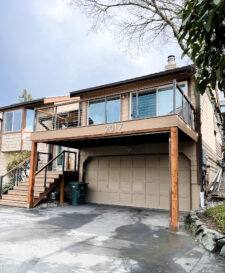
What's Actually Damaging Your Siding
Wind and Wind-Driven Debris
Hillsborough County doesn't need a direct hurricane hit to produce damaging wind events. Tropical storm bands, strong seasonal fronts, and severe thunderstorm outflow can all generate gusts strong enough to lift siding edges, crack brittle panels, or drive small debris into a wall hard enough to punch through. Once a panel's edge is compromised, wind gets underneath it, and the next storm makes the problem worse.
UV Exposure
Tampa's sun exposure is relentless. Painted and lower-grade siding materials chalk, fade, and become brittle under years of direct UV, and that brittleness is exactly what turns a minor wind event into cracked or shattered panels. South- and west-facing elevations typically show UV wear first and worst.
Wind-Driven Rain and Moisture Intrusion
Florida rain rarely falls straight down. When it's driven sideways by wind, it finds every gap in flashing, every failed caulk joint, and every seam that wasn't lapped correctly during the original install. Moisture behind siding doesn't just damage the siding itself — it can rot sheathing and framing, which turns a surface repair into a structural one if it's ignored too long.
Salt Air and Humidity
Even away from the immediate coastline, salt content in the air accelerates corrosion of fasteners, trim, and any metal components in a siding system. Combined with Tampa's high year-round humidity, this creates conditions where moisture-sensitive materials stay damp longer than they would in a drier climate, encouraging rot and mold growth behind the cladding.
Repair or Replace? How We Make the Call
Not every damaged section needs full replacement, but not every repair is worth doing either. We inspect the extent and cause of the damage before recommending anything — patching over a moisture problem just hides it until it resurfaces somewhere else on the wall.
| Condition Found | Usually Repairable | Usually Needs Replacement |
|---|---|---|
| Isolated cracked or missing panel, sound substrate underneath | Yes | — |
| Soft, spongy wall sections (rot in sheathing) | — | Yes, beyond the siding itself |
| Widespread cracking/chalking across an elevation | Rarely worth patching | Yes |
| Failed caulk/flashing causing a single leak point | Yes | — |
| Multiple past patch repairs already visible | — | Yes |
| Storm-damaged section on an otherwise sound wall | Yes, if matching material is available | — |
The hardest cases are homes where the original siding is a material we don't install — LP SmartSide, vinyl, primed spruce, or similar. If the damage is isolated and the existing material is still structurally sound, we'll repair it honestly rather than push an unnecessary full replacement. But when damage is widespread or that material is nearing the end of its practical life, we'll tell you that directly, and we'll only offer James Hardie fiber cement for the replacement — not because it's the only product on the market, but because it's the only one we're willing to put our name behind long-term in this climate.
What a Correct Siding Repair Actually Involves
A repair that just gets a new piece of siding nailed over the old opening isn't a repair — it's a temporary cover-up. Done correctly, siding repair in a climate like Tampa's means:
- Removing damaged material back to sound substrate, not just the visibly broken piece
- Inspecting the sheathing and framing underneath for moisture damage or rot before closing anything back up
- Correcting the underlying cause — failed flashing, a bad seam, missing house wrap — not just replacing the surface material
- Re-flashing and re-sealing penetrations (utility lines, vents, fixtures) that are common leak points
- Matching the replacement panel's profile, reveal, and finish as closely as possible so the repair doesn't stand out
- Sealing and painting or color-matching to protect the repaired section from the same UV and moisture exposure that damaged the original
Skipping any of these steps is how homeowners end up paying for the same repair twice.
Our Process, Start to Finish
1. On-Site Inspection
We look at more than the obvious damage — we check the full elevation, adjacent trim, and any areas where water could be tracking behind the wall from the damaged section.
2. Honest Diagnosis
We tell you what's causing the damage, whether it's isolated or a sign of broader wear, and whether a repair will actually hold or if replacement is the more honest long-term answer.
3. Written Scope and Estimate
You get a clear explanation of what will be removed, what will be inspected underneath, and what materials will be used to close it back up — no vague line items.
4. The Repair Itself
Removal, substrate inspection, moisture barrier and flashing correction, new material installation, and finish work to blend the repair into the surrounding siding.
5. Final Walkthrough
We review the completed work with you before considering the job done.
Why We Only Install James Hardie Fiber Cement
When a repair turns into a replacement conversation — for a section, an elevation, or a whole home — we only offer James Hardie. It's non-combustible, engineered specifically for humid, high-UV, storm-prone climates through its HZ5 product line, and it holds a factory-applied ColorPlus finish that resists the fading and chalking that plagues painted siding under Tampa's sun. It also carries a strong transferable warranty when installed to Hardie's specifications, which matters in a market where siding call-backs are common. We don't install LP SmartSide, vinyl, Cemplank, Allura, or primed wood siding — each has real strengths, but none matched the combination of moisture resilience, fire performance, and long-term finish durability we wanted to stand behind for Westchase's climate.
What Affects the Cost of a Siding Repair
| Factor | Why It Matters |
|---|---|
| Extent of hidden moisture/rot damage | Sheathing and framing repair adds labor and material beyond the siding itself |
| Availability of matching material | Discontinued profiles or colors may require a larger repair area to blend properly |
| Number and location of penetrations | Vents, fixtures, and utility lines each need proper re-flashing |
| Elevation and accessibility | Second-story or hard-to-reach sections take more time and equipment |
| Repair vs. full section replacement | Replacing an entire wall section can sometimes cost less long-term than repeated patch repairs |
Signs Your Westchase Home Needs a Siding Inspection
- Visible cracks, gaps, or missing pieces after a storm
- Soft or spongy spots when you press on the siding
- Peeling paint or a chalky residue that wipes off on your hand
- Discoloration or streaking that could indicate water tracking behind the wall
- Warping, bubbling, or panels that have visibly separated from the wall
- Musty smells or moisture signs on interior walls that back up to exterior siding
Why It Matters to Hire a Crew That Already Works in Westchase
Siding repair isn't just a materials question — it's a diagnosis question, and getting the diagnosis right depends on understanding how homes in this specific area actually fail. A crew that regularly works Westchase and the surrounding Tampa area already knows which elevations take the worst wind-driven rain, which original siding materials in the neighborhood are showing their age, and what correct flashing and moisture management actually look like in Hillsborough County's climate. That local pattern recognition is what keeps a repair from becoming a recurring expense.
If you're noticing damage, discoloration, or soft spots on your Westchase home's siding, we're happy to take a look and give you a straight answer — repair, partial replacement, or full replacement — with no pressure either way. Request a free estimate using the form below and we'll schedule a time to inspect the damage in person.