 Tampa Window
 Board & Batten in Wesley Chapel: A Style That Has to Earn Its Keep
Board and batten has become one of the most requested siding profiles in Wesley Chapel's newer neighborhoods. The vertical lines read as clean, modern farmhouse, or transitional depending on the trim and color palette, and it pairs well with the gable-heavy rooflines and covered porches common in this part of Hillsborough County. But a siding profile that looks good on a rendering has to actually perform on a house that sits through a Tampa Bay summer, and that's where board and batten either earns its reputation or becomes a maintenance headache.
Wesley Chapel sits inland from the coast, which changes the climate math a little compared to a beachfront property, but it does not exempt a home from Florida's core siding stressors: long stretches of intense UV exposure, high ambient humidity most of the year, sudden wind-driven rain during afternoon thunderstorms, and the structural wind loads that come with hurricane season. Any siding installed here — board and batten included — has to be chosen and installed with those specific conditions in mind, not just picked because it looks right on a sample board.
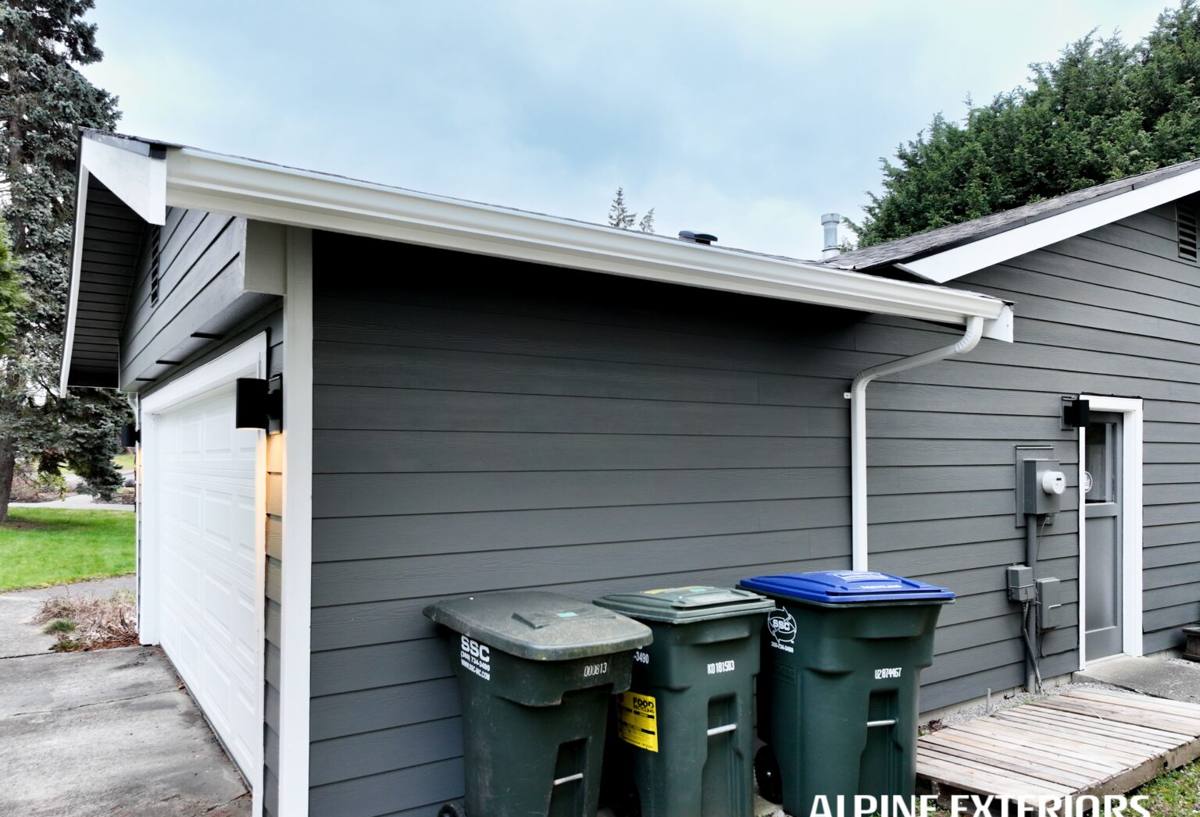
What Hillsborough County's Climate Actually Does to This Profile
Board and batten has more vertical seams and more exposed edge than a standard horizontal lap profile, and every one of those seams and edges is a place where water, heat, and UV can find a weakness if the material or the installation is wrong.
- UV exposure: Florida gets sun intensity most of the country doesn't see year-round. Paint-grade materials chalk, fade, and need repainting far sooner here than in milder climates.
- Humidity: Sustained moisture in the air keeps wood-based products damp longer after rain, which is exactly the condition that lets rot and mold get a foothold behind the boards.
- Wind-driven rain: Tampa Bay's afternoon storms don't just fall straight down — wind pushes rain sideways into vertical seams and batten joints, which is a harder condition to seal against than a simple downpour.
- Hurricane-season wind loads: Even away from the immediate coast, this region gets tropical storm and hurricane wind events that put real uplift and lateral load on exterior cladding and its fastening.
None of this means board and batten is a bad choice for a Wesley Chapel home. It means the material and the installation details matter more here than they would in a drier, milder climate.
What Correct Board & Batten Actually Is
Board and batten siding is a two-layer vertical system: wide flat panels or boards installed first, then narrower strips (the battens) fastened over the seams between them. Done right, this creates a shadow-line reveal and hides the panel joints from weather. Done wrong — wrong fastening, wrong gaps, wrong flashing — those same seams become the exact places water gets behind the siding.
The Parts That Matter Most
- Weather-resistant barrier: A correctly lapped and taped water-resistive barrier behind the panels is the actual first line of defense — the siding itself is the second line, not the only one.
- Flashing at penetrations and transitions: Windows, doors, roof-to-wall intersections, and any point where the wall plane changes need proper flashing detail, not caulk used as a substitute for it.
- Fastening pattern: Panels and battens need to be fastened per the manufacturer's specified pattern and into solid framing or sheathing — not just "enough nails to hold it up."
- Expansion gaps: Fiber cement and wood both move with temperature and moisture. Butt joints and terminations need the gap the manufacturer specifies, sealed appropriately, so the material isn't fighting itself.
- Batten spacing and fastening: Battens have to land over the panel seams correctly and be fastened without bridging into gaps that trap water.
Why We Install James Hardie Fiber Cement for This Profile — Not Wood, Not Vinyl
Board and batten can be built out of several materials, and each one carries real trade-offs worth understanding before you commit to a look for the next couple of decades on your home.
Primed Wood or Spruce Board and Batten
Traditional wood board and batten has a genuine, authentic look that some homeowners specifically want. The trade-off in this climate is maintenance: wood absorbs moisture, and Tampa Bay's humidity and rain patterns mean repainting and caulk maintenance on a shorter cycle than most homeowners expect going in. Left unmaintained, wood board and batten in this region is prone to rot at the base, at seams, and anywhere water can sit against the grain.
Vinyl Board and Batten
Vinyl board and batten is inexpensive and low-maintenance in the sense that it doesn't need painting, but it comes with its own set of climate trade-offs here. Vinyl can warp or distort in sustained high heat, its color is baked in rather than a separate finish (so scratches and fading show differently than on a painted or coated product), and in high-wind events it depends heavily on correct, tight fastening to stay put — loose or improperly installed vinyl panels are a common casualty in wind events.
James Hardie Fiber Cement
This is the only siding system we install, in board and batten or any other profile, and it's a deliberate professional standard rather than a default. Hardie fiber cement is non-combustible, engineered for high-humidity climates in its HZ5 product formulation, and finished with the factory-applied ColorPlus finish, which holds color and resists the fading and chalking that Florida UV causes in field-painted materials. It carries a strong transferable limited warranty when installed to Hardie's specification, which matters most in a climate that stress-tests siding as hard as this one does.
Comparing the Options for a Wesley Chapel Home
| Factor | Primed Wood | Vinyl | James Hardie Fiber Cement |
|---|---|---|---|
| UV / fade resistance | Fades, needs repainting on a short cycle | Color can fade unevenly over time | ColorPlus factory finish holds color longer |
| Moisture / rot risk | High if maintenance lapses | Low rot risk, but can trap moisture behind panels if installed poorly | Engineered for high-humidity climates (HZ5) |
| Wind performance | Depends on fastening and wood condition | Sensitive to fastening quality; can dislodge in high wind | Rated system performance when installed to spec |
| Combustibility | Combustible | Combustible (melts/deforms under heat) | Non-combustible |
| Maintenance cycle | Frequent repainting/caulking | Occasional cleaning, no repainting | Minimal — no repainting needed for the life of the finish warranty |
| Warranty structure | Varies by installer/paint | Varies by manufacturer | Strong transferable limited warranty |
Our Process for a Wesley Chapel Board & Batten Project
Every board and batten job starts with an honest look at the wall system underneath, not just the finish. We assess the existing siding, sheathing condition, and any moisture damage before quoting a replacement, because installing new siding over a compromised wall just hides a problem instead of fixing it.
- Inspection and assessment: We check sheathing, existing water-resistive barrier condition, and flashing at windows, doors, and roof transitions before anything comes off the wall.
- Tear-off and prep: Old siding comes off, damaged sheathing gets addressed, and the water-resistive barrier is installed or repaired correctly — lapped, taped, and continuous.
- Flashing detail: Every penetration and transition gets flashed to shed water outward and downward, not just caulked over.
- Panel and batten installation: Installed to James Hardie's fastening pattern, spacing, and gap specifications — the details that actually determine how the siding performs in wind and rain, not just how it looks on installation day.
- Final inspection: We walk the finished job checking fastening, sealant lines, and trim details before calling it complete.
Why a Crew That Already Works Wesley Chapel Matters
Wesley Chapel has grown fast, and a lot of that growth is inside planned communities with HOAs that have specific rules about exterior colors, siding styles, and sometimes even batten spacing or reveal width. A crew that's already worked in these neighborhoods knows to check HOA architectural guidelines before ordering material, not after — which saves homeowners from a color or spacing rejection partway through a project.
Local familiarity also means understanding how Wesley Chapel's specific site conditions — newer construction, particular lot orientations, tree coverage in some communities versus open exposure in others — affect where a home gets the most sun and wind exposure, and adjusting installation details accordingly. A contractor who treats every job as their first Wesley Chapel job is learning on your house. That's not a risk worth taking on a siding system meant to last decades.
A Homeowner's Maintenance Checklist
Even correctly installed board and batten benefits from basic homeowner attention. This is what we recommend checking a couple of times a year:
- Look along the base of the siding for any signs of staining, softness, or gaps where water could be collecting.
- Check caulk lines at windows, doors, and trim for cracking or separation, especially after a hard storm season.
- Rinse siding periodically to clear pollen, dirt, and salt-laden residue that can build up on any exterior surface in this region.
- Watch for any panels or battens that seem loose or have shifted, particularly after high-wind events.
- Keep sprinklers and irrigation aimed away from the base of the siding to avoid constant wetting in one spot.
What This Means for Your Home
Board and batten can be a genuinely great fit for a Wesley Chapel home, but the material and the installation details are what determine whether it still looks and performs well in ten or twenty years, not just on day one. Choosing a non-combustible, climate-engineered material and having it installed with the flashing, fastening, and gap details done correctly is what separates a siding job that lasts from one that needs early intervention.
If you're considering board and batten siding for a Wesley Chapel home, we're happy to take a look and put together a straightforward, no-pressure estimate — just fill out the form below.