 Tampa Window
 Valrico's Climate Is Hard on Decks
Valrico sits inland from Tampa Bay in Hillsborough County, but "inland" doesn't mean sheltered. The same conditions that wear down homes across the Tampa area — long stretches of intense UV, high humidity, sudden downpours, and the occasional brush with hurricane-force wind — hit an exposed outdoor deck harder than almost any other part of a house. A deck has no roof, no siding, and no HVAC system protecting it. It sits outside, fully exposed, twelve months a year.
Wood and composite decking both expand and contract with Florida's heat and humidity swings. Fasteners work loose. Boards cup, crack, or warp. Ledger boards and joists trap moisture where they meet the house, which is where rot usually starts and is hardest to see. None of this is unique to Valrico, but it's a fact of life for anyone with an outdoor deck in the Tampa Bay area, and it's why deck repair here is less about cosmetic touch-ups and more about catching structural problems before they become safety issues.
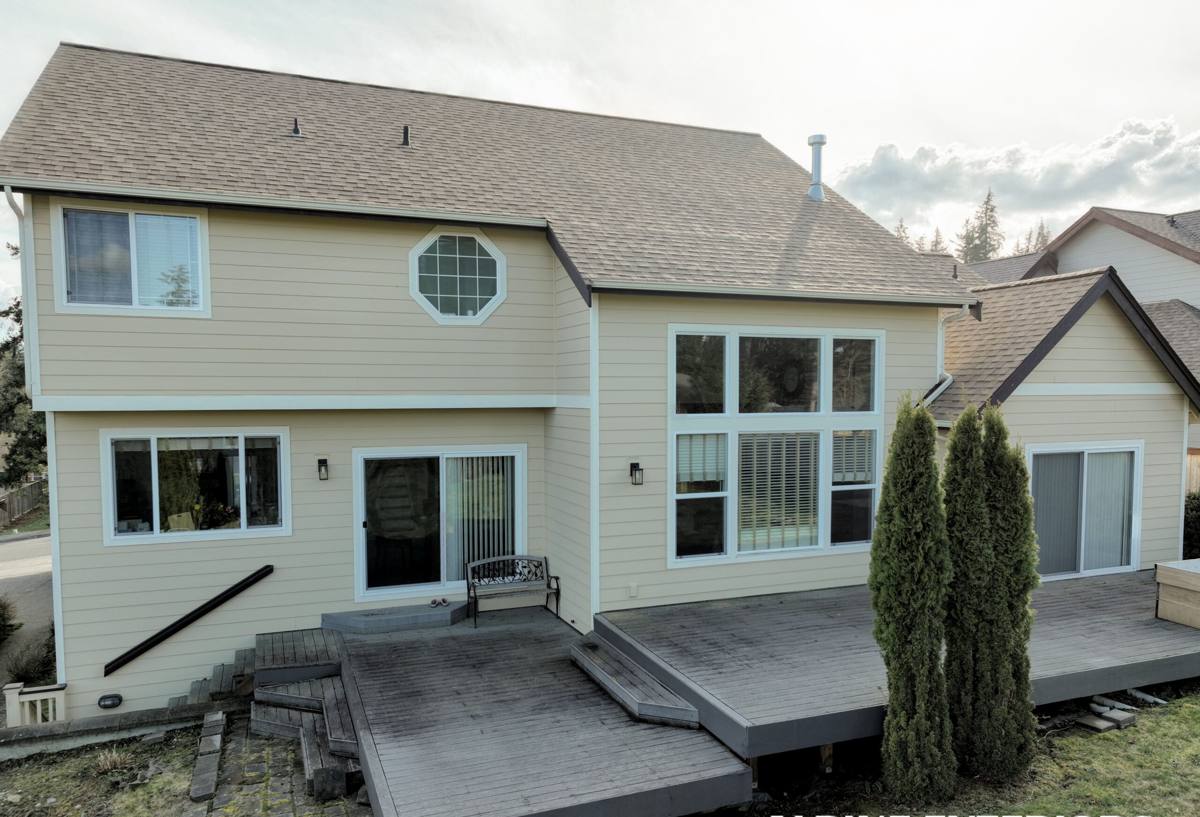
What We Typically Find on Valrico Decks
Every deck is different, but after years of repair work around Hillsborough County, certain problems show up again and again on decks in this area:
- Soft or rotted decking boards — usually where water pools instead of draining, or near planters and grills
- Ledger board separation or rot — where the deck attaches to the house, often hidden until you probe it
- Rusted or corroded fasteners and hardware — humidity and rain accelerate corrosion on lower-grade screws, nails, and brackets
- Loose or wobbly railings and stair stringers — a safety issue, not just a cosmetic one
- Cupped, warped, or splitting boards — sun and moisture cycling stress the wood fibers over time
- Mildew and algae staining — Florida's humidity keeps surfaces damp longer than drier climates, which feeds growth
- Undersized or failing footings — older decks built without proper post footings can settle or shift
Some of these are surface-level and cheap to fix. Others point to a structural issue underneath that needs to be addressed before it becomes a liability. Part of our job is telling you honestly which is which.
Wood vs. Composite: Different Decks, Different Repair Needs
What a deck is made of changes how it fails and how we repair it. Here's a general comparison of what we see with each in this climate:
| Factor | Pressure-Treated Wood | Composite Decking |
|---|---|---|
| Common failure mode | Rot, splitting, warping, fastener pull-through | Fading, surface flaking, edge swelling if moisture gets into the core |
| UV sensitivity | Grays and roughens without regular sealing | Colorfast but can fade unevenly over many years |
| Repair approach | Board-by-board replacement, spot sanding, re-sealing | Full board replacement (composite doesn't sand or patch well) |
| Structural framing underneath | Almost always wood, needs the same inspection either way | Almost always wood, needs the same inspection either way |
| Maintenance after repair | Periodic sealing or staining recommended | Occasional cleaning, no sealing needed |
One thing surprises a lot of homeowners: composite deck surfaces don't necessarily mean the whole structure is low-maintenance. Underneath almost every composite deck in Valrico is a wood frame — joists, beams, and posts — and that framing ages and reacts to moisture the same way a fully wood deck does. A composite deck with rotted joists underneath is not a rare thing to find.
Why We Don't Try to "Save" Everything
We get asked to patch or seal boards that are already structurally compromised. We won't do that as a stand-in for a real repair — sealing over rot doesn't stop it, it just hides it for a while, and that puts the eventual failure back on you with less warning. If a board or framing member is genuinely sound, we'll say so and leave it alone. If it isn't, we'll tell you plainly and explain why patching it isn't a real fix.
What a Correct Deck Repair Actually Involves
Structural Inspection First
Before any board gets replaced, we check the parts of the deck you can't see from the surface: the ledger board connection to the house, the condition of joists and beams, post footings, and the hardware holding it all together. This is the part of deck repair that actually determines whether a deck is safe — cosmetic wear on the surface is usually the easy part.
Fastener and Hardware Condition
In a humid coastal climate, fastener corrosion is one of the most common causes of deck failure that homeowners never see coming. Older decks built with standard steel screws or nails are especially prone to this. We check hardware condition as part of every inspection, not just the boards it's holding together.
Surface Repair
Once the structure is confirmed sound (or brought back to sound), surface repairs — replacing damaged boards, re-securing railings, fixing stair treads, addressing stains or mildew — go much faster and last much longer, because they're not sitting on top of an underlying problem.
Railings and Stairs
Loose railings and stair stringers get flagged as priority items regardless of the rest of the job's scope, because they're the most common source of injury on an aging deck. A deck can look fine and still have a railing that won't hold real weight.
Our Repair Process
- On-site inspection — We walk the full deck, check the structure underneath where accessible, and test boards, railings, and stairs by hand, not just by eye.
- Honest assessment — We tell you what's cosmetic, what's structural, and what we'd genuinely recommend if it were our own deck.
- Written estimate — Scope and cost laid out clearly before any work starts, with repair and (if relevant) replacement options.
- The repair itself — Structural fixes first, then surface work, using fasteners and hardware suited to Florida's humidity and salt-air exposure.
- Cleanup and walkthrough — We don't consider the job done until we've walked it with you and shown you what was fixed and why.
Repair or Replace? How We Make That Call
Not every deck problem calls for a full rebuild, and not every deck is worth patching indefinitely. We weigh a few honest factors:
| Factor | Leans Toward Repair | Leans Toward Replacement |
|---|---|---|
| Extent of rot | Isolated to a few boards or a section | Widespread through framing or multiple areas |
| Age of the deck | Newer, otherwise well-built | Older deck nearing the end of its practical life |
| Framing condition | Joists and posts still structurally sound | Framing compromised or undersized for current code |
| Original construction quality | Well-built to begin with | Signs of shortcuts in the original build |
| Cost over time | Repair cost is a fraction of rebuild cost | Repeated repairs are approaching rebuild cost |
Straightforward spot repairs — a handful of boards, some hardware, a railing section — are typically a modest cost, often in the range of a few hundred dollars depending on scope. Larger structural work, especially anything involving joists, footings, or a ledger board rebuild, runs into the thousands. We won't give you a real number without seeing the deck, but we'll never pad an estimate or push a rebuild you don't need.
Permits and Local Code Considerations
Deck work in Hillsborough County can require permitting depending on the scope of the repair — particularly anything touching structural framing, footings, or the ledger board connection to the house. Purely cosmetic board replacement is usually more straightforward, but structural work often isn't something you want to do without the proper permit, both for your safety and for resale purposes down the line. We handle this conversation with you upfront as part of the estimate, rather than leaving it as a surprise.
Keeping a Repaired Deck in Good Shape
A repair is only as good as the maintenance that follows it. In Valrico's climate, a little seasonal attention goes a long way toward avoiding a repeat visit:
- Sweep debris off the deck regularly — trapped leaves and organic matter hold moisture against boards
- Check for standing water after heavy rain and confirm drainage is working as intended
- Inspect railings and stair connections by hand a few times a year, especially after storms
- Reseal or restain wood decking on a regular schedule appropriate to the product used
- Watch for early signs of mildew or algae and clean it before it spreads
- Keep an eye on fastener heads for early rust or backing-out
- Trim back vegetation that keeps sections of the deck shaded and damp
Why Hiring a Crew That Already Works in Valrico Matters
Deck repair isn't a one-size-fits-all trade. A crew that regularly works in Valrico and the broader Tampa area already knows what this climate does to fasteners, framing, and finishes over time, because they've seen it on the last job and the one before that. That familiarity shows up in the details — which hardware actually holds up here, where moisture tends to collect on a typical local deck layout, and what corners get cut on older builds that need to be caught during inspection.
It also means a faster, more realistic response. A local crew isn't estimating drive time from across the county or juggling an unfamiliar permitting process for the first time. They know Hillsborough County's requirements, they know what "typical" looks like for decks in this area, and they can usually get eyes on your deck without a long wait — which matters if you've spotted a soft board or a wobbly railing and don't want to leave it unaddressed through the next round of Tampa Bay storms.
Get a Straight Answer on Your Deck
If your Valrico deck has soft spots, loose railings, rusted hardware, or you're just not sure how much life it has left, we're happy to take a look and give you a straightforward read on what it needs — no pressure, no upsell. Reach out using the form below to schedule a free estimate.