 Tampa Window
 Board & Batten Siding in Valrico: Built for What This Climate Actually Does to a House
Valrico sits inland from Tampa Bay but doesn't get a pass on Florida's toughest exterior conditions. Homes here still take the full brunt of Hillsborough County's summer heat, sudden downpours, and the outer bands of tropical systems that roll through most years. Board and batten siding has become a popular look on Valrico homes — the vertical lines read as craftsman, farmhouse, or modern coastal depending on the trim and color — but the style only holds up if the material and installation underneath it are matched to this climate. A board and batten wall that looks right on day one and starts failing by year five isn't a design problem. It's a materials and workmanship problem, and it's one we see often enough to take seriously on every Valrico job.
This page covers what board and batten siding needs to survive in this area, what a correct installation actually involves, and how our process works for Valrico homeowners specifically.
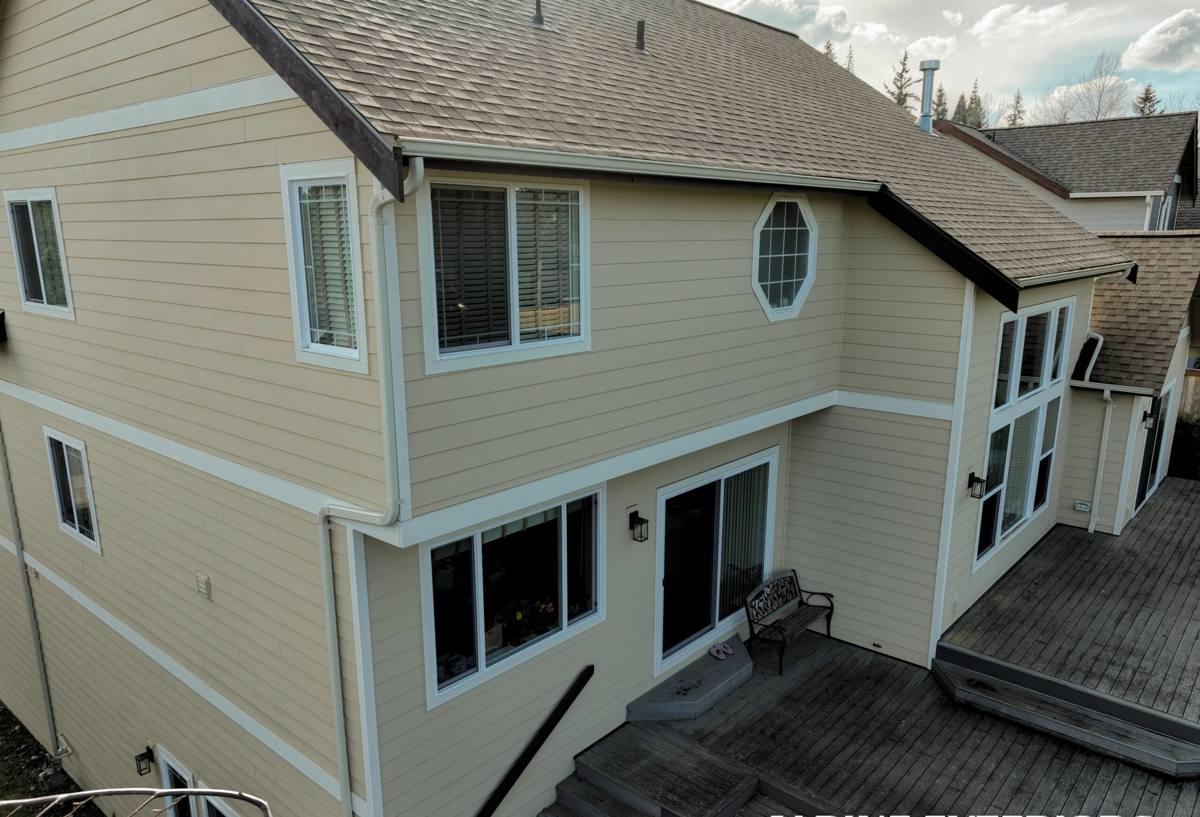
What Board & Batten Siding Is
Board and batten is a vertical siding profile: wide flat boards installed with narrower strips (battens) covering the seams between them. It's an old style — originally a practical way to cover gaps in wood plank walls — that's had a strong revival in new construction and renovation because of the clean, linear look. On a lot of Valrico streets you'll see it used as a full exterior, or as an accent on gables, dormers, and porch areas paired with a horizontal lap siding field.
The visual appeal is straightforward. What's not always obvious to homeowners is that the batten-over-board detail creates more seams, more fastener penetrations, and more opportunities for water to get behind the wall than a plain lap profile does. That's not a reason to avoid the style — it's a reason to be picky about who installs it and what it's made of.
Why the Detail Matters More in West-Central Florida
Every seam, joint, and fastener hole in a siding system is a potential entry point for moisture. In a drier, milder climate, a sloppy detail might go unnoticed for a decade. In Hillsborough County, where wind-driven rain during named storms and the afternoon thunderstorm pattern both push water sideways against exterior walls, a poorly flashed or poorly caulked batten seam can start letting moisture in within a couple of storm seasons. Add in the year-round UV exposure that degrades caulk and lower-grade coatings faster here than in northern climates, and the margin for installation error gets even smaller.
What a Correct Board & Batten Installation Actually Involves
A board and batten job that's going to hold up in Valrico's climate isn't just nailing boards to the wall. It's a layered system, and each layer has a job.
Weather-Resistant Barrier First
Before any siding goes up, the wall needs a continuous, properly lapped weather-resistant barrier (WRB). Every seam, every window and door opening, and every penetration through that barrier needs to be flashed and taped correctly so that any water that does get past the siding drains back out instead of soaking into the sheathing. This layer is invisible once the job is done, which is exactly why it's the layer that gets cut corners on lower-bid jobs — and it's the layer that determines whether the wall rots from the inside over the next ten years.
Fastening and Batten Spacing
Board and batten needs to be fastened per the manufacturer's specifications for both the base boards and the battens — wrong fastener type, wrong spacing, or face-nailing where blind-nailing is called for all create long-term failure points. Battens also need consistent spacing and proper coverage over the board seams; battens that don't fully bridge a seam defeat the purpose of the detail.
Caulking and Sealant Joints
Board and batten has more sealant joints than most siding profiles — at trim, at corners, around penetrations. In this climate, that means using a high-quality, paintable, UV-stable sealant and reapplying it as part of ongoing maintenance, not a one-time install step. Cheap caulk fails under Florida sun faster than homeowners expect, and once it cracks, it's an open door for water.
Clearance and Drainage
Bottom edges of board and batten siding need proper clearance from grade, roof lines, decks, and other horizontal surfaces where water can pool or splash back. This is a detail that's easy to get wrong when a crew is matching an existing look rather than following a spec, and it's one of the most common causes of rot we find at the base of board and batten walls.
Why We Only Install James Hardie Fiber Cement for This Style
Board and batten is available in several materials — vinyl, engineered wood (like LP SmartSide), fiber cement, and traditional primed wood or cedar. We install James Hardie fiber cement exclusively, and the reasoning is more pronounced for board and batten than for almost any other siding style, because of how many seams and exposed edges the profile has.
| Material | How It Handles This Climate | Why It Affects Board & Batten Specifically |
|---|---|---|
| Vinyl | Can warp or distort under sustained high heat and direct sun; seams are visible and can shift over time | Board and batten's straight vertical lines make any waviness or seam misalignment much more noticeable than on lap siding |
| LP SmartSide (engineered wood) | Wood-based core is more moisture-sensitive at cut edges and fastener points than fiber cement | Board and batten has more cut edges and fastener penetrations per square foot than lap profiles, so edge moisture sensitivity matters more |
| Primed wood / cedar | Requires ongoing painting, caulking, and moisture monitoring; natural wood movement can open seams | Board and batten's seam-heavy design amplifies the maintenance burden of a material that moves with humidity |
| James Hardie fiber cement | Non-combustible, dimensionally stable, engineered with HZ product lines for high-humidity, high-UV climates like Florida's | Stable boards and battens hold their line and their seams over decades rather than shifting or cupping |
James Hardie's HZ5 product line is engineered specifically for the moisture and humidity conditions common in Gulf Coast climates, and the factory-applied ColorPlus finish holds color and resists fading far better under Tampa's UV load than field-applied paint on wood or engineered wood products. For a style that depends on straight, stable lines to look right, dimensional stability isn't a cosmetic preference — it's the whole point. That's why board and batten is one of the clearest cases for why we standardized on Hardie and don't install vinyl, LP, Cemplank, Allura, or raw wood board and batten systems.
Our Process for Valrico Board & Batten Projects
1. On-Site Assessment
We walk the exterior, check the condition of existing siding and sheathing where accessible, and identify any moisture damage, rot, or prior repair issues before quoting the job. Board and batten over a compromised wall is a bandage, not a fix, so this step matters.
2. Tear-Off and Wall Prep
Old siding comes off, sheathing gets inspected and repaired as needed, and the weather-resistant barrier and flashing system goes in before a single board is hung.
3. Board and Batten Installation
Boards and battens go up per James Hardie's fastening and spacing specifications, with attention to consistent reveal, proper corner and trim details, and correct clearance at the base of the wall.
4. Sealant, Trim, and Finish Work
Sealant joints, trim, and any transitions to adjacent siding fields or masonry get finished and inspected before we consider the job complete.
5. Walkthrough and Cleanup
We walk the finished exterior with the homeowner, and the site gets cleaned up — old siding and debris hauled off, not left for someone else to deal with.
Cost Factors for Valrico Board & Batten Projects
Every home is different, so we don't quote pricing sight unseen, but these are the main factors that move a board and batten estimate up or down:
| Factor | Why It Matters |
|---|---|
| Wall condition underneath existing siding | Rot or sheathing damage found during tear-off adds repair scope before new siding can go on |
| Full exterior vs. accent application | Board and batten used only on gables or porch areas costs less than a full-house application |
| Trim and corner complexity | More gables, dormers, and transitions mean more cutting, flashing, and finish work |
| Color selection | Standard ColorPlus colors vs. custom or premium finishes affect material cost |
| Access and site conditions | Two-story sections, tight lot lines, or landscaping that limits staging affect labor time |
Maintaining Board & Batten Siding in This Climate
Even a correctly installed board and batten system needs some upkeep in a hot, humid, storm-prone area like this one. A short annual routine goes a long way:
- Rinse the siding periodically to remove salt air residue, pollen, and mildew buildup before it stains the finish
- Inspect caulk joints at trim, corners, and penetrations each year and touch up any that have cracked or pulled away
- Check the base of the walls after major storms for standing water, debris buildup, or signs of splash-back staining
- Trim back landscaping that's grown in against the siding, which traps moisture and blocks airflow
- Have any impact damage from storms or yard equipment repaired promptly rather than left exposed
Why a Crew That Already Works in Valrico Makes a Difference
Hillsborough County permitting requirements, wind-load expectations tied to local building code, and the specific weather pattern this part of the county sees aren't things a crew learns on your job — they're things they should already know walking in. A contractor who regularly works Valrico and the surrounding Tampa-area neighborhoods has already dealt with the permitting process, understands how HOA architectural guidelines in the area typically treat board and batten applications, and has a feel for how homes in this specific pocket of the county tend to be built. That local familiarity shows up in fewer surprises mid-project and a faster, smoother process from estimate to finished wall.
Questions to Ask Before Hiring a Board & Batten Contractor
- Do you install James Hardie fiber cement, and are your installers factory-trained on the current fastening and clearance specs?
- Will you inspect and repair sheathing before installing the weather-resistant barrier, not just cover over what's there?
- What's your plan for flashing and sealing the seams and penetrations specific to board and batten?
- Are you licensed and insured to work in Hillsborough County, and can you handle the permitting?
- Can you walk me through your process from tear-off to final cleanup before I sign anything?
If you're weighing board and batten siding for a Valrico home, we're happy to take a look and talk through what your home specifically needs — no pressure, no obligation. Request a free estimate using the form below and we'll get back to you with straight answers.