 Tampa Window
 Why Decks in Temple Terrace Wear Out Faster Than You'd Expect
Temple Terrace sits inside Hillsborough County's humid subtropical climate, and that climate is hard on any structure built outdoors, especially one made largely of wood or wood-composite materials sitting low to wet ground. The mature tree canopy that gives many Temple Terrace neighborhoods their shaded, established feel also means decks here deal with more leaf litter, more standing shade-dampness, and more debris buildup in joints and fastener heads than a deck out in open sun. Add in the region's long, wet summer season, intense year-round UV exposure, and the occasional hurricane-force wind event, and you have a structure that's under constant low-grade stress even when nothing looks obviously wrong.
Most deck damage we find in Tampa-area homes isn't dramatic. It's slow: a ledger board that's been absorbing moisture for two years, joist hangers that rusted from the inside out, or fasteners that backed out just enough to let water track into end grain. By the time a board feels soft underfoot or a rail wiggles, the problem has usually been developing for a while.
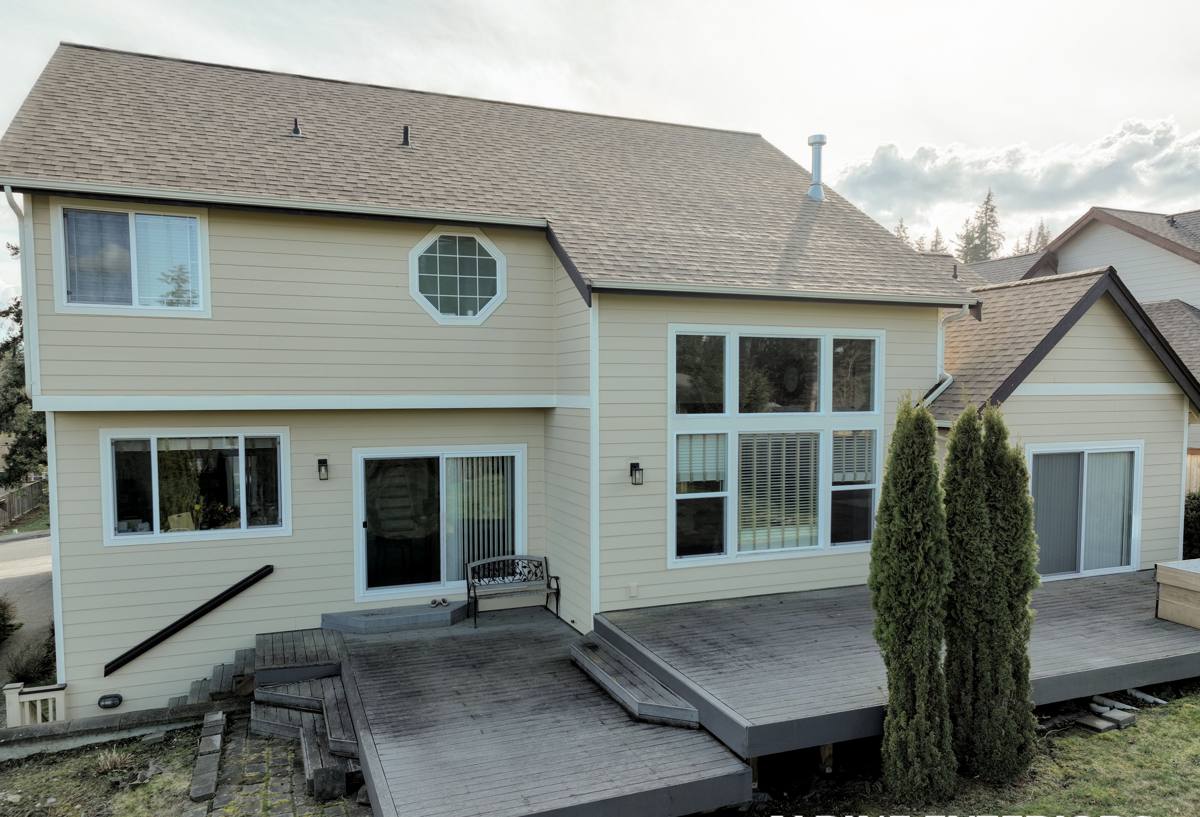
Common Deck Problems We See on Temple Terrace Homes
Ledger Board Separation and Moisture Intrusion
The ledger board — where the deck attaches to the house — is the single most important structural connection on most decks, and it's also the most common failure point. Wind-driven rain pushes moisture behind poorly flashed ledgers, and once water gets between the ledger and the house band board, rot spreads quietly. We check this connection first on every inspection because a failed ledger is a safety issue, not a cosmetic one.
Fastener and Hardware Corrosion
Salt air reaches further inland than most homeowners assume, and combined with Tampa's humidity, standard fasteners and joist hangers corrode faster here than they would in a drier climate. We regularly find galvanized hardware that's rusted through in decks that are otherwise structurally sound — a fix that's straightforward if caught early, but expensive if ignored.
UV-Damaged and Cupped Decking Boards
Year-round sun exposure dries out wood fibers and breaks down the surface of composite boards over time, leading to graying, splintering, cupping, or delamination on lower-grade composites. Boards that see full sun most of the day age noticeably faster than shaded sections of the same deck.
Post and Footing Movement
Florida's sandy soils and seasonal rain saturation can allow posts to shift slightly over years, especially on older decks that weren't set on adequately sized footings to begin with. This shows up as a deck that feels slightly springy or racked out of square, even when the decking surface itself looks fine.
Repair or Replace? How We Make That Call
Not every deck problem means starting over, and we don't default to recommending full replacement just because it's the bigger job. Our approach is to isolate the damage: if the framing is sound and only surface boards or a section of railing is compromised, targeted repair is the honest answer. If the ledger connection, multiple joists, or the main support posts are compromised, patching around that damage just delays a bigger failure — and we'll tell you that plainly.
- Surface boards cupping, graying, or splintering with solid framing underneath: repair candidate
- Isolated soft spot near a planter, downspout, or low-drainage area: repair candidate
- Rusted-through joist hangers on an otherwise sound frame: repair candidate
- Soft or spongy ledger board connection to the house: needs full evaluation, often replacement of that section
- Multiple rotted joists or posts showing rot at the base: usually points toward larger rebuild
- Deck older than 20 years with no maintenance history: worth a full structural assessment before spending on cosmetic repair
What a Proper Deck Repair Actually Involves
A repair that only replaces what's visibly damaged, without checking what's underneath it, tends to fail again within a season or two. Here's what we consider a complete repair rather than a patch:
- Full inspection of framing, ledger connection, and footings — not just the decking surface
- Moisture testing on suspect boards and ledger areas to confirm the extent of rot before cutting anything out
- Removal of damaged material back to solid, dry wood — never just covering over a soft spot
- Correction of the underlying cause (poor flashing, blocked drainage, undersized fasteners) so the same damage doesn't recur
- Replacement with fasteners and hardware rated for coastal/humid exposure
- Reinstallation of decking or railing to match existing spacing and fastening pattern
- Final check of the repaired area under load before we call it done
Materials: What We Use and Why
Material choice matters more in this climate than in most. We'll walk through the honest trade-offs for your specific deck rather than push one product line.
| Material | How It Handles Tampa's Climate | Maintenance |
|---|---|---|
| Pressure-treated pine | Good rot resistance when properly sealed and drained; needs re-sealing on a regular schedule | Moderate — periodic sealing and inspection |
| Composite decking | Resists rot and UV fading better than untreated wood; quality varies significantly by product tier | Low — occasional cleaning, no sealing |
| Cedar or tropical hardwood | Naturally rot-resistant but can still cup or check under intense UV without upkeep | Higher — regular oiling recommended |
| Structural framing lumber | Must be rated for ground contact where applicable; humidity accelerates decay in untreated framing | Low if correctly treated and flashed |
For structural framing repairs, we default to fasteners and connectors rated for coastal or high-moisture exposure rather than standard galvanized hardware, since the cost difference is small relative to the labor of redoing a repair a few years later.
Our Repair Process, Step by Step
We keep the process straightforward because deck repair doesn't need to be mysterious:
- Inspection and honest assessment. We look at the whole structure, not just the spot you called about, and tell you what we find — including if the issue is smaller than it looked.
- Written scope and pricing. You know what's being repaired, with what materials, before work starts.
- Damage removal. We cut back to solid material only, protecting the surrounding structure and landscaping during the work.
- Root-cause correction. If drainage, flashing, or fastener choice caused the failure, we address that as part of the repair.
- Rebuild and finish. New material is installed to match the existing deck's spacing, fastening, and finish where possible.
- Final walkthrough. We show you the completed repair and explain any maintenance steps that will extend its life.
Signs Your Deck Needs Attention Now
Deck damage rarely announces itself loudly. Watch for these signs, especially heading into Tampa's rainy season:
- Boards that feel soft, spongy, or flex noticeably underfoot
- Rust staining around fastener heads or visible corrosion on hardware
- Gaps or separation where the deck meets the house at the ledger board
- Railings or posts that wiggle more than they used to
- Standing water that lingers on the deck surface after rain instead of draining
- Visible cupping, splintering, or graying concentrated on the sun-exposed side
- A musty smell near or under the deck, which often points to trapped moisture
What Affects the Cost of a Deck Repair
| Factor | Why It Matters |
|---|---|
| Extent of hidden framing damage | Repairs that stay surface-level cost far less than ones requiring joist or ledger replacement |
| Material selected | Composite repairs cost more upfront per board than pressure-treated pine, but need less future maintenance |
| Access to the damaged area | Ground-level decks are generally easier and less costly to work under than elevated decks |
| Code or permit requirements | Structural repairs involving posts, footings, or railings may require permitting through the county or city |
| Age and condition of the rest of the deck | Older decks sometimes reveal additional issues once work begins, which we always flag before proceeding |
We give real ranges after inspection, not phone-quote guesses — deck repair costs swing too widely based on what's actually happening underneath the surface to price accurately any other way.
Why It Matters to Hire a Crew That Already Works in Temple Terrace
A contractor who regularly works decks in this part of Hillsborough County already has a feel for the patterns: which framing details tend to fail first in this climate, how local soil and drainage conditions affect footings, and what permitting steps apply for structural deck work in the area. That familiarity shows up in fewer surprises during the job and fewer callbacks after it. It also means a faster, more accurate first visit, since we're not guessing at how Tampa's humidity and storm exposure typically show up in a deck's framing.
If your Temple Terrace deck has a soft board, a wobbly rail, or you just haven't had it looked at in a few years, we're happy to come take an honest look. The estimate is free, there's no pressure to do more work than the deck actually needs, and you'll get a clear explanation of what we find either way.