 Tampa Window
 Why South Tampa Roofs Take More Punishment Than Most
South Tampa sits close to open water on more than one side, which means homes here deal with a combination of stresses that inland Hillsborough County neighborhoods don't face nearly as often. Hurricane-force winds and tropical storms push rain sideways instead of straight down, salt-laden air corrodes metal fasteners and flashing faster than it would twenty miles inland, and the sun is intense enough, year-round, to break down roofing materials on its own. None of these forces act alone — they compound each other, which is why a roof that looks fine from the driveway can already have real problems underneath.
Understanding that combination matters because it changes what a "correct" repair looks like. A roofer who mostly works on inland, low-wind-exposure homes may not think twice about details that are non-negotiable on a South Tampa roof: fastener patterns rated for higher wind uplift, underlayment that actually stops wind-driven rain instead of just shedding water downhill, and flashing metals that won't corrode within a few storm seasons.
The Specific Ways Storms Damage Roofs Here
Wind Uplift and Lost Coverings
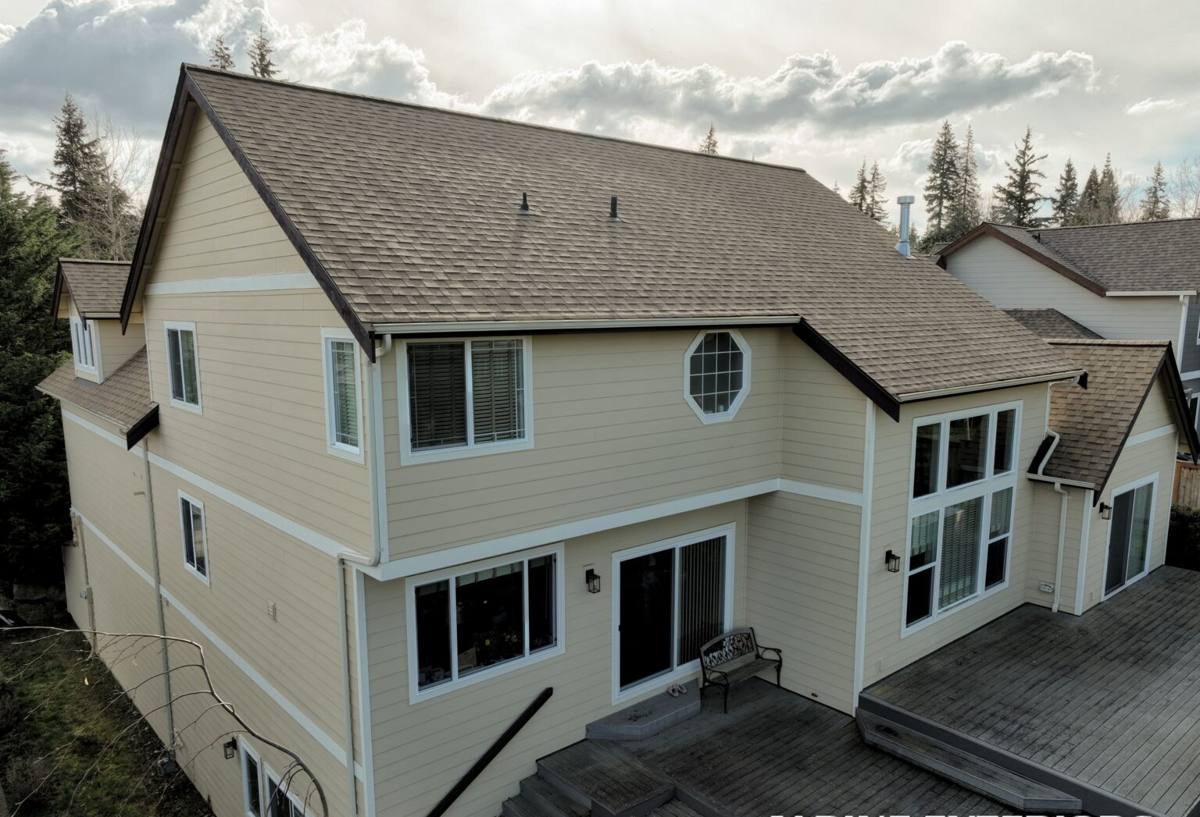
Sustained tropical-storm and hurricane winds create uplift pressure at roof edges, corners, and ridges — the areas engineers call high-pressure zones. This is where shingles or tiles peel back or lift free first, exposing the underlayment and decking beneath. Once a section is compromised, the next storm finds that weak spot and makes it worse.
Wind-Driven Rain Intrusion
Rain that's being pushed sideways at 40, 60, or 90+ mph doesn't behave like ordinary rainfall. It can work its way under shingle tabs, through nail penetrations, and around flashing that would hold up fine in a normal downpour. This is one of the most common causes of interior water damage after a storm, and it often shows up with no obvious sign of missing shingles from the ground.
UV Degradation
Florida's sun bakes asphalt shingles and dries out the oils that keep them flexible, making them more brittle and more likely to crack or tear when wind stress hits. A roof that's already UV-worn going into hurricane season is far more vulnerable than one that's been properly maintained.
Salt Air Corrosion
Proximity to Tampa Bay means airborne salt settles on exposed metal — flashing, drip edge, fasteners, vent stacks — and accelerates rust and corrosion. Corroded flashing is a leading cause of leaks that have nothing to do with the shingles or tiles themselves.
What Counts as Storm Damage — Visible and Hidden
Homeowners often assume storm damage means missing shingles or a visible hole, but a lot of the damage that leads to real problems is harder to spot from ground level.
- Lifted, cracked, or missing shingles or tiles, especially at edges, ridges, and valleys
- Torn or exposed underlayment where covering material has blown off
- Bent, lifted, or missing flashing around chimneys, vents, and roof-to-wall transitions
- Granule loss on asphalt shingles, visible as bare or discolored patches
- Soft spots or sagging that suggest wet, weakened decking underneath
- Water stains on interior ceilings or attic framing that appeared after a storm
- Debris impact marks from branches or wind-blown objects
The hidden category is the one that causes the most long-term cost. Water that gets under intact-looking shingles can saturate decking and insulation for weeks before a stain ever appears on a ceiling. That's a core reason a proper post-storm roof inspection includes attic access, not just a walk around the exterior.
What a Correct Storm Damage Repair Actually Involves
Emergency Mitigation First
If a roof has active exposure — a torn section, missing covering, exposed decking — the first job is stopping additional water intrusion. That typically means a properly secured tarp system, not a quick patch job that blows off in the next round of wind. Rushing past this step, or doing it poorly, is how a manageable repair turns into a full deck replacement.
Full Inspection, Not a Surface Look
A real storm damage assessment includes the roof surface, the flashing details, the attic (for moisture, staining, and daylight where there shouldn't be any), and the decking condition at any compromised area. Skipping the attic check is one of the most common shortcuts that leads to callbacks.
Decking Repair or Replacement
Any decking that's delaminated, soft, or water-damaged has to be cut out and replaced before new covering goes down. Covering over bad decking is a guaranteed way to have the same leak reappear, often in a worse spot.
Underlayment Appropriate for Wind-Driven Rain
In wind-exposed areas like South Tampa, self-adhering underlayment at eaves, valleys, and other vulnerable areas gives real protection against wind-driven rain that standard felt underlayment can't match on its own.
Flashing Rebuilt, Not Just Caulked
Corroded or bent flashing needs to be replaced with appropriately rated metal and integrated correctly with the roofing material — not simply resealed with caulk, which is a temporary fix at best and tends to fail again within a season or two in this climate.
Matching Fastening and Coverage to Wind Exposure
The repaired section needs a fastening pattern and covering method that accounts for the wind uplift pressures typical of the area — not the minimum that would pass in a lower-exposure inland location.
Repair vs. Full Replacement: How We Decide
Not every storm-damaged roof needs to be replaced, and not every roof can be safely patched. The decision comes down to the extent and location of the damage, the age and remaining life of the roof, and the condition of the decking underneath.
| Factor | Repair Usually Makes Sense | Replacement Usually Makes Sense |
|---|---|---|
| Damage extent | Isolated to one or two sections | Widespread across multiple roof planes |
| Roof age | Well within expected service life | Already near or past expected lifespan |
| Decking condition | Sound, dry decking under the damaged area | Rot or water damage found in multiple areas |
| Material availability | Matching material readily available | Discontinued or mismatched material would be visible |
| Prior storm history | First significant damage event | Repeated repairs over past storm seasons |
We'll always tell you honestly which category your roof falls into, including when a repair is the right call even though a replacement would be a bigger job for us. A roof that's been well maintained and takes an isolated hit doesn't need to be torn off.
Our Process, Start to Finish
- Contact and scheduling: We gather basic details about the damage and get a crew out promptly, prioritizing active leaks and exposed areas.
- Emergency tarp-over (if needed): Any exposed decking gets secured against further water intrusion before anything else.
- Full inspection: Roof surface, flashing, attic, and decking are all checked — not just what's visible from the ground.
- Written findings and options: You get a clear explanation of what's damaged, what caused it, and whether repair or replacement is the right path, in plain language.
- Insurance documentation: If you're filing a claim, we document damage with photos and notes that support your adjuster's review.
- Repair work: Decking, underlayment, flashing, and covering material are addressed in that order, using methods suited to wind and rain exposure here.
- Final walkthrough: We review the completed work with you before considering the job done.
Insurance Claims: What South Tampa Homeowners Should Know
Filing a storm damage claim in Hillsborough County can move faster or slower depending on how well the damage is documented and how quickly it's reported. A few practical points worth knowing going in:
- Photograph visible damage yourself as soon as it's safe to do so, before any tarping or repair covers it up
- Report the claim promptly — most policies have windows for reporting storm damage
- Keep receipts for any emergency mitigation, such as tarping, since those costs are often reimbursable
- A contractor's inspection report and photos can support your claim, but the adjuster's assessment is what the insurer relies on
- Get a clear written scope of work before repairs begin, so it lines up with what's submitted to the insurer
We're glad to walk you through what our documentation typically includes, but we don't handle the claim negotiation itself — that stays between you and your insurance company and their adjuster.
Why a Crew That Already Works South Tampa Matters
Roofing work in this part of Hillsborough County isn't identical to roofing work forty minutes inland. A crew that regularly works South Tampa homes already understands the wind exposure this area sees, has a feel for the age and construction styles common in the neighborhood, and knows the local permitting process for storm repair work. That familiarity shows up in small but meaningful ways — knowing which flashing details tend to fail first on homes near the water, or not being surprised by roof configurations that are common here but less common elsewhere.
It also matters after the storm has passed and demand for repair crews spikes across the whole Tampa Bay area. A contractor already established locally isn't starting from scratch trying to source materials or navigate permitting for the first time under pressure.
Protecting the Repair Going Forward
A correct repair only stays correct if the rest of the roof is looked after. A short annual checklist goes a long way toward catching small issues before the next storm season turns them into bigger ones:
- Have the roof visually inspected before hurricane season each year
- Check attic spaces periodically for staining, daylight gaps, or musty odors
- Clear debris from valleys and gutters so water isn't dammed against roof edges
- Watch for granule buildup in gutters, a sign of accelerating shingle wear
- Have flashing and sealant points checked for salt-air corrosion every couple of years
- Address minor damage promptly rather than waiting for the next storm to make it worse
If your South Tampa home has storm damage — or you're not sure whether what you're seeing is worth worrying about — we're happy to take a look and give you an honest read on it. Fill out the form below for a free, no-pressure estimate.