 Tampa Window
 Why South Tampa Siding Wears Out Faster Than You'd Expect
South Tampa sits closer to open water than most of Hillsborough County, which means homes here take a harder hit from the elements than siding manufacturers usually design for. You're dealing with a combination most inland neighborhoods never see at the same intensity: salt-laden air drifting off Tampa Bay and Hillsborough Bay, near-constant summer UV exposure, wind-driven rain that gets pushed sideways into wall assemblies during afternoon storms, and the real threat of hurricane-force winds during the June-through-November season.
Any one of these factors alone would shorten the life of exterior siding. Together, they compound. Salt air accelerates corrosion on fasteners and trim. UV breaks down pigments and resins in lower-grade materials, leading to fading and chalking. Wind-driven rain finds any gap in flashing or caulking and pushes moisture behind the siding instead of running off the surface like it would in calmer weather. And hurricane winds test every fastener, every seam, and every piece of trim on the house at once.
This is the environment your siding has to perform in every single day, not just during a named storm. A siding replacement in South Tampa isn't just a cosmetic upgrade — it's a decision about how well your home's envelope will hold up to years of this compounding stress.
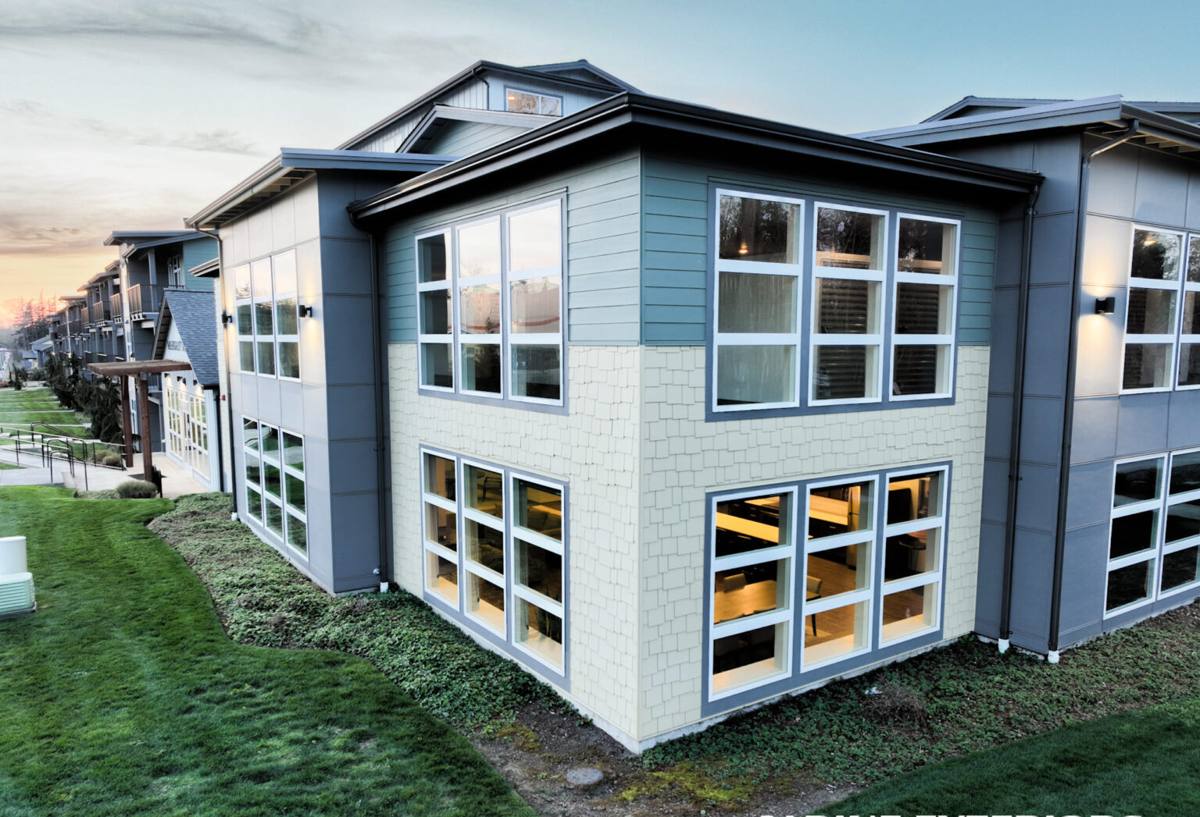
Signs a South Tampa Home Needs Siding Replacement, Not Just Repair
Not every siding problem calls for a full replacement, but in this climate, small issues tend to escalate faster than homeowners expect. Here's what typically separates a patch job from a full replacement:
- Soft, spongy, or crumbling siding when pressed — usually a sign moisture has already gotten behind the panels
- Persistent staining or dark streaking near seams, corners, or under windows
- Visible warping, buckling, or panels pulling away from the wall
- Paint that won't hold no matter how often it's redone — often a symptom of moisture cycling underneath, not a paint quality issue
- Rising energy bills with no other explanation, which can point to a compromised weather barrier
- Siding that's original to an older home and has never had a full moisture barrier or flashing upgrade
If you're seeing more than one of these at once, repair usually just delays a bigger and more expensive fix. Fiber cement siding that was installed correctly to begin with rarely reaches this point — most of the failures we see trace back to installation shortcuts, not the material itself.
What a Correct Siding Replacement Actually Involves
It Starts Underneath the Siding, Not With It
The visible siding is the last thing that goes on, and it's the part that matters least if everything underneath it is wrong. A correct replacement in a wind-driven-rain climate like this one requires a continuous weather-resistive barrier, properly lapped and sealed housewrap, and flashing at every window, door, and penetration that directs water back out instead of letting it pool behind the wall.
Fastening Matters More Here Than Almost Anywhere
Hurricane-force wind loads put real uplift and lateral pressure on siding. Fastener spacing, fastener type, and how close to the edge of each panel a nail or screw is placed all affect whether siding stays put in high wind or peels off in sheets. This is one of the most common places we see prior installations cut corners — it doesn't show up as a problem until the first serious windstorm.
Clearances and Joints
Fiber cement siding needs proper clearance from grade, roofing, and hardscape, along with correctly caulked or flashed joints at trim and corners. Skipping these details doesn't cause immediate failure — it causes a slow moisture problem that surfaces two or three years later, usually as the staining and softness described above.
Why We Install Only James Hardie Fiber Cement
We don't install LP SmartSide, vinyl, Cemplank, Allura, or primed wood siding, and that's a deliberate standard, not an oversight. Each of those products has real strengths, but they each carry a trade-off that matters more in this specific climate than it might elsewhere:
- Vinyl is affordable and low-maintenance, but it softens and can warp under sustained heat, and it has lower wind-resistance ratings than fiber cement in most product lines.
- LP SmartSide and other engineered wood products perform well in many climates, but wood-based substrates are more sensitive to sustained moisture exposure if any water gets behind them — a real risk with wind-driven rain.
- Primed wood or cedar requires the most ongoing maintenance of any option and is the most vulnerable to the moisture and pest pressure common in Florida's humidity.
James Hardie fiber cement is non-combustible, engineered in HZ (HardieZone) formulations specifically for high-humidity, high-UV climates like ours, and finished with the ColorPlus factory finish, which resists fading far better than field-applied paint. It carries a strong transferable warranty when installed by a qualified crew to Hardie's specifications — and installation quality is the operative phrase, since even the best material underperforms if it's hung wrong.
Comparing the Options Honestly
| Factor | James Hardie Fiber Cement | Vinyl | Engineered Wood (LP SmartSide) |
|---|---|---|---|
| Wind/impact resistance | High, tested to hurricane-zone standards | Moderate, varies by gauge | Moderate |
| Moisture behavior if compromised | Resists rot; does not support fungal growth | Doesn't rot but can trap moisture behind it | Wood-based; more sensitive to sustained moisture |
| UV/fade resistance | Strong, factory ColorPlus finish | Fades and chalks over time in intense sun | Depends on paint/finish maintenance |
| Fire rating | Non-combustible | Combustible | Combustible |
| Typical maintenance | Low | Low | Moderate to high |
| Warranty structure | Strong, transferable when installed to spec | Varies widely by manufacturer | Varies; installation-sensitive |
This isn't a claim that other products are bad — it's why we, specifically, standardized on one material and stopped installing the rest. In this climate, the trade-offs stack against them more than they do inland.
Our Process, From Estimate to Finished Siding
- On-site inspection: We look at the existing siding, sheathing condition, flashing, and any moisture damage before quoting anything.
- Scope and material plan: We spec the correct Hardie product line, profile, and color for your home and confirm it against local wind and moisture demands.
- Tear-off and substrate check: Old siding comes off, and we inspect the sheathing underneath for rot or damage before closing anything back up.
- Weather barrier and flashing: New housewrap, properly lapped, with flashing at every window, door, and penetration.
- Installation to manufacturer spec: Correct fastener type, spacing, and clearances — the details that determine how the siding performs in the next storm, not just how it looks on install day.
- Final walkthrough: We go over the finished work with you before calling the job done.
Why a Crew That Already Works South Tampa Matters
South Tampa has its own mix of older bungalow-era homes and newer construction, often close enough to the water that wind exposure and moisture load are higher than a few miles inland. A crew that regularly works this area already understands the wind zone requirements that apply under Hillsborough County's building code, knows what permitting looks like locally, and has a feel for how the bay's proximity affects material choices and detailing — none of which a crew unfamiliar with the area picks up on day one.
That local familiarity shows up in small but consequential decisions: how much fastener corrosion resistance to spec near the water, how aggressively to flash a west-facing wall that takes the worst of the afternoon storms, and which parts of the house need extra attention because of how the property sits relative to prevailing wind and rain patterns.
Cost Factors Worth Understanding Before You Get Quotes
Siding replacement costs vary based on several factors, and understanding them helps you evaluate quotes on substance rather than just the bottom-line number:
- Square footage and the complexity of the home's exterior (corners, gables, dormers all add labor)
- Condition of the sheathing underneath — hidden rot found during tear-off adds cost but should never be skipped
- Hardie product line and profile chosen (lap siding, shingle-style panels, board-and-batten each price differently)
- Trim and accessory work — corner boards, soffit, fascia often get addressed at the same time
- Height and access — two-story or complex rooflines take longer to work around safely
- Whether existing siding needs full removal versus a more limited tear-off
Be cautious of quotes that are dramatically lower than others for the same scope — it usually means something is being skipped in the weather barrier, flashing, or fastening that won't show up until years later.
After the Install: Keeping Your Siding Performing
James Hardie siding with a ColorPlus finish needs very little upkeep, but a yearly visual check after storm season is worth the time — looking for any caulking that's pulled away at trim joints, staining that suggests water intrusion, or impact damage from wind-blown debris. Catching a small issue early is a five-minute fix; catching it three years late is a much bigger job.
If your South Tampa home's siding is showing its age or storm damage, we're happy to take a look and give you a straightforward, no-pressure estimate — just fill out the form below.