 Tampa Window
 Siding Replacement in New Tampa
New Tampa's mix of established subdivisions and newer master-planned communities means a lot of homes are hitting the same wall at once: siding that's 15-25 years old, installed under a builder contract that prioritized cost over long-term performance. If your siding is chalking, buckling, showing soft spots at the bottom courses, or just looks tired no matter how much you pressure wash it, you're not imagining a problem — you're looking at a material reaching the end of what it can do in this climate.
We replace siding on New Tampa homes with James Hardie fiber cement, installed to manufacturer spec by a crew that works this part of Hillsborough County regularly. This page walks through what New Tampa's climate actually does to siding, what a correct replacement involves, and how our process runs from first look to final walkthrough.
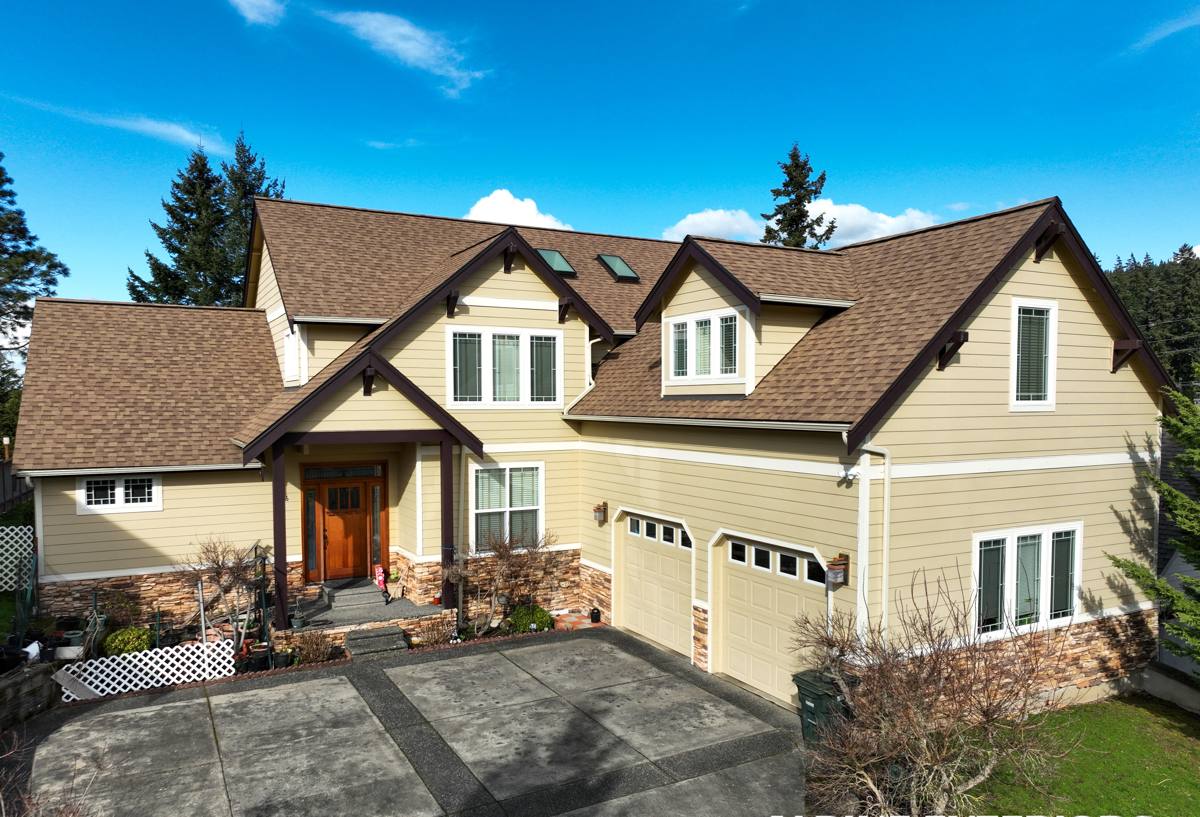
What Tampa's Climate Does to Siding
Homes in New Tampa deal with a specific combination of stressors that doesn't let up seasonally the way it does farther north:
- Hurricane-force wind events that test every fastener, seam, and piece of trim — siding that isn't installed to withstand real wind load can lift, crack, or pull loose during a storm.
- Intense, near-constant UV exposure that breaks down pigments, resins, and coatings faster than in most of the country, leading to fading, chalking, and surface degradation on lower-grade materials.
- Wind-driven rain that gets pushed sideways into seams, laps, and penetrations — a much harder test than rain falling straight down, and one that exposes weak flashing and poor water management fast.
- Salt-influenced humid air that accelerates corrosion on fasteners and hardware and keeps moisture levels elevated around the house even between rain events.
None of this is unique to New Tampa specifically, but it's the baseline every siding product installed here has to survive, year after year, without a break for winter. Materials that perform fine in a drier or milder climate often show their weaknesses here within a decade.
Why This Matters for Material Choice
The siding decision on a New Tampa home isn't just about looks. It's about what happens when the material spends decades absorbing UV, getting rained on sideways, and occasionally taking a direct hit from tropical-storm or hurricane winds. That's the lens we use when we tell homeowners why we standardized on one product line instead of offering a menu of options.
Why We Only Install James Hardie
We install James Hardie fiber cement siding exclusively. We don't install vinyl, LP SmartSide, Cemplank, Allura, or wood siding like primed spruce or cedar — not because those products have no legitimate use anywhere, but because we've made a professional judgment that Hardie is the product that holds up best to this specific climate and gives homeowners the fewest unpleasant surprises down the road.
| Factor | Why It Matters in New Tampa |
|---|---|
| Non-combustible material | Fiber cement doesn't contribute fuel to a fire the way wood-based siding products can, which matters for insurance and peace of mind. |
| Engineered for humid climates | Hardie's HZ5 product line is specifically formulated for high-humidity, high-moisture regions like the Gulf Coast, addressing swelling and moisture absorption issues that generic siding wasn't designed around. |
| Factory-applied ColorPlus finish | Baked-on finish resists UV fading far better than field-applied paint, which matters given how much direct sun this area gets year-round. |
| Dimensional stability | Fiber cement doesn't expand, contract, warp, or rot the way wood-based and some composite products can when repeatedly wetted and dried. |
| Transferable warranty | A strong manufacturer warranty that can transfer to a new owner is a real selling point if you list the home later. |
The trade-off is real, and we're upfront about it: Hardie siding costs more upfront than vinyl and is heavier and more labor-intensive to install than some alternatives, which is reflected in installed price. We think the difference shows up in how the siding looks and performs 10 and 20 years out, which is the timeframe that actually matters for a home you plan to keep.
What a Correct Siding Replacement Involves
Siding replacement is not just stripping old panels and nailing up new ones. Done right, it's a full envelope job:
1. Tear-Off and Substrate Inspection
Once the old siding is off, we inspect the sheathing underneath for water damage, soft spots, or rot — especially around window and door openings, corners, and lower wall sections where wind-driven rain tends to find its way in over the years. Any compromised sheathing gets addressed before anything new goes up. Skipping this step is one of the most common shortcuts in the industry, and it's the one that causes the most expensive problems later.
2. Water-Resistive Barrier
A properly installed weather-resistive barrier (house wrap) goes down before siding, with correct overlaps and sealed penetrations. This is the layer that actually stops bulk water from reaching your sheathing if wind-driven rain gets past the siding surface — and given how often this area sees driving rain during storm season, it's not a step to shortcut.
3. Flashing at Every Penetration
Windows, doors, hose bibs, light fixtures, vents — every penetration in the wall plane needs correct flashing detail so water is directed out and away rather than trapped behind the siding. This is where a lot of installation failures actually originate, not from the siding material itself.
4. Fastening to Manufacturer Spec
James Hardie publishes specific fastener types, spacing, and placement requirements, and those specs assume real wind load. We follow them, not a generic "close enough" approach, because in a wind event the fastening pattern is what keeps panels on the wall.
5. Trim, Caulking, and Finish Details
Corner boards, trim around openings, and caulking at joints all affect both appearance and water management. This is also where ColorPlus-finished trim and siding get handled correctly so the factory finish isn't compromised by field cutting or fastening errors.
Signs a New Tampa Home Needs Siding Replacement
- Visible cracking, buckling, or warping in panels
- Soft or spongy spots when you press on the siding, especially near the bottom
- Paint that won't hold or keeps chalking off soon after repainting
- Gaps opening up at seams, corners, or around trim
- Visible mold, mildew, or staining that keeps coming back after cleaning
- Rising energy bills that suggest the wall assembly isn't performing the way it should
- Damage from a recent storm — even if it looks cosmetic
If you're seeing more than one of these, it's worth getting an honest look before the next storm season rather than after.
Our Process, Start to Finish
- On-site evaluation. We look at your current siding, sheathing condition where accessible, and any problem areas you've noticed, and walk you through what we find.
- Written estimate. A clear scope and price — no vague allowances, no pressure to decide on the spot.
- Product and color selection. We help you choose from Hardie's HZ5 lines and ColorPlus palette based on your home's style and HOA requirements, if applicable.
- Tear-off and substrate check. Old siding comes off, sheathing gets inspected, and any needed repairs are flagged and addressed.
- Weather barrier and flashing installation. The water management layer goes in correctly before any new siding is hung.
- Siding installation to spec. Panels, trim, and fasteners installed per James Hardie's published requirements.
- Final walkthrough. We go over the finished job with you before calling it done.
Why Hiring a Crew That Already Works New Tampa Matters
New Tampa has enough of its own building patterns, HOA expectations, and common construction eras that local experience shortens the guesswork. A crew that's already replaced siding on homes in this area knows what tends to be underneath a given era of construction, what HOA architectural review boards in this part of Hillsborough County typically expect for color and material approval, and how permitting and inspection tend to run locally. That familiarity translates into fewer surprises mid-project and a smoother path from estimate to finished home.
It also means faster response if something comes up after installation — you're not waiting on a crew that has to drive across the region or juggle unfamiliar jurisdictions to get back to you.
What Correct Installation Costs You If Skipped
The single biggest driver of premature siding failure isn't the product — it's installation shortcuts: skipped substrate inspection, missing or poorly lapped weather barrier, wrong fastener spacing, or flashing that was rushed around openings. A homeowner paying for premium fiber cement siding installed with a rushed process ends up with premium-priced problems instead of a durable wall system. That's a big part of why our process spends as much attention on what's under the siding as on the siding itself.
If your New Tampa home's siding is showing its age or storm wear, we're happy to take a look and give you a straightforward, no-pressure estimate — just fill out the form below.