 Tampa Window
 Siding Repair Built Around How Town 'n' Country Homes Actually Age
Town 'n' Country sits on the west side of Tampa in Hillsborough County, close enough to Tampa Bay and the Gulf that homes here take on a specific combination of stress: salt-tinged air, wind-driven rain off summer storms, and long stretches of intense Florida UV between events. None of that is unusual for the Tampa Bay area, but it adds up differently depending on what's actually on your walls. A siding repair here isn't just patching a hole — it's addressing why that spot failed in the first place, so the same section of wall isn't back on our schedule in eighteen months.
We work in this neighborhood regularly, which matters more than it sounds. A crew that's repaired siding on a handful of Town 'n' Country streets already knows which materials show up most often, which sides of a house catch the worst weather, and what a rushed repair from a storm-chasing contractor tends to miss. That local pattern recognition is the difference between a repair that holds and one that's a temporary fix.
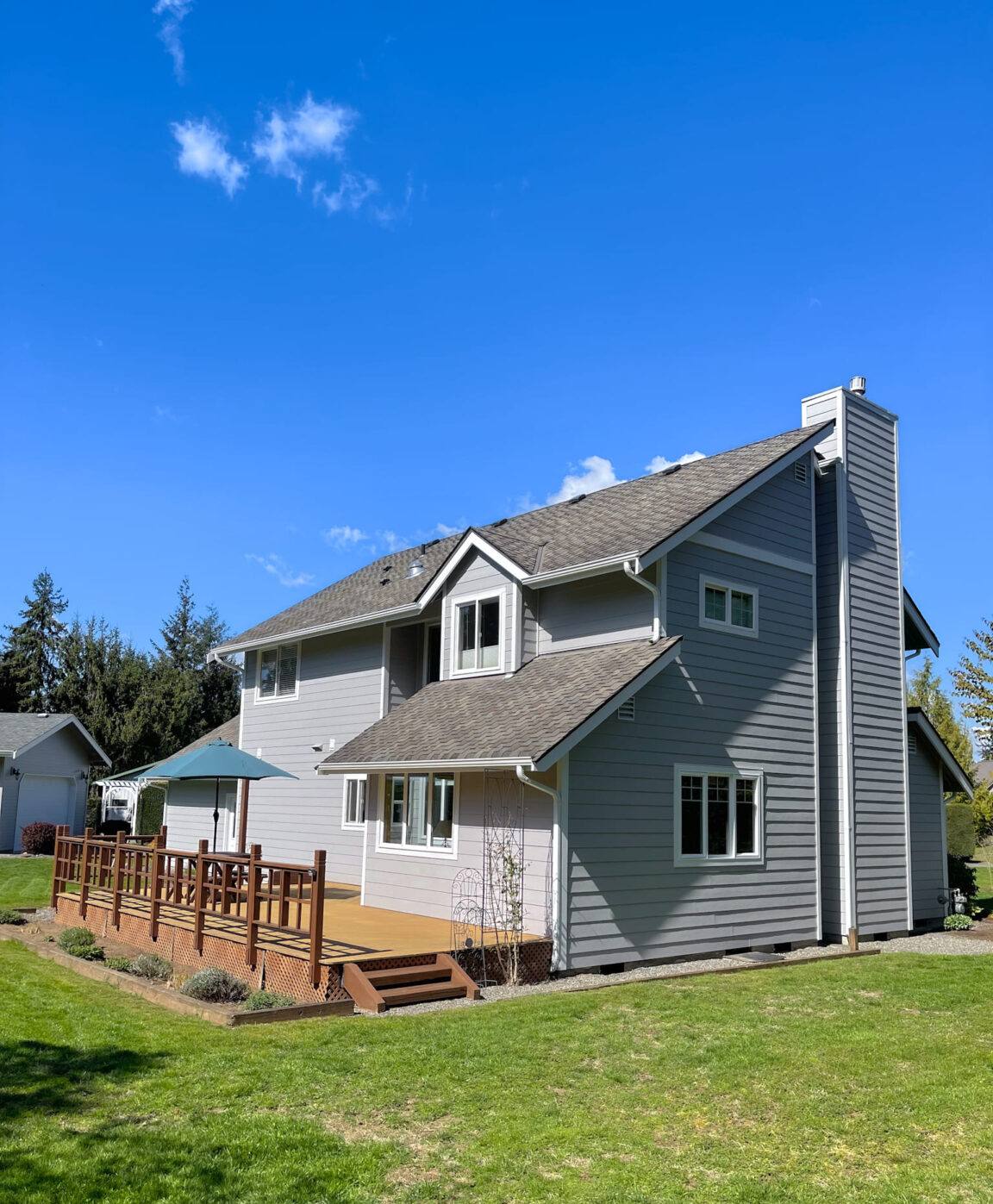
What Hillsborough County's Climate Does to Siding
Four things drive most of the siding repair calls we get in this part of Tampa:
- Hurricane-force winds and wind-driven rain — even storms that don't make landfall directly can push rain sideways under loose or aging siding, forcing water into seams and fastener points that were never designed to be submerged.
- Year-round UV exposure — Tampa doesn't get much of a winter break from the sun, and constant UV breaks down paint films, caulk, and some siding substrates faster than in cooler climates.
- Salt air — proximity to the Bay means airborne salt settles on exterior surfaces, accelerating corrosion on fasteners, trim flashing, and any exposed metal components behind or around the siding.
- Heat and humidity cycling — daily swings between hot, humid afternoons and cooler, damp evenings keep moisture moving in and out of wall assemblies, which is hard on materials that swell, shrink, or absorb water.
Individually, each of these is manageable. Together, over years, they're what turns a small gap at a butt joint into a soft spot, and a soft spot into a repair that involves more than just the visible board.
Signs Your Siding Needs Repair, Not Just a Look
Most homeowners notice siding problems late, because the early signs are subtle and easy to write off as cosmetic. Here's what we look for, and what you can check yourself before calling anyone:
- Soft, spongy, or flexing spots when you press on the siding, especially near the bottom of walls or under windows
- Visible cracking, splitting, or buckling in individual panels or boards
- Paint that's peeling, bubbling, or failing in one specific area rather than uniformly across the house
- Gaps opening up at seams, corners, or where siding meets trim, window frames, or the roofline
- Staining or streaking that suggests water is tracking down from a point higher up
- Visible rust bleeding from fastener heads or trim
- A musty smell or visible mold/mildew concentrated in one interior wall area
- Siding that feels or sounds hollow, or panels that have visibly separated from the wall
Any one of these on its own might be minor. Several together, or any sign near a window, door, or roofline, usually means water has already found a way in and the repair needs to address what's happening behind the surface, not just what's visible on it.
What a Correct Siding Repair Actually Involves
A lot of "siding repair" in this industry means cutting out a damaged section, nailing in a patch, and caulking the edges. That can look fine for a season or two. It also tends to fail again, faster, because it doesn't address the underlying cause — usually moisture that got behind the siding through a gap, a failed flashing detail, or a compromised weather barrier.
Diagnose before you cut
Before any material comes off the wall, the damaged area needs to be understood: is this isolated storm or impact damage, or is it the visible symptom of ongoing moisture intrusion from a flashing failure, a caulk joint that gave out years ago, or a chronic drainage issue at that part of the house? Cutting into a wall without answering that question first is how repairs get repeated.
Check what's behind the siding
Once a section is opened up, we look at the sheathing and weather-resistant barrier underneath. If there's rot, soft wood, or a compromised barrier, patching new siding over that problem just hides it again — the repair needs to include remediating what's underneath, not just what's visible from the street.
Match materials correctly
Repairs on older siding often run into a mismatch problem: the original product may be discontinued, faded from years of Florida sun, or a different type entirely than what's readily available today. A correct repair accounts for this — sometimes that means sourcing a close match, sometimes it means recommending a slightly larger repair area so the transition is less visible, and sometimes it means being honest that a patch will look patched.
Seal and flash it properly
Every repair needs to restore the drainage plane — the layered system that lets any water that gets behind the siding find its way back out instead of sitting against your wall. That means correct flashing at penetrations and transitions, proper overlap, and sealant used only where it belongs (sealant is not a substitute for correct flashing, even though it's often used that way in rushed repairs).
Common Siding Materials We Encounter on Repair Calls Here
| Material Found | Typical Issue in This Climate | Repair Consideration |
|---|---|---|
| Vinyl siding | Warping or cracking from heat and UV; panels blown off in high wind | Matching older, sun-faded panels is often difficult; repeated wind damage may point to a bigger replacement conversation |
| Wood or wood-composite siding | Rot at seams, bottom edges, and anywhere paint film has failed | Often needs sheathing inspection behind the damaged boards; painting/sealing schedule matters for how fast it recurs |
| Older fiber cement | Caulk failure at joints, paint wear, occasional impact cracking | Generally durable; repairs are usually localized if the underlying panel is sound |
| Aluminum siding | Denting, oxidation, fastener corrosion from salt air | Cosmetic dents are hard to fully correct; corrosion at fasteners often needs full fastener replacement, not just spot repair |
We don't push a full siding replacement when a legitimate repair will do the job. But when we open a wall and find the same failure pattern repeating across multiple areas — especially on older vinyl or wood siding that's been patched before — we'll tell you plainly if repair is starting to cost more, over time, than a proper replacement would.
Our Repair Process
- Inspection and diagnosis — we assess the damaged area and, where possible, the general condition of the siding around it, so you know if this is an isolated fix or a sign of something broader.
- Honest scope and estimate — you get a clear explanation of what's damaged, why, and what the repair will involve, with a written estimate before any work starts.
- Careful removal — damaged material is removed without unnecessary disruption to surrounding, sound siding.
- Underlying assessment — sheathing and the weather barrier are checked and addressed if compromised.
- Correct reinstallation — new or matched material is installed with proper flashing, fastening, and sealant placement.
- Cleanup and walkthrough — we walk the repair with you before we consider the job finished.
Repair vs. Replacement: How to Think About the Decision
| Factor | Leans Toward Repair | Leans Toward Replacement |
|---|---|---|
| Extent of damage | Isolated to one or two areas | Recurring damage across multiple walls or sides of the house |
| Age of existing siding | Relatively recent, otherwise in good condition | Original siding is decades old and nearing the end of its practical life |
| Material match | Close match available; patch won't stand out | Discontinued product, heavy fading, or no reasonable match exists |
| Underlying wall condition | Sheathing and barrier sound once opened up | Rot, mold, or barrier failure found behind more than one repair area |
| Storm exposure pattern | One-time impact or isolated wind event | Repeated wind or water intrusion suggesting a systemic installation issue |
There's no universal answer here — it depends on what we actually find once the damaged section is open, not just what's visible from the driveway.
Why a Crew That Already Works Town 'n' Country Matters
Siding repair isn't a one-size-fits-all trade. A crew that regularly works this part of Hillsborough County has already seen how the local mix of home ages, construction styles, and prior siding choices holds up against Tampa Bay's weather. That means faster, more accurate diagnosis, fewer surprises once a wall is opened, and a better sense of when a patch is the right call versus when it's just delaying a bigger repair.
It also means accountability. A local crew is reachable after the job is done if a question comes up, and has a reputation in the neighborhood worth protecting — which is a different incentive structure than a traveling storm crew that's gone once the invoice is paid.
Why We Install and Repair With James Hardie Fiber Cement
When repair work turns into a broader replacement conversation, we only install James Hardie fiber cement siding. We don't install vinyl, LP SmartSide, or other engineered wood or fiber cement alternatives, and we're upfront about why: in a climate like Tampa's — heat, humidity, salt air, and hurricane-season wind and rain — the materials that hold up best over the long run are non-combustible, dimensionally stable, and engineered specifically for this kind of exposure.
James Hardie's HZ5 product line is engineered for hot, humid, high-moisture climates like ours, and the ColorPlus factory-applied finish is baked on under controlled conditions rather than field-painted, which matters a great deal under constant Florida UV. Fiber cement doesn't absorb moisture the way wood-based products can, and it doesn't warp or soften from heat the way vinyl can in direct summer sun. That doesn't mean it's maintenance-free or immune to every kind of damage — it still needs correct installation, proper caulking at joints, and periodic inspection — but it's the product we're willing to stand behind with our own labor and a transferable warranty, in this specific climate.
If your current siding is a different material and it's a legitimate repair, we'll repair it. We're not going to tell you to replace sound siding just to sell Hardie. But if you're deciding what to put back up after storm damage, or planning ahead for a future replacement, we'll explain plainly why fiber cement is what we recommend for homes in this part of Florida.
Keeping Repaired Siding in Good Shape
- Rinse siding periodically to remove salt residue and airborne grime, especially on sides of the house that face prevailing wind
- Inspect caulk joints and repaint or reseal painted siding on the manufacturer's recommended schedule — UV breaks these down faster here than in milder climates
- Trim back vegetation that holds moisture against the wall or creates constant shade where mold can take hold
- After any major storm, do a visual walk-around looking for lifted panels, new gaps, or debris damage before small issues sit unnoticed
- Address small caulk or paint failures early — they're inexpensive to fix and expensive to ignore
If you're seeing any of the warning signs above, or you've got storm damage you want assessed honestly, we're happy to take a look. We offer free, no-pressure estimates for Town 'n' Country homeowners — just fill out the form below and we'll get back to you.