 Tampa Window
 Deck Replacement Built for New Tampa's Climate
New Tampa sits inland from the bay but still lives under the same subtropical weather that defines Hillsborough County: long stretches of intense UV exposure, sudden downpours, high humidity nearly year-round, and the real possibility of hurricane-force wind during storm season. A deck out here isn't just outdoor furniture space — it's a structure that has to survive repeated wet-dry cycling, sun that breaks down finishes and fastener coatings faster than most homeowners expect, and wind loads that a tired, undersized deck was never built to handle. When a deck starts failing in this environment, patching boards or re-staining rarely solves the underlying problem. What's usually needed is a full, code-correct replacement.
We approach deck replacement in New Tampa the way we'd want it done on our own house: assess the structure honestly, replace what's actually failing, and build it back stronger than it was originally — not just cosmetically refreshed.
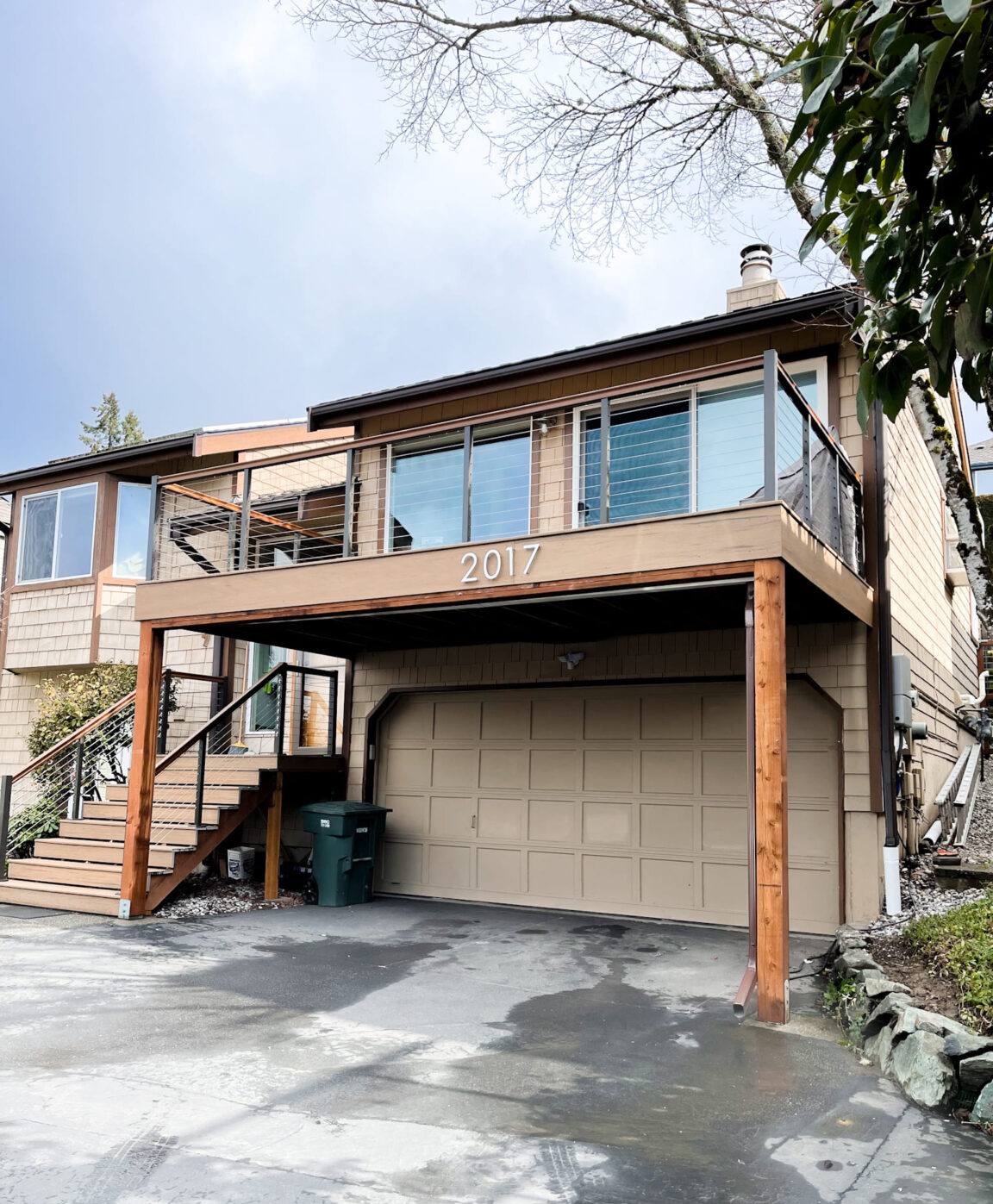
Why Decks Fail Faster Here Than in Drier Climates
Wood and even some composite systems age differently in Tampa Bay's climate than they would inland or up north. A few local factors drive most of the deck failures we see:
- UV breakdown: Florida sun degrades sealants, stains, and plastic components faster than shade-heavy climates, leaving wood surfaces dry, splintered, and unprotected years ahead of schedule.
- Wind-driven rain: Afternoon storms don't just fall straight down — wind pushes moisture into joints, under ledger boards, and behind poorly flashed connections where it sits and doesn't dry out.
- Humidity and ground moisture: Constant humidity keeps framing lumber and footings damp longer after every rain, accelerating rot in wood that isn't rated for ground contact or properly ventilated underneath.
- Storm and wind loading: Even away from the coast, tropical systems bring sustained high winds. A deck with undersized joists, weak ledger attachment, or corroded fasteners is a real structural liability in a storm, not just a cosmetic problem.
- Salt-laden air: New Tampa is inland, but Tampa Bay's salt air still reaches this far during onshore winds, which is enough over years to accelerate corrosion on lower-grade fasteners and hardware.
None of this means a deck can't last in this climate — it means it has to be built with the right materials and details from the start.
Signs a Deck Needs Replacing, Not Just Repairing
Homeowners often ask whether a few rotted boards mean the whole deck needs to come out. Sometimes yes, sometimes no — it depends on what's happening below the surface. Here's how we tell the difference:
Repair Might Be Enough If:
- Only a handful of surface boards show splitting, cupping, or splintering
- The framing underneath probes solid with no soft spots or visible rot
- Railings are secure and meet current safety spacing
- The ledger board attachment to the house is intact and properly flashed
Replacement Is the Honest Answer If:
- A screwdriver sinks easily into joists, beams, or posts (a clear sign of rot)
- The deck feels bouncy, springy, or noticeably shifts underfoot
- Footings are cracked, heaved, or were never poured to proper depth
- The ledger board was face-nailed to siding with no flashing — a common older-construction shortcut that lets water into the house structure itself
- Multiple boards across the deck show consistent wear, not isolated spots
We'll tell you honestly which category your deck falls into. If a repair genuinely solves the problem, that's what we'll recommend — a full replacement isn't the right answer for every situation.
What a Correct Deck Replacement Actually Involves
Structural Framing and Footings
The part of a deck nobody sees is the part that matters most. Footings need to be sized and set to the depth Hillsborough County code requires for the deck's height and span — not just poured to whatever depth is convenient. Joists and beams need to be sized correctly for the actual span and load, using lumber rated for exterior and, where in contact with soil or masonry, ground-contact-rated pressure-treated wood. Joist hangers, post bases, and structural connectors should be corrosion-resistant hardware rated for treated lumber, since standard-grade fasteners corrode fast against the chemicals in modern treated wood — faster still with salt-influenced humidity in the air.
The Ledger Connection
If the deck attaches to the house, that ledger board connection is one of the most safety-critical details on the entire structure — and one of the most common failure points on older Tampa-area decks. A correct ledger attachment includes proper flashing to keep water from migrating behind the siding and into the house framing, along with through-bolts or structural screws rated for the load, not just nails.
Decking Material Choices
Material choice matters more here than in milder climates, because the decking surface takes the brunt of UV and moisture cycling directly.
| Material | How It Handles New Tampa's Climate | Maintenance |
|---|---|---|
| Pressure-treated pine | Affordable, structurally solid when properly treated; surface still needs regular sealing to resist UV and moisture cycling | Re-seal or re-stain every 1-2 years |
| Composite decking | Resists rot and UV fading well; performance varies by brand and quality tier, so we're selective about which lines we install | Periodic cleaning, no staining needed |
| Tropical hardwoods | Naturally dense and rot-resistant, handles humidity well, but demands consistent oiling to prevent surface graying and checking | Oil treatment 1-2 times a year |
| PVC decking | Fully synthetic, excellent moisture and UV resistance, higher upfront cost | Minimal — occasional cleaning |
We'll walk through the honest trade-offs of each based on your budget, how the deck will be used, and how much upkeep you actually want to commit to — not just push whichever product has the best markup.
Permits and Florida Building Code in Hillsborough County
Deck replacement in Hillsborough County generally requires a permit, and for good reason — this is a structure people stand on, and it's built to withstand real wind loads. Permitted work means the framing, footings, railing height and baluster spacing, and stair details all get checked against current Florida Building Code requirements rather than just matching whatever was there before. Skipping permits on a deck rebuild might save time upfront, but it can create real problems at resale, with insurance, or simply with the safety of the structure itself. We handle the permitting and inspection process as a standard part of the job.
Our Deck Replacement Process
1. On-Site Assessment
We inspect the existing deck from the ground up — probing framing for rot, checking the ledger connection, evaluating footings, and confirming whether replacement or repair is the honest recommendation.
2. Design and Material Selection
We talk through decking material, railing style, and layout, factoring in how the deck will be used and how much long-term maintenance you want to take on.
3. Permitting
We pull the required Hillsborough County permits and schedule inspections at the appropriate stages of construction.
4. Demolition
The old deck comes out, including footings that don't meet current depth or sizing requirements, so the new structure isn't compromised by reusing anything questionable.
5. Framing and Structural Build
New footings, framing, and the ledger connection go in to code, with corrosion-resistant hardware throughout.
6. Decking, Railing, and Finish Work
Surface material and railings are installed, stairs are finished, and every detail is checked before final walkthrough.
7. Final Inspection
The completed deck is inspected and signed off, and we walk you through any maintenance the material you chose will need going forward.
Protecting Your New Deck After Installation
A correctly built deck still needs some ongoing attention in this climate to get its full lifespan. A short seasonal checklist goes a long way:
- Sweep debris off the surface regularly — trapped leaves and pollen hold moisture against the decking
- Check and re-seal wood decking on the schedule appropriate to the product before the finish visibly fails
- Inspect railings and stair connections once or twice a year for looseness
- Keep gutters and downspouts near the deck clear so runoff isn't dumping directly onto framing or footings
- After major storms, do a quick visual check for loose boards, shifted footings, or damaged railings
Why Hiring a Crew That Already Works in New Tampa Matters
A deck built to a generic national standard isn't necessarily built for Hillsborough County's actual conditions. A crew that regularly works in New Tampa already knows which fastener grades hold up against local humidity, how deep footings need to go for the soil conditions in this area, and what the county's inspectors actually check for at each stage. That local familiarity shows up in fewer surprises during inspection, and in a deck that's genuinely built for the wind, rain, and sun it's going to face every year it stands.
If your deck is showing its age or you're not sure whether it needs repair or full replacement, we're happy to take a look and give you a straight answer. Reach out for a free, no-pressure estimate using the form below.