 Tampa Window
 Riverview has grown into one of Hillsborough County's busiest residential areas over the past two decades, with new subdivisions, HOA communities, and a mix of home ages sitting side by side. That growth means a wide range of siding conditions on the ground here — from builder-grade material installed in a hurry during a construction boom to older homes that have taken fifteen or twenty years of unshaded Florida sun without a proper refresh. Whatever the starting point, Riverview's climate does not go easy on exterior materials, and a siding installation done right the first time saves homeowners years of headaches.
What Riverview's Climate Actually Does to Siding
Riverview sits inland from Tampa Bay but is still very much in the storm path, and it shares the same year-round sun exposure and humidity load as the rest of the region. A handful of specific stresses show up again and again on siding jobs in this area:
- Hurricane-force wind — gusts during tropical systems and even strong summer thunderstorms can pull poorly fastened siding straight off the wall, especially on gable ends and upper stories where wind pressure is highest.
- Wind-driven rain — Florida storms rarely fall straight down. Rain gets driven sideways into laps, seams, and trim joints, which is where most water intrusion problems actually start.
- Intense, near-constant UV — Florida sun is stronger and more consistent than most of the country sees. Unprotected or poorly finished siding fades, chalks, and breaks down faster here than in almost any other climate.
- Salt-influenced air — Riverview is close enough to Tampa Bay that airborne salt still reaches roofs and siding, accelerating corrosion on fasteners, flashing, and trim hardware that isn't rated for it.
- Humidity and afternoon heat cycling — daily swings between rain-soaked mornings and scorching afternoons stress any material that isn't dimensionally stable, causing warping, cupping, or joint separation over time.
None of this means siding is a losing battle in Riverview. It means the material and the installation both have to be matched to the environment, not just to a builder's price sheet.
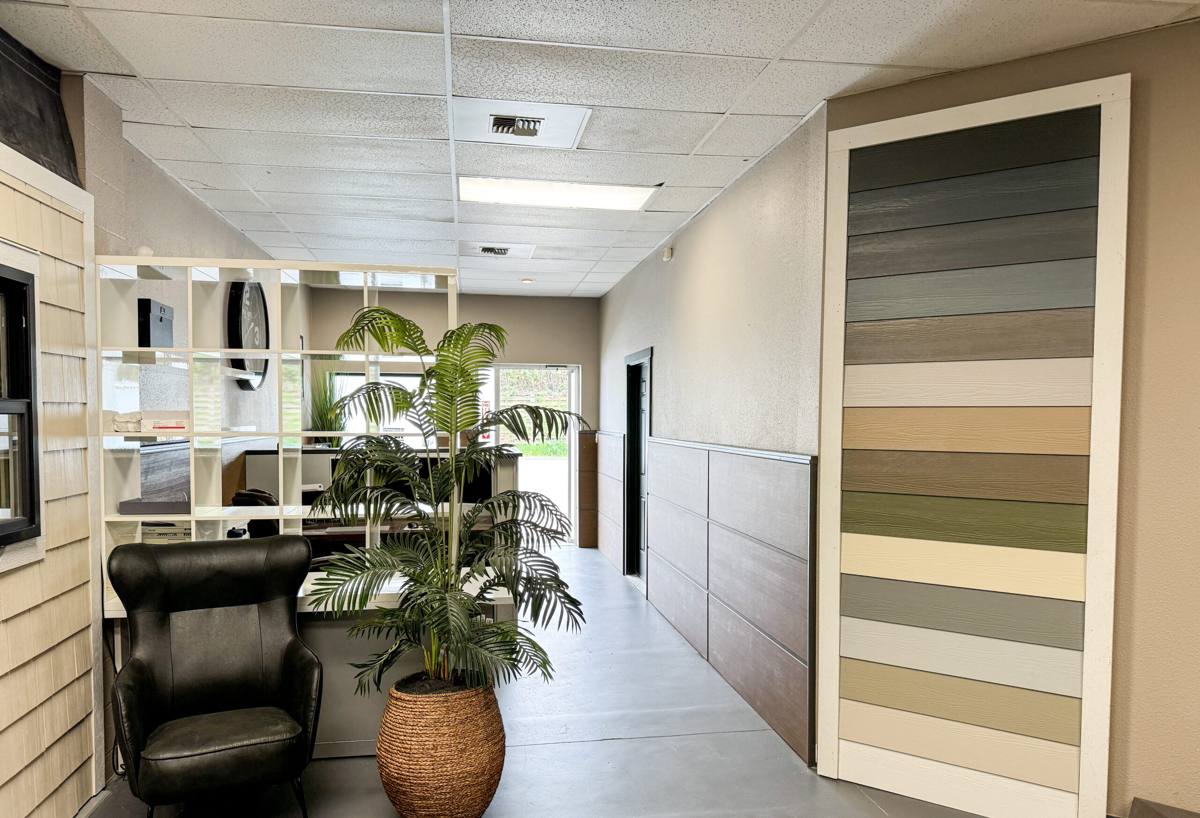
Why We Only Install James Hardie Fiber Cement
We made a decision as a company to install one siding system: James Hardie fiber cement. We don't install vinyl, LP SmartSide, Cemplank, Allura, or primed wood siding like spruce or cedar. That's not a marketing gimmick — it's a standard we hold because of what we've seen these products do, and not do, in Tampa Bay's climate specifically.
Vinyl softens and can warp under sustained heat, and it doesn't hold up structurally in hurricane-force wind the way a heavier, engineered fiber cement panel does. Wood-based products, including engineered wood siding, are more sensitive to moisture intrusion — a real risk given how much wind-driven rain this region sees, and once moisture gets behind a wood-based product, deterioration can move quickly. James Hardie's fiber cement is non-combustible, dimensionally stable in heat and humidity, and specifically engineered with HZ5 product lines built for high-moisture, high-UV climates like ours. The factory-applied ColorPlus finish is baked on under controlled conditions, which is a big part of why it resists the fading and chalking that field-applied paint struggles with under Florida sun. It also carries a strong, transferable manufacturer warranty when installed to spec — something we can stand behind because we control the installation quality ourselves.
What a Correct Siding Installation Actually Involves
Siding failures in this climate are rarely about the panel itself — they're almost always about what happens underneath and around it. A correct installation is a system, not just a set of boards nailed to the wall.
The Weather Barrier Comes First
Before any siding goes up, the wall needs a continuous, properly lapped weather-resistant barrier. Every seam, penetration, and window or door opening needs to be flashed so that any water that does get past the siding is directed back out, not trapped against the sheathing. This step is invisible once the job is done, which is exactly why it's the step that gets rushed on lower-quality installs.
Fastening Matched to Wind Exposure
James Hardie specifies exact fastener types, spacing, and placement, and those specs change based on wind zone and exposure category. A Riverview home near an open field or a two-story gable end needs tighter fastener spacing than a sheltered single-story wall. Using the wrong fastener pattern is one of the most common ways siding fails in a storm — not because the panel was bad, but because it wasn't held on correctly for the wind load it was going to see.
Clearances and Gaps
Fiber cement siding needs proper clearance from the roofline, decks, patios, and grade — generally a minimum of a few inches depending on the detail — plus small gaps at butt joints and trim to allow for expansion. Installers who tack panels down tight against each other or too close to the ground are setting up long-term moisture problems even with the best material on the market.
Caulking and Joint Treatment
Joints, trim intersections, and penetrations need the right sealant applied correctly, not just a bead run along the surface. Done wrong, caulk becomes a place where water pools and gets trapped rather than sheds.
Our Process for a Riverview Siding Project
The overall process is straightforward, but the details matter and we don't skip steps to move faster.
- On-site assessment — we look at the existing siding condition, the wall assembly underneath if it's a re-side, wind exposure by elevation, and any moisture damage that needs to be addressed before new siding goes up.
- Product and profile selection — lap width, texture, and color from the James Hardie line that fits the home and, where relevant, any HOA architectural guidelines common in Riverview's newer communities.
- Permitting — siding work typically requires a permit through Hillsborough County or the applicable local jurisdiction; we handle that process rather than leaving it to the homeowner.
- Tear-off and substrate check — old siding comes off, and we inspect the sheathing underneath for rot or water damage before anything new goes on. This is the point where hidden problems get caught, not covered up.
- Weather barrier and flashing installation — done to spec, at every penetration and opening, before a single piece of siding is hung.
- Siding installation — fastened to the wind-zone-appropriate pattern, with correct clearances and joint gaps throughout.
- Trim, caulking, and finish detail — the parts most likely to get rushed elsewhere are where we spend the extra time.
- Final walkthrough — we go over the finished job with the homeowner before calling it done.
What We Commonly See on Riverview Homes
Because so much of Riverview was built during a fast growth period, a lot of the siding problems we run into trace back to speed-driven original construction rather than age alone. Common issues include:
- Builder-grade siding installed with minimal or incorrect weather barrier detailing, leading to hidden moisture damage that isn't visible until the siding is removed.
- Fastener patterns that don't account for the wind exposure of a specific elevation, especially on two-story homes and gable ends.
- Caulk-dependent joints that were never properly flashed, which fail once the caulk ages and shrinks.
- Siding installed with insufficient clearance at grade or at attached patios and pool decks, trapping moisture at the bottom courses.
- Faded or chalking finishes on older wood or lower-grade products that were never designed for sustained Florida UV exposure.
Cost Factors for a Riverview Siding Project
Every home is different, and we don't quote sight-unseen prices, but these are the main factors that move a siding project's cost up or down:
| Factor | Why It Matters |
|---|---|
| Home size and wall area | More square footage means more material and labor hours, the largest single cost driver. |
| Number of stories and roof complexity | Multi-story homes and complex rooflines need more staging, scaffolding, and careful flashing work around valleys and dormers. |
| Substrate condition | Rotted sheathing found during tear-off adds repair work before new siding can go on — this is why an honest inspection up front matters. |
| Siding profile and finish selection | Different James Hardie lap widths, textures, and ColorPlus finishes carry different material costs. |
| Trim and detail work | Homes with more corners, window trim, and architectural detail take more labor to finish correctly. |
| Removal and disposal | Tearing off and hauling away old siding, especially heavier or damaged material, adds to the scope. |
Maintaining Your Siding After Installation
James Hardie fiber cement is low-maintenance compared to wood or vinyl, but "low-maintenance" doesn't mean "no maintenance," especially in this climate. A short annual routine goes a long way:
- Rinse the siding with a garden hose once or twice a year to clear salt residue, pollen, and grime buildup before it accumulates.
- Walk the exterior after any major storm and look for loose panels, cracked caulk joints, or damaged trim.
- Keep sprinklers and irrigation heads aimed away from the siding — constant direct spray shortens the life of any exterior finish.
- Trim back shrubs and landscaping so siding gets airflow and isn't holding moisture against the surface.
- Check caulk joints around windows, doors, and trim every year or two and have any cracked or shrunken sections redone.
Why a Local Crew Matters for This Job
Siding installation isn't a job you want a crew learning on. A crew that already works regularly in Riverview and the broader Tampa Bay area knows the wind exposure realities of this specific area, has already been through the Hillsborough County permitting process, and has seen firsthand what happens when a weather barrier or fastener schedule gets shortcut in a climate like this one. That local repetition is what separates a siding job that holds up through hurricane season after hurricane season from one that starts showing problems in year three.
If you're planning a siding project in Riverview — whether it's a full re-side, storm damage repair, or new construction — we'd be glad to take a look and put together a clear, no-pressure estimate using James Hardie fiber cement siding installed to the standard this climate actually requires.