 Tampa Window
 Plant City's Climate Is Harder on Siding Than It Looks
Plant City sits inland from Tampa Bay, but "inland" doesn't mean easy on a home's exterior. The same weather systems that batter the coastline still move through Hillsborough County with hurricane-force winds, and Plant City gets the wind-driven rain and prolonged humidity right along with it. Add in some of the most intense, sustained UV exposure of any region in the continental United States, and you have a climate that quietly wears down cheap or improperly installed siding years before it should fail.
The damage rarely shows up as a single dramatic event. It's slow: caulk lines drying and cracking under UV, seams absorbing moisture during summer storms, paint chalking and fading, and panels swelling or warping where water gets behind them. By the time a homeowner notices bubbling paint or soft spots near the bottom of a wall, the underlying substrate has often been compromised for a while. Siding here isn't just a cosmetic layer — it's the first line of defense against a genuinely aggressive climate, and it needs to be treated that way from the material choice through the last nail.
Why We Install James Hardie and Nothing Else
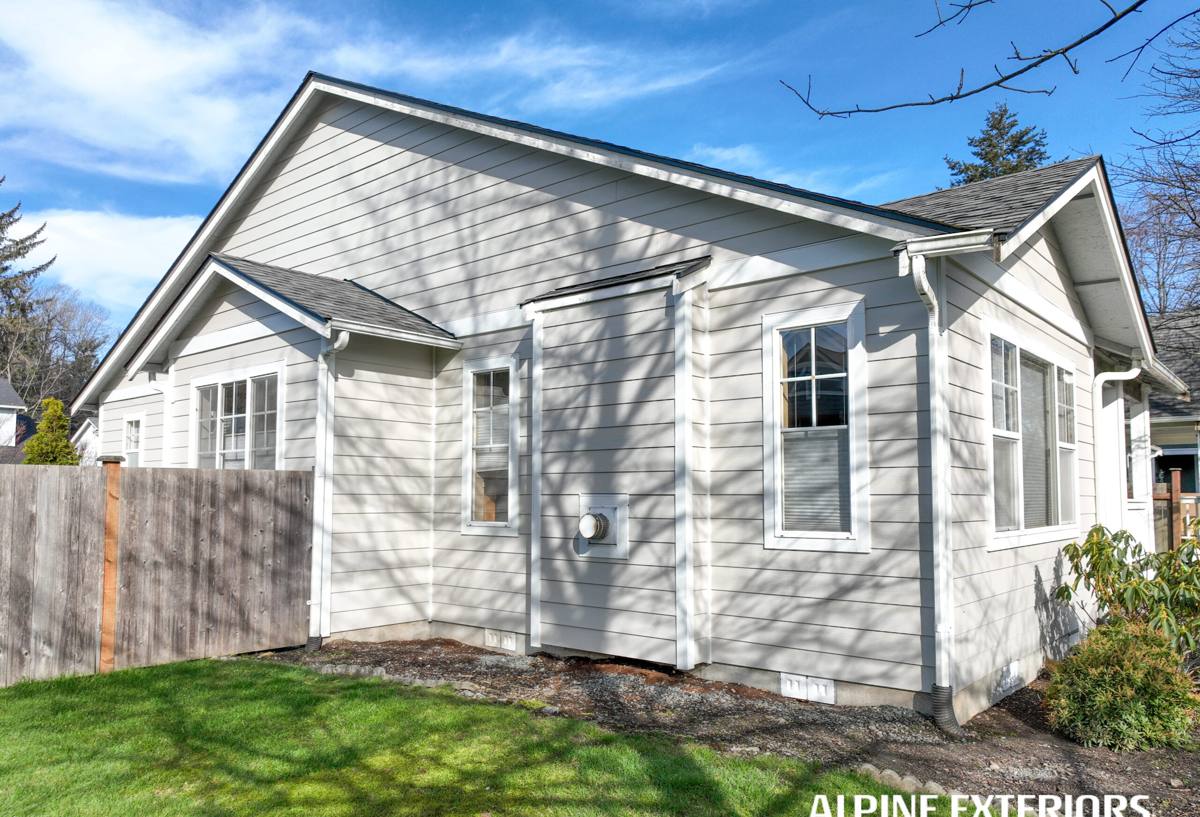
We standardized on James Hardie fiber cement siding because it's engineered for exactly this kind of climate. Hardie's HZ5 product line is formulated for humid, high-UV, storm-prone regions like ours — it resists moisture absorption better than wood-based products, doesn't support rot or termite activity the way engineered wood can, and carries a ColorPlus factory finish that's baked on rather than field-applied, so it holds color and resists fading far longer than site-painted alternatives.
We don't install LP SmartSide, vinyl, cedar, or primed spruce, and we're upfront about why. Wood-based composite siding depends heavily on caulking and paint maintenance to keep moisture out — skip a maintenance cycle in a climate that puts homes through year-round humidity and seasonal downpours, and the product's weak points get exposed fast. Vinyl handles moisture fine but softens and warps under sustained heat and can shatter or dent in wind-driven debris. Cedar looks great on day one but needs a maintenance commitment that most homeowners underestimate, especially in a climate this humid. None of these are "bad" products in every application — they're just not what we'd want to bet a Plant City home's exterior on for the next 30 years, so we don't install them.
| Material | Moisture Resistance | Wind/Impact Resistance | UV/Color Retention | Typical Maintenance |
|---|---|---|---|---|
| James Hardie fiber cement (HZ5) | High — cement-based, doesn't swell or rot | High when correctly fastened | Strong — factory ColorPlus finish | Occasional wash; recaulk as needed |
| Vinyl siding | Good, but can trap moisture behind panels | Moderate — can crack or blow off in high wind | Fades and chalks over time in strong UV | Low, but repainting isn't an option if faded |
| LP SmartSide / engineered wood | Moderate — vulnerable if caulk/paint fails | Good, but edges swell if moisture intrudes | Depends entirely on paint upkeep | Regular caulk and paint inspection required |
| Cedar / primed spruce | Low without diligent sealing | Moderate | Fades and grays without frequent refinishing | High — frequent staining/sealing |
What Correct Installation Actually Involves
James Hardie siding performs the way it's rated to perform only when it's installed to the manufacturer's specifications — and Hardie's own warranty language makes correct installation a condition of coverage, not a suggestion. This matters more here than in milder climates because installation shortcuts that might go unnoticed for years elsewhere get exposed quickly by Tampa-area storms and heat cycles.
Key installation details that matter in this climate
- Proper fastener spacing and placement — HardiePlank driven too close to the edge or with the wrong fastener type is a common cause of premature cracking under wind load.
- Correct clearance from grade, roofing, and decking — Hardie specifies minimum gaps to keep the bottom edge of the siding from sitting in standing water or splash-back after heavy rain.
- A functioning weather-resistive barrier and proper flashing at every window, door, and penetration — this is where the majority of real-world moisture intrusion happens, not through the siding panels themselves.
- Correctly caulked and painted-to-spec joints, especially at butt seams, since exposed raw edges absorb moisture faster.
- Ventilation behind the siding assembly so trapped humidity has somewhere to go instead of sitting against the sheathing.
Skip any one of these and you can end up with a home that looks like it has premium siding but behaves like it has none — moisture gets in, and Hardie's durability advantage never gets a chance to matter.
Our Process for a Plant City Siding Project
We run every job the same disciplined way, because consistency is what prevents the small mistakes that cause big problems later.
- On-site assessment — we inspect existing siding, sheathing, and trim for hidden moisture damage before quoting anything, since Plant City's humidity means problems can exist behind intact-looking siding.
- Tear-off and substrate check — old siding comes off, and we evaluate the sheathing underneath rather than covering up rot or soft spots.
- Weather barrier and flashing — a new, continuous weather-resistive barrier goes down with properly integrated flashing at every opening.
- Hardie installation to spec — correct fastener schedule, clearances, and seam treatment, following James Hardie's published installation guidelines for our climate zone.
- Finish and detail work — trim, caulking, and touch-up painting where field cuts expose raw edges.
- Final walkthrough — we go over the finished exterior with the homeowner and flag anything worth watching going forward.
Why a Crew That Already Works Plant City Matters
Siding work isn't uniform across Hillsborough County, and a crew that regularly works Plant City brings a few practical advantages over one that doesn't. They already know which detailing tends to fail first in this specific inland-but-still-hurricane-exposed environment, they're used to scheduling around the same seasonal storm patterns that affect every job here, and they're not learning local permitting and inspection expectations on your project. That familiarity translates into fewer surprises and faster turnaround, because the crew isn't solving climate-specific problems for the first time on your home.
It also matters for accountability. A contractor with an ongoing local presence has a reason to stand behind the work years down the line — reputation in a specific community is worth protecting. That's a different incentive structure than a crew passing through on a storm-chasing basis, which is common in Florida after major weather events.
Living With James Hardie Siding in This Climate
One advantage homeowners notice quickly is how little Hardie asks of them compared to wood-based siding. It doesn't need repainting on a fixed schedule the way raw wood or unfinished composite does, since the ColorPlus finish is designed to hold up under sustained UV for many years. That said, "low-maintenance" isn't "no-maintenance" — a periodic rinse to clear pollen, mildew, and salt-laden humidity buildup keeps the finish looking right, and it's worth a visual check after any significant storm for cracked caulk lines or displaced panels.
Because Plant City sees the same tropical humidity and storm exposure as the rest of the Tampa Bay area, keeping gutters clear and grading away from the foundation also helps protect the bottom courses of siding from prolonged moisture exposure — a small habit that extends the life of any exterior, Hardie included.
What This Typically Costs
Siding costs vary by home size, the amount of trim and architectural detail, tear-off complexity, and finish selection, so we don't quote firm numbers without seeing the house. In general terms, homeowners should expect fiber cement siding to sit above vinyl and below high-maintenance wood systems in upfront cost, with the difference typically paid back through lower long-term maintenance and repainting expense.
| Cost Factor | Why It Matters |
|---|---|
| Home size and wall complexity | More corners, gables, and dormers mean more cutting, flashing, and labor time |
| Tear-off vs. new construction | Removing and disposing of old siding, plus repairing any hidden substrate damage, adds cost |
| Trim and accessory detail | Fascia, soffit, and decorative trim in Hardie's matching products add to material cost |
| Product line and profile | Plank width, texture (smooth vs. cedar-textured), and color selection affect pricing |
| Access and site conditions | Landscaping, fencing, or multi-story sections can affect labor time |
What to Ask Before You Hire
- Are you a certified or factory-trained James Hardie installer, and can you explain what that training covered?
- What fastener schedule and clearance specs will you follow, and are they consistent with James Hardie's published guidelines?
- How do you handle flashing and weather barrier work around windows and doors — the most common source of real-world leaks?
- Do you inspect and repair sheathing damage before installing new siding, or does it get covered up?
- Are you licensed and insured to work in Hillsborough County, and can you provide proof?
- What does your warranty cover, separate from the manufacturer's material warranty?
If your Plant City home's siding is aging, showing wear, or you're planning ahead of the next storm season, we're glad to take a look and give you an honest read on what it needs. Request a free, no-pressure estimate using the form below.