 Tampa Window
 Why Plant City Decks Wear Out Faster Than the Manual Says
Every deck board, fastener, and post in Plant City is living in a harder environment than the same materials would face in most of the country. Hillsborough County sits in a stretch of Florida that gets long, humid summers, sudden afternoon thunderstorms, intense year-round UV exposure, and the occasional direct hit or near-miss from hurricane-force wind. None of that shows up on a lumber tag or a composite warranty card, but it shapes how fast a deck actually fails on the ground.
Wood decking absorbs moisture from rain and humidity, then dries out under strong sun, over and over, all year. That swell-shrink cycle loosens fasteners, opens up joints, and eventually splits boards along the grain. Composite and PVC decking don't rot, but the substructure underneath them almost always is wood, and that framing takes the same abuse even when the surface looks fine. Add in wind-driven rain that gets pushed sideways under railings and ledger boards during storms, and you get moisture intrusion in places a simple visual check won't catch.
A deck repair done for a house in a drier, cooler climate isn't automatically the right fix here. Fasteners, flashing details, and even the repair sequence need to account for how this region actually behaves.
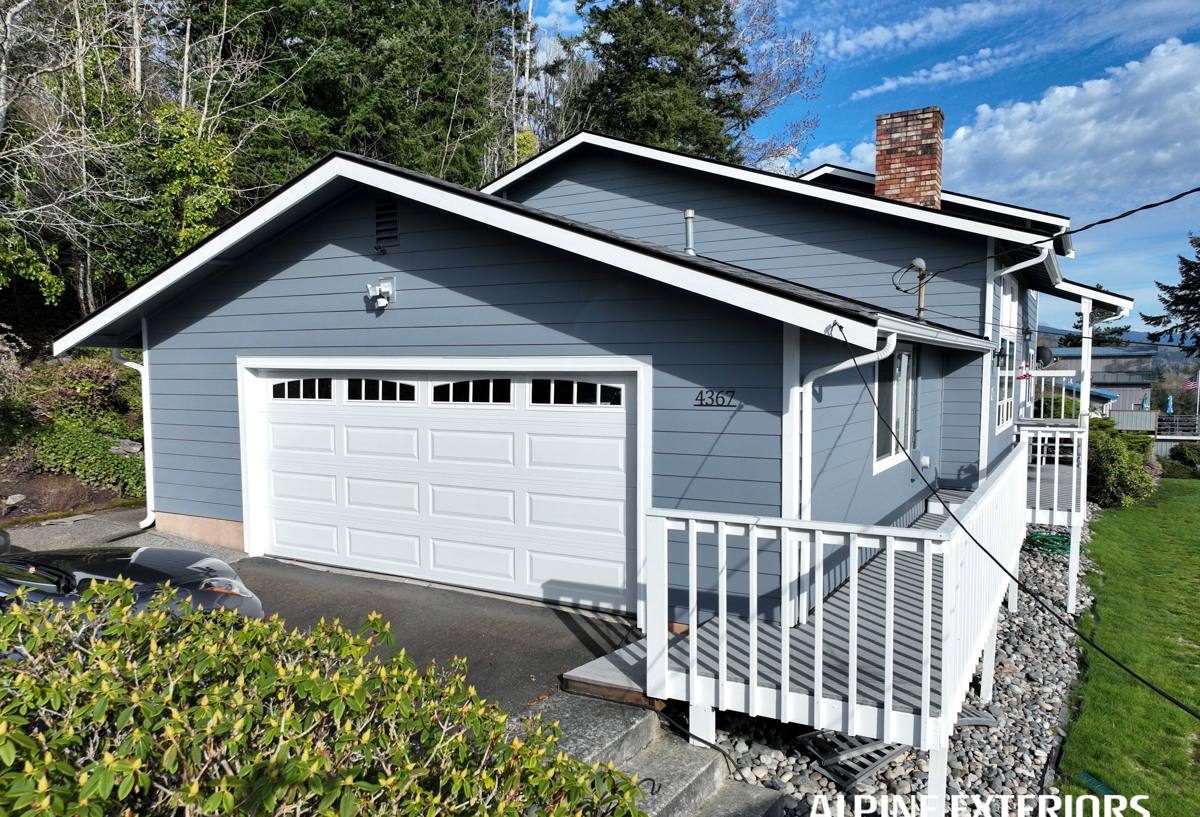
The Deck Problems We See Most Often in This Area
Ledger Board and Attachment Point Failures
The ledger board — where the deck attaches to the house — is one of the most common failure points we find. Wind-driven rain can work its way behind flashing that was installed without enough attention to detail, and the wood behind it rots quietly for years before anyone notices sagging or bounce in the deck.
Fastener and Hardware Corrosion
Humidity and, for homes closer to the water, salt-laden air accelerate corrosion in screws, bolts, and joist hangers. Once hardware starts rusting, it loses holding strength long before it looks obviously bad. We check hardware condition, not just wood condition, on every repair call.
Sun-Damaged and Splitting Boards
Year-round UV breaks down the lignin in wood fibers and the surface layer in composite decking alike. Wood grays, splinters, and cracks; lower-grade composite can fade unevenly or become brittle at the surface. Boards that face full afternoon sun typically show wear years ahead of shaded sections of the same deck.
Post and Footing Movement
Heavy, fast-dumping rain events can saturate soil around footings and posts, especially on decks that weren't set with adequate footing depth or drainage in mind. That shows up as a deck that feels slightly unstable, or stairs that have shifted out of level.
Loose Railings
Railings take direct wind load and get used as a handhold every time someone goes up or down. Loose railing posts are one of the most common safety complaints we hear, and one of the most overlooked repairs until someone leans on one that shouldn't move.
What an Honest Deck Repair Actually Involves
A correct repair starts with figuring out whether a problem is cosmetic or structural, because those require completely different responses. Replacing a gray, weathered board is cosmetic. A soft spot near a support post is structural, and it needs to be traced back to its source, not just patched over.
- Identify every affected board, joist, or post — not just the one that's visibly broken
- Check for hidden rot or hardware corrosion behind flashing, under railings, and at ground contact points
- Confirm the structural frame (joists, beams, footings) can still carry the load before replacing surface decking
- Match or upgrade fasteners and hardware to corrosion-resistant grades appropriate for this climate
- Address the moisture source, not just the symptom, so the same failure doesn't reappear in a year or two
- Reinforce or replace railings and stair connections to current structural expectations, not just to "match" old construction
Skipping the diagnostic step is how homeowners end up paying for the same repair twice. A new board bolted next to a joist that's still wet inside will look fine for a season and then fail again.
Repair vs. Replace: How We Help You Decide
Not every deck problem needs a full rebuild, and not every deck is worth patching indefinitely. The right call usually comes down to how much of the structure is still sound versus how much has been compromised.
| Factor | Leans Toward Repair | Leans Toward Replacement |
|---|---|---|
| Structural frame condition | Joists and beams solid, isolated soft spots | Widespread rot or corrosion in framing |
| Age of the deck | Under 10-15 years, built to a reasonable spec | Original construction quality was already marginal |
| Extent of damage | Limited to a few boards, one railing section, or a ledger area | Damage spread across multiple structural components |
| Footings and posts | Stable, properly set, no visible movement | Shifting, undersized, or improperly footed |
| Code and safety standards | Original build already meets current expectations | Older railing height, spacing, or attachment doesn't meet today's standards |
We'll walk you through which category your deck falls into and explain the reasoning, not just hand you a number. If a repair is genuinely the right call, that's what we'll recommend — a full rebuild isn't automatically the "better" answer just because it's the bigger job.
Decking Material Considerations for This Climate
Whether your deck is wood, composite, or PVC changes how a repair should be approached and what to expect afterward.
| Material | How It Holds Up Here | Repair Considerations |
|---|---|---|
| Pressure-treated wood | Affordable, but needs regular sealing to resist the swell-shrink cycle from humidity and sun | Rot and splitting are common; individual board replacement is usually straightforward if the frame is sound |
| Composite decking | Resists rot in the board itself, but quality varies significantly between product lines | Surface damage often means replacing the affected board rather than repairing it; substructure still needs wood-rot checks |
| PVC/vinyl decking | Highly resistant to moisture, good UV stability in most product lines | Repairs are less frequent, but installation sensitivity means poor original installs cause recurring issues |
We don't push a single material as the universal answer. Each has real trade-offs in maintenance burden, upfront cost, and how it behaves over time in humid, sun-heavy conditions — we'll give you the honest version of those trade-offs for your specific deck rather than a sales pitch for whatever we happen to stock.
How Our Deck Repair Process Works
1. On-Site Inspection
We walk the entire deck, not just the spot you called about. That includes checking under the deck where possible, testing railings and stair connections by hand, and probing wood at common failure points — ledger boards, post bases, and joist ends.
2. Clear Explanation Before Any Work Starts
You'll get a plain explanation of what's actually wrong, what's driving it, and what the repair options are — including the honest "this is cosmetic and can wait" answer when that's the truth.
3. Repair Matched to the Cause
We fix the source of the problem first — flashing, drainage, hardware — then address the visible damage. Replacing a board without correcting what caused it to fail just resets the clock.
4. Corrosion-Resistant Hardware and Fasteners
Given the humidity and occasional salt exposure in this part of Florida, we use fasteners and connectors rated to resist corrosion rather than standard-grade hardware that will start failing again within a few seasons.
5. Final Walkthrough
Before we consider a job finished, we walk the deck with you, test railings and stairs again, and answer any questions about maintenance going forward.
Checklist: Signs Your Plant City Deck Needs a Repair Inspection
- Boards that feel spongy, soft, or spring back slowly when stepped on
- Visible rust streaks around screws, bolts, or joist hangers
- Railings that wiggle or shift when leaned on
- Gaps opening up between the deck and the house at the ledger board
- Stairs that feel uneven or have started to separate from stringers
- Standing water that lingers on the deck surface after rain instead of draining
- Visible daylight or gaps around post bases where they meet footings
- Cracking or splitting concentrated on the sections that get the most direct afternoon sun
Any one of these on its own might be minor. Several appearing together usually means it's time for a proper inspection rather than another season of "we'll get to it."
Why It Matters That We Already Work in Plant City
A crew that regularly works in Plant City and the surrounding Hillsborough County area already knows how local weather patterns actually play out on real decks — which orientations take the worst sun, which construction habits from years past tend to cause ledger problems down the line, and what hardware genuinely holds up versus what looks fine in the store. That familiarity means fewer surprises during the inspection and a repair plan built around how this climate actually behaves, not a generic checklist written for a different region.
It also means we can usually get to you without treating your job like an unfamiliar one-off. Local knowledge shows up in small decisions — where to check first, what questions to ask about the deck's history, what's worth flagging even if it wasn't the reason you called.
After the Repair: Keeping Your Deck in Good Shape
A good repair buys you time, but a little upkeep buys you a lot more of it in this climate.
- Reseal or re-stain wood decking on a regular schedule rather than waiting until it looks dry and gray
- Keep gutters and downspouts clear so runoff isn't dumping extra water onto or under the deck
- Sweep off standing debris after storms so moisture doesn't sit trapped against boards
- Do a quick hands-on check of railings and stair connections once or twice a year
- Watch for early rust on hardware and address it before it spreads
None of this requires a professional visit every time, but it does mean paying attention rather than waiting for something to fail outright.
If your deck has a soft spot, a loose railing, or you just want an honest read on where it stands, we're happy to take a look. Reach out for a free, no-pressure estimate using the form below.