 Tampa Window
 New Tampa's Climate Puts Real Stress on Siding
New Tampa has grown fast over the past two decades, and most of its homes are still relatively young by siding standards. That doesn't mean the exterior is in the clear. Hillsborough County sits squarely in a hurricane-prone zone, and even homes well inland from the bay take a beating from wind-driven rain, sustained summer humidity, and some of the most intense UV exposure in the continental United States. Add in the salt-influenced air that moves through the greater Tampa Bay region on prevailing winds, and you've got a combination that ages cheap or poorly installed siding fast.
None of these stressors act alone. UV breaks down pigments and surface coatings, humidity keeps moisture in contact with the wall assembly longer than in drier climates, and wind events test every fastener, joint, and seam at once. A siding system that isn't engineered for this combination, or that isn't installed correctly, tends to show it within a handful of years: fading, warping, soft spots, or fastener failure. A system that is engineered for it, and installed to spec, can look and perform well for decades.
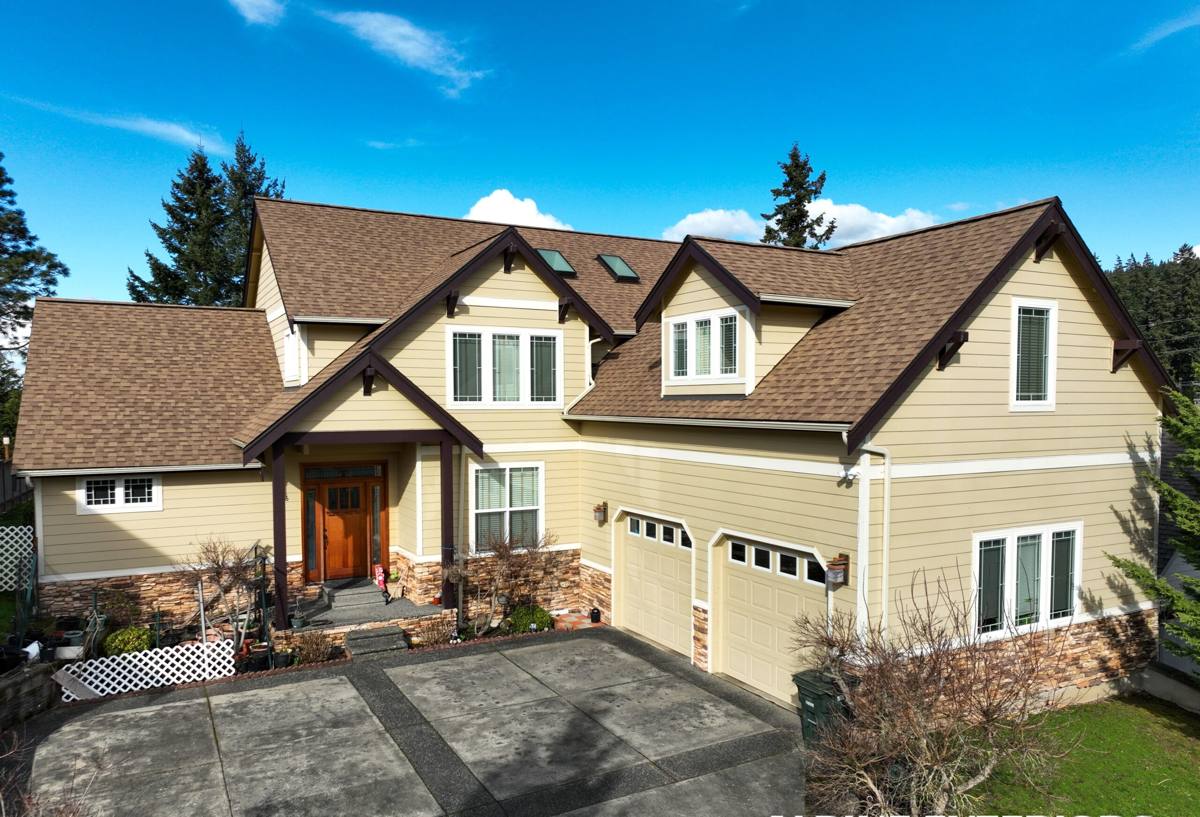
Why James Hardie Fiber Cement Is the Right Call for This Climate
We install James Hardie fiber cement siding exclusively. That's not a marketing angle — it's a standard we hold because of what fiber cement does under exactly the conditions New Tampa homes face year-round.
- Non-combustible material. Fiber cement doesn't feed a fire, which matters in a region where dry lightning season and wildfire risk both exist alongside hurricane season.
- Dimensionally stable in heat and humidity. Hardie board doesn't swell, warp, or rot the way wood-based and some engineered wood products can when they take on moisture cycle after cycle.
- Factory-baked ColorPlus finish. The color is baked on in a controlled environment, so it resists Florida's UV load far better than field-applied paint, which is the first thing to fail on lesser products in this climate.
- HZ5 climate-engineered formulation. Hardie makes region-specific products, and the HZ5 line is formulated for humid, high-moisture climates like ours — it's not the same board sold in a dry western state.
- Backed by a strong transferable warranty when installed to manufacturer specification, which protects the investment if the home changes hands.
We get asked why we don't install vinyl, LP SmartSide, Cemplank, Allura, or primed wood siding. The honest answer is that each of those comes with a real trade-off — moisture sensitivity, coating durability, installation forgiveness, or long-term warranty structure — that we're not willing to put our name behind on a home that has to survive Tampa Bay summers and hurricane seasons. James Hardie is the product we've found holds up to spec, consistently, in this exact climate.
What Correct Siding Installation Actually Involves
Fiber cement siding is only as good as the installation behind it. Most siding failures we get called out to inspect in the Tampa area aren't product failures — they're installation shortcuts that let water get behind the cladding or let panels move and crack under wind load. A correct install includes several details that are easy to skip and expensive to fix later.
Weather-Resistant Barrier and Drainage Plane
Every wall gets a continuous weather-resistant barrier before a single piece of siding goes up. In a climate with this much wind-driven rain, the drainage plane behind the siding matters as much as the siding itself — it's what carries incidental moisture back out instead of trapping it against the sheathing.
Flashing at Every Penetration
Windows, doors, hose bibs, vents, and any other wall penetration need proper flashing integrated with the water-resistant barrier. This is one of the most commonly rushed steps on production-built homes, and it's usually where the first signs of trouble show up.
Manufacturer-Spec Fastening
Hardie has specific fastener type, spacing, and embedment requirements, and those requirements change slightly depending on the product line and exposure. Under-fastened or improperly placed fasteners are a direct path to panel movement and cracking in high-wind events, which matters in a county that sees tropical storm and hurricane conditions on a fairly regular cycle.
Proper Clearances and Gaps
Siding needs clearance from the roofline, grade, decks, and patios, along with correctly sized gaps at butt joints and trim to allow for expansion and to keep water from wicking in. Tight-to-grade or tight-to-roof installations are a common shortcut that leads to moisture problems down the road.
Caulking and Sealant Done Right
Sealant belongs at specific joints, not everywhere, and it has to be a product rated for the movement and UV exposure it will see. Over-caulking is almost as much of a problem as under-caulking, since it can trap moisture instead of letting the assembly breathe and drain as designed.
Our Siding Installation Process
- On-site assessment. We look at the existing wall assembly, current siding condition, and any moisture or structural issues before quoting anything.
- Product and color selection. We walk through the relevant Hardie lines and ColorPlus options for the home's style and HOA requirements, if applicable.
- Tear-off and substrate check. Old siding comes off and we inspect sheathing for rot, water damage, or pest issues before covering anything back up.
- Weather barrier and flashing installation. This is the step that determines how the wall performs for the next 30-plus years, and we don't shortcut it.
- Siding installation to Hardie spec. Correct fastening, clearances, and joint treatment throughout.
- Trim, caulking, and final detailing. Clean lines at corners, windows, and transitions.
- Walkthrough. We go over the finished work with the homeowner before calling the job done.
Signs a New Tampa Home Needs New Siding
- Visible warping, buckling, or soft spots you can press in with a hand
- Paint that's peeling or bubbling repeatedly despite recent painting
- Cracked or missing panels after a storm, even minor ones
- Rising cooling bills that can't be explained by the HVAC system alone
- Visible mold, mildew, or staining that keeps returning after cleaning
- Gaps, rot, or soft framing visible around window and door trim
James Hardie Product Lines for New Tampa Homes
| Product Line | Look | Best Fit For |
|---|---|---|
| HardiePlank Lap Siding | Traditional horizontal lap | Most New Tampa single-family homes; the most common request |
| HardieShingle | Staggered or straight-edge shingle profile | Accent walls, gables, or a more custom architectural look |
| HardiePanel Vertical Siding | Board and batten, vertical panels | Modern facades, porch gables, accent sections |
| HardieTrim | Trim boards for corners, windows, fascia | Completing the system with matching, durable trim |
All of these come in the ColorPlus finish system, which gives homeowners a factory-cured, UV-resistant color option that holds up better in this climate than most field-applied paint jobs, along with a matching warranty on the finish itself.
What Affects the Cost of a Siding Project
| Factor | Why It Matters |
|---|---|
| Home size and wall complexity | More corners, gables, and dormers mean more cutting, flashing, and labor |
| Product line and profile | Lap, shingle, and board-and-batten involve different material and labor costs |
| Substrate condition | Rotted or damaged sheathing found during tear-off adds repair scope |
| Trim and detail work | Custom trim, window casing, and accent details add time |
| Tear-off and disposal | Removing and hauling away existing siding is part of most re-side jobs |
We don't quote firm numbers without seeing the home, since wall condition and scope vary too much house to house. What we can promise is a written estimate that spells out exactly what's included, with no vague allowances.
Why Hire a Crew That Already Works in New Tampa
Siding installed in Hillsborough County has to answer to Hillsborough County's building code, permitting process, and wind-load requirements, and a crew that already works this area knows those requirements cold instead of learning them on your project. Local experience also means we've seen how New Tampa's mix of newer construction, mature landscaping, and Florida's fast-moving storm seasons actually plays out on real walls, not just in a manufacturer's spec sheet. That translates into fewer surprises, correct permitting, and a finished product built for the conditions it actually has to survive.
Questions Worth Asking Any Siding Contractor Before You Hire
- Are you licensed and insured to work in Hillsborough County?
- Will you pull the required permit, or is that left to me?
- What weather-resistant barrier and flashing details will you use?
- Which James Hardie product line and fastening spec applies to my home?
- What does the manufacturer warranty cover, and does it transfer if I sell the house?
- Can I get the scope of work and materials in writing before the job starts?
If your New Tampa home's siding is showing its age, or you're just weighing your options before a storm season does the deciding for you, we're happy to take a look and walk you through what we'd recommend. Fill out the form below for a free, no-pressure estimate.