 Tampa Window
 Siding in Lutz Has to Survive a Different Kind of Weather
Lutz sits inland from Tampa Bay but still feels everything the Gulf Coast throws at Hillsborough County — long stretches of intense UV exposure, thick summer humidity, wind-driven rain that comes in sideways during afternoon storms, and the real possibility of hurricane-force wind during the season. Add in the salt air that carries inland on stronger storm systems, and you have a climate that is genuinely hard on the outside of a house. Siding here isn't just a cosmetic layer. It's the first line of defense between your home's structure and a climate that works against it twelve months a year.
Homes in Lutz run the gamut from older ranch-style construction to newer builds in planned communities, but the siding failures we see are consistent across all of them: sun-baked and chalking paint film, swollen or delaminating panels where moisture got behind the cladding, soft spots near ground contact and roof lines, and caulk joints that dried out and cracked years before the siding itself gave out. None of that is inevitable. It's usually the result of a product or installation that wasn't matched to what this climate actually demands.
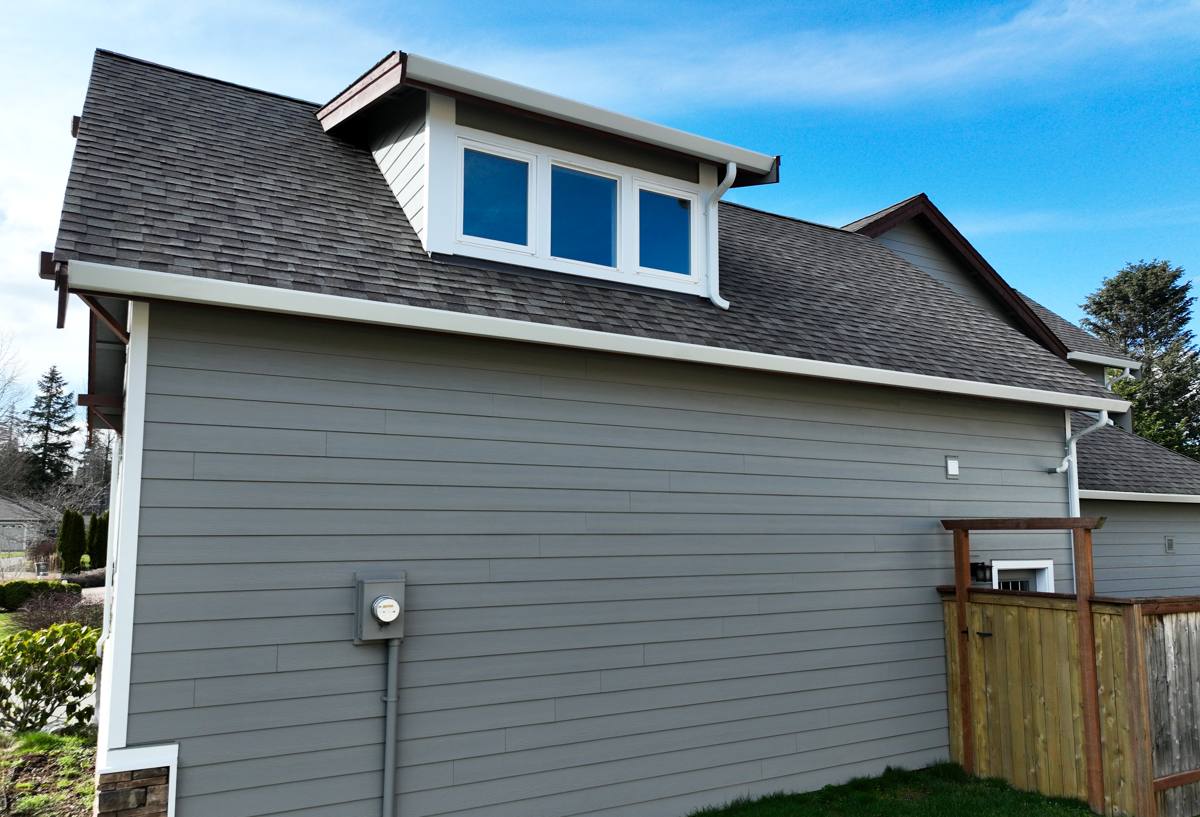
What Florida Humidity and Sun Actually Do to Siding
Moisture Intrusion
Wind-driven rain doesn't just hit a wall — it gets pushed into every gap, seam, and fastener hole that isn't properly sealed or flashed. Once water gets behind the siding, it has nowhere good to go in a hot, humid climate. That trapped moisture is what causes swelling, rot at panel edges, and the conditions that invite wood-destroying insects, which are a year-round concern in this part of Florida.
UV Degradation
Tampa-area sun exposure is intense and constant. Field-applied paint finishes on siding break down faster here than in milder climates — chalking, fading, and losing adhesion well before their expected lifespan. A siding product's factory finish matters more in Lutz than it does almost anywhere else in the country.
Wind Load
Hillsborough County building code accounts for hurricane wind pressures, and siding installation has to meet those fastening and clearance requirements — not as a suggestion, but as a structural necessity. A panel that isn't fastened to spec is a liability the first time a tropical system pushes through.
What a Correct Siding Installation Actually Involves
Siding installation is often treated as a cosmetic upgrade, but the work that matters most happens before a single piece of visible siding goes up. A correct installation includes:
- Substrate inspection — checking the sheathing underneath for existing rot, soft spots, or prior water damage before covering it back up
- A continuous weather-resistive barrier — installed correctly, lapped, and sealed so water sheds outward instead of tracking behind the wall assembly
- Proper flashing at every window, door, roofline, and penetration, so water is directed out and away rather than trapped
- Manufacturer-specified fastening — correct nail or screw type, spacing, and penetration depth, which is what actually gives siding its wind resistance
- Correct clearances from grade, roofing, and decking, so the bottom edge of the siding isn't sitting in a moisture trap
- Sealed joints and trim work using products rated for exterior, high-UV exposure — not a generic caulk that will crack within a couple of summers
Skip any one of these steps and the siding itself becomes almost irrelevant — even a premium product will fail early if it's installed over a compromised weather barrier or fastened incorrectly for local wind loads.
Why We Install Only James Hardie Fiber Cement
We made a deliberate decision to install one siding system: James Hardie fiber cement. We don't install vinyl, LP SmartSide, Cemplank, Allura, or primed wood siding, and that's worth explaining honestly rather than just stating as a policy.
Vinyl siding is affordable and low-maintenance in mild climates, but it softens and can distort under sustained high heat, and it doesn't hold up structurally to the same wind ratings as fiber cement without careful (and often more expensive) installation detailing. Engineered wood products like LP SmartSide perform well in many parts of the country, but wood-based substrates carry more inherent moisture sensitivity — a real concern in a climate where humidity and wind-driven rain are constant, not occasional. Other fiber cement brands, like Cemplank and Allura, are legitimate products, but we've standardized on one system so our crews install it the same correct way every time, and so our warranty and service commitments are backed by a single manufacturer relationship rather than spread thin across several.
James Hardie fiber cement is non-combustible, dimensionally stable in heat and humidity, and available in HZ5 formulations specifically engineered for hot, humid, high-moisture climates like Florida's. Its ColorPlus factory finish is baked on under controlled conditions, which is a meaningfully different (and more UV-durable) product than a field-painted panel baking in Tampa-area sun. It also carries a strong transferable warranty — but only when the installation itself meets the manufacturer's specifications, which is exactly why installation quality matters as much as the product choice.
Our Installation Process for Lutz Homes
- On-site assessment — we walk the exterior, check the existing substrate and siding condition, and identify problem areas like water staining, soft trim, or prior repairs that need addressing before new siding goes on
- Removal — old siding and trim come off, and we inspect the sheathing underneath for any hidden damage before it's covered again
- Substrate repair — any compromised sheathing or framing is repaired, not just covered up
- Weather barrier installation — a continuous, properly lapped and sealed water-resistive barrier goes down before any siding
- Flashing — windows, doors, and rooflines get flashed correctly so water is directed outward
- Hardie panel or plank installation — installed to manufacturer fastening specifications for our local wind exposure category
- Trim, caulking, and touch-up — using exterior-rated sealants suited for high-UV, high-humidity conditions
- Final walkthrough — we review the finished work with the homeowner before calling the job complete
None of these steps are optional, and none of them get shortcuts because a deadline is close. In a climate this demanding, the steps that aren't visible after the job is done are usually the ones that determine whether the siding lasts fifteen years or fifty.
Signs Your Lutz Home's Siding Needs a Closer Look
- Visible warping, buckling, or panels that no longer sit flush against the wall
- Chalky residue or noticeably faded color, especially on south- and west-facing walls
- Soft spots when you press near the bottom edge of siding, corners, or below windows
- Cracked, shrunken, or missing caulk at trim and window joints
- Peeling or bubbling paint that keeps returning even after repainting
- Musty odors or visible staining on interior walls that share an exterior wall
- Rising energy bills that can't be explained by anything else — a compromised siding and weather barrier system lets conditioned air escape
Any one of these on its own might just need a repair. Several at once, especially combined with the age of the siding, usually points to a system that's reached the end of its useful life.
What Affects the Cost of a Siding Installation
| Factor | Why It Matters |
|---|---|
| Home size and wall area | More square footage means more material and labor, straightforwardly |
| Number of stories | Second-story work requires more scaffolding, staging, and time |
| Existing siding removal | Tear-off and disposal add labor beyond a straightforward install |
| Substrate condition | Hidden rot or water damage found during removal requires repair before new siding goes up |
| Trim and architectural detail | Homes with more corners, dormers, or trim work take longer to flash and finish correctly |
| Panel vs. lap siding style | Different Hardie profiles have different material and labor requirements |
| Color and finish selection | ColorPlus factory-finished options vs. field painting affect both cost and long-term durability |
We won't quote a project without walking the property first — too many of these factors depend on what's actually happening at the house, not just its square footage.
Why It Matters That We Already Work in Lutz
A crew that regularly works in and around Lutz already understands the practical realities of building here: the Hillsborough County permitting process, the wind-load requirements that apply to siding installation in this part of the county, and the specific ways Florida humidity and storm exposure show up on a wall assembly over time. That's different from a crew learning the local code and climate behavior on your project. We've seen how siding installed to spec performs after a few Florida summers and storm seasons, and how the corners cut on a cheaper install show up two or three years later — and we build every project to avoid that outcome, not just to pass the initial walkthrough.
Being local also means we're accountable after the job is done. If a warranty question comes up or something needs a look years down the road, we're not a crew that passed through once and moved on.
Caring for Your Siding After Installation
James Hardie siding is low-maintenance compared to wood or vinyl, but "low-maintenance" doesn't mean "no maintenance," especially in this climate. A periodic rinse to remove salt air residue and pollen buildup, prompt attention to any caulk that starts to crack or shrink, and keeping sprinklers and irrigation from constantly wetting the bottom courses will all extend the life of the installation. If you ever notice a section that seems damaged after a storm, addressing it quickly prevents a small repair from becoming a bigger moisture problem behind the wall.
If your Lutz home's siding is showing its age, or you're planning ahead of storm season, we're happy to take a look and give you a straightforward, no-pressure estimate. Fill out the form below and we'll schedule a time to assess your home's exterior and walk you through what correct James Hardie installation would look like for your property.