 Tampa Window
 Building Decks That Actually Hold Up in Lutz
Lutz sits in northern Hillsborough County, where large residential lots, mature tree canopy, and a landscape dotted with lakes give homeowners more room to build outdoor living space than in denser parts of Tampa. That extra square footage is exactly why custom decks are so popular here — but it also means more exposed structure facing Florida's weather. A deck in Lutz spends its life absorbing intense year-round UV, sudden downpours, high humidity, and the occasional hurricane-force wind event. None of that is optional to design around. It's the baseline.
A deck that looks good on installation day but wasn't built for this climate will show it within a season or two: fasteners bleeding rust through the boards, joists cupping and checking, ledger connections working loose, or a railing that never quite felt solid. We build decks in Lutz the way this climate demands, not the way a generic build would go in a drier, milder region.
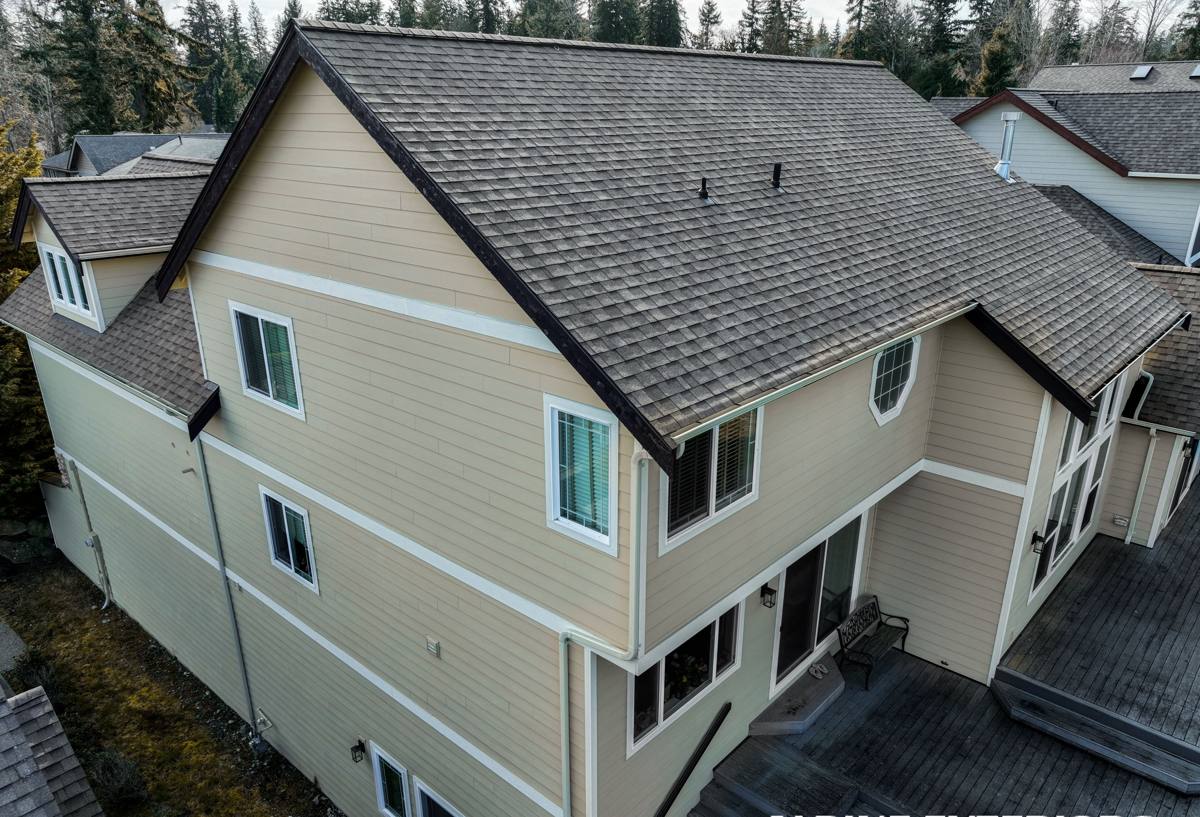
What Lutz's Climate Actually Does to a Deck
UV and Heat
Tampa Bay gets sun exposure most of the year, and a deck surface takes the brunt of it. Wood fibers break down under constant UV, graying and roughening the surface. Composite and PVC decking resist UV fading far better than untreated wood, but even those products vary in how well their color-fastness holds up over a decade of Florida sun — which is why the specific product line matters, not just the material category.
Wind-Driven Rain and Humidity
Afternoon storms and the occasional tropical system bring rain that doesn't just fall straight down — it drives sideways into railings, stair stringers, and any spot where two pieces of material meet. Combined with Florida's humidity, that moisture doesn't evaporate quickly. Any gap in flashing, any fastener that isn't corrosion-rated, or any board laid without proper spacing becomes a place where water sits and rot or corrosion starts.
Hurricane-Force Wind Loads
Structural connections — how the deck ties to the house, how posts anchor to footings, how railings resist lateral force — have to be engineered for wind uplift and lateral loads, not just vertical weight from foot traffic and furniture. This is where a lot of budget decks cut corners that don't show up as a problem until a significant wind event tests them.
Salt Air
Lutz is inland, but Tampa Bay's salt-laden air still travels with prevailing winds, and it accelerates corrosion on standard fasteners and hardware faster than it would in a landlocked climate far from the coast. Hardware selection matters more here than most homeowners realize.
What a Correctly Built Deck Involves
A deck is a structural project, not just a surface. Getting it right in this climate means attention at every layer:
- Ledger board attachment: Properly flashed and lag-bolted or through-bolted into structural framing — never nailed, never resting on siding without flashing behind it.
- Footings: Sized and depth-rated for Hillsborough County soil and frost-line requirements, with concrete piers set below grade for stability.
- Framing lumber: Pressure-treated for ground contact where applicable, spaced and sized to local building code span tables for the specific decking product used.
- Fasteners and hardware: Corrosion-resistant, rated for treated lumber's chemical makeup, and matched to the connectors used at every structural joint.
- Decking surface: Installed with correct board spacing for expansion, drainage, and airflow underneath.
- Railings and guards: Meeting code height and baluster-spacing requirements, anchored to resist lateral load, not just decorative attachment.
- Stairs: Properly sized stringers, consistent rise and run, and secure footing at the base.
Skipping or under-building any one of these doesn't necessarily show up on day one. It shows up in year three or four, or during the next significant storm — which is the worst time to find out.
Choosing the Right Decking Material for Lutz
There's no single "best" decking material — there's a best fit for your budget, how much upkeep you want to do, and how the deck will be used. Here's how the common options compare in this climate specifically:
| Material | UV/Heat Performance | Moisture Behavior | Maintenance | Typical Lifespan |
|---|---|---|---|---|
| Pressure-treated wood | Fades and grays without regular sealing | Prone to cupping/splitting if not sealed and drained properly | Annual cleaning and re-sealing recommended | 10-15 years with upkeep |
| Composite decking | Good fade resistance; surface can run warm underfoot in direct sun | Resists rot; needs proper airflow underneath to avoid moisture trapping | Periodic washing, no sealing needed | 20-25+ years |
| PVC/capped polymer decking | Strong fade and stain resistance | Fully moisture-resistant surface | Low; occasional cleaning | 25-30+ years |
| Tropical hardwoods | Naturally dense, moderate fade without oiling | Naturally decay-resistant but needs oiling to prevent graying/checking | Regular oiling for appearance | 20-25 years with upkeep |
We don't push one product line for every homeowner. We'll walk through how each option performs specifically on a Lutz property — sun exposure, tree cover, whether the deck is near a pool or lake, and how much maintenance you actually want to commit to — and give you a straight answer about trade-offs rather than a sales pitch.
Lutz-Specific Design Considerations
Because so many Lutz properties sit on larger lots, often with mature trees or proximity to one of the area's many lakes, deck projects here tend to have a few recurring design questions:
Tree Canopy and Shade
Heavy tree cover reduces UV exposure on the decking surface but increases organic debris (leaves, pollen, sap) that needs airflow underneath the deck to avoid trapping moisture against framing. We factor joist spacing and ventilation gaps into the plan when a deck will sit under significant canopy.
Grading and Drainage
Larger lots in this area often have more variable grading than a standard subdivision lot. Footing depth and post height need to account for how water moves across your specific yard during heavy rain, not a generic assumption.
Pool and Water Proximity
For decks built near pools or lakefront areas, added moisture exposure and, in some cases, splash chemistry from pool water push us toward hardware and fastener upgrades beyond baseline code minimums.
Privacy and Lot Size
Bigger lots often mean homeowners want a larger deck footprint, multi-level designs, or built-in features like benches and pergola structures. Those additions change the structural load calculations, so they need to be part of the design from the start, not bolted on later.
How Our Process Works
- On-site consultation: We walk your Lutz property, assess sun exposure, grading, tree cover, and how you plan to use the space.
- Design and material selection: We go over decking material options, layout, railing style, and any built-in features, with honest trade-offs for each.
- Permitting: We handle the Hillsborough County permit application and engineering documentation required for your specific design.
- Construction: Footings and framing first, inspected before decking goes down, then surface installation, railings, and stairs.
- Final walkthrough: We go over the finished deck with you, including care and maintenance specific to the material you chose.
We don't subcontract the structural work out to whoever's available that week. The crew that scopes your project is the crew that builds it, which keeps accountability and quality consistent from the first site visit to the final board.
Permits, Codes, and Wind Ratings in Hillsborough County
Hillsborough County requires permits for most deck construction, and inspections at the footing/framing stage and again at completion. Structural requirements — post spacing, footing depth, railing height, guard spacing, and connection hardware — are tied to Florida's building code wind provisions, which account for the hurricane-force wind speeds this region can see. A deck built without permits, or with hardware that doesn't meet these wind provisions, isn't just a compliance issue — it's a real safety and longevity risk, and it can complicate a home sale or insurance claim down the road. We pull permits on every project and build to the engineering requirements those permits carry, not around them.
Keeping a Lutz Deck Looking and Performing Well
Whatever material you choose, a little seasonal attention goes a long way in this climate:
- Sweep debris off the surface regularly, especially under tree canopy where leaves and pollen accumulate
- Check that gaps between boards stay clear so water drains instead of pooling
- Inspect railings and stair connections for looseness once or twice a year
- Look for rust bleed around fasteners, which signals hardware that's starting to corrode
- For wood or hardwood decking, plan on resealing or oiling on the schedule the manufacturer recommends for high-UV climates
- After a major storm, check footings and post bases for any shifting or standing water pooling nearby
None of this is difficult, but skipping it is how a well-built deck starts showing problems years earlier than it should.
What Drives the Cost of a Deck Project
| Factor | Why It Matters |
|---|---|
| Decking material | Pressure-treated wood costs less upfront; composite and PVC cost more initially but reduce long-term maintenance spending |
| Deck size and footprint | Larger square footage means more framing, footings, and decking material |
| Height and grading | Elevated decks or uneven lots require more substantial footings and support structure |
| Railings and features | Custom railing styles, built-in seating, or multi-level designs add labor and material |
| Stairs | Number of stairs and landings adds framing and code-required components |
| Permitting and engineering | Larger or more complex decks may require additional engineering documentation for permit approval |
We give straightforward estimates based on your actual design, not a generic per-square-foot number that ignores what your property and plans actually require.
Why It Matters to Hire a Crew That Already Works in Lutz
A crew that regularly builds in Lutz and the surrounding Tampa area already knows the local permitting process, the wind and moisture demands specific to this part of Hillsborough County, and how local soil and grading conditions typically behave. That familiarity shows up in fewer surprises during construction, a smoother permit and inspection process, and a deck designed from the outset for how this climate actually treats outdoor structures — not a one-size-fits-all build brought in from a crew unfamiliar with the region.
If you're planning a new deck or replacing one that's showing its age, we're happy to take a look at your property and talk through what makes sense for your space, your budget, and how you want to use it. Reach out for a free, no-pressure estimate using the form below.