 Tampa Window
 Why Seminole Heights Siding Decisions Are Different
Seminole Heights is one of Tampa's older established neighborhoods, and that history shows up directly in the siding conversation. A large share of the housing stock here is early-to-mid-20th-century bungalow and cottage construction, much of it originally clad in wood lap siding under a heavy canopy of mature oak trees. That combination — older wood-frame construction, shaded lots, and decades of Florida weather — means a lot of homes in this neighborhood are dealing with siding that's either been painted over rot for years, replaced piecemeal with mismatched materials, or covered at some point with a product that hasn't aged the way the original wood profile did. Getting the siding right here isn't just a curb-appeal upgrade; on a lot of these houses it's the first real chance in decades to fix moisture problems at the source.
Because the neighborhood's housing stock skews older and the lot sizes and tree cover create their own access and drainage quirks, a siding job in Seminole Heights isn't quite the same project as new siding on a 2005 build in a newer Hillsborough County subdivision. The wall assembly underneath is often different, the trim details are often more involved, and the moisture history of the wall is usually more of an unknown going in. That's the backdrop for everything below.
What Tampa's Climate Does to Siding Over Time
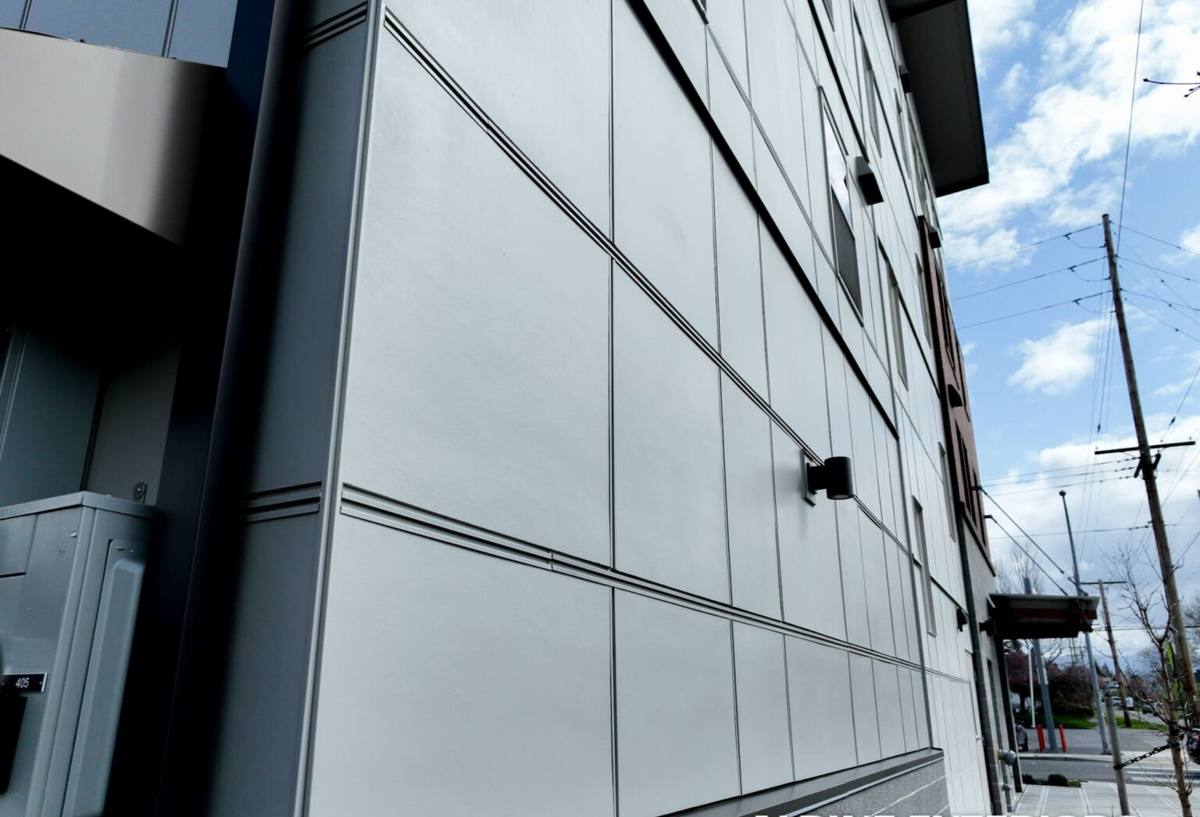
Hillsborough County sits squarely in the path of everything Florida's climate throws at an exterior wall. Hurricane-force wind events test how well siding is fastened and how well it resists being peeled off the wall. Between storms, it's the everyday conditions doing the real long-term damage: intense, near year-round UV breaks down pigments and lower-grade coatings; wind-driven rain forces water sideways into laps, seams, and trim joints instead of letting it run straight down; and salt air carried in off Tampa Bay accelerates corrosion on fasteners, flashing, and anything metal on the wall, even well inland from the immediate coastline.
None of those stresses work in isolation. A siding product that handles UV fine but swells when it takes on moisture will still fail early here, because the wind-driven rain guarantees it will take on moisture. A product that resists moisture but chalks or fades under UV will look tired within a few years regardless of how well it's sealing the wall. Tampa's climate doesn't give a siding material credit for being good at one thing — it tests all of them at once, continuously, for the life of the house.
On Seminole Heights' older lots specifically, heavy tree cover adds a variable that newer subdivisions with young landscaping don't deal with as much: shaded walls that stay damp longer after rain, leaf and pollen debris that collects in laps and trim, and less direct sun to help siding dry out between wet spells. That's a real factor in how fast a lower-quality material shows wear on these particular lots.
Why We Install Only James Hardie Fiber Cement
We standardized this company on James Hardie fiber cement siding and don't install LP SmartSide, vinyl, Cemplank, Allura, primed spruce, or cedar. That's a deliberate call, not a brand preference, and it's worth explaining honestly rather than just asserting it.
Wood products — primed spruce, cedar — can look excellent when new, but they're organic material in a climate that stays warm and humid most of the year. Even with good paint and maintenance, wood siding in this region is fighting rot, insect activity, and coating failure on a shorter clock than most homeowners want to be on. Vinyl siding is affordable and low-maintenance in a light-wind climate, but it's a thin plastic product that can distort under sustained heat, become brittle with age, and isn't rated for the wind loads Hillsborough County's hurricane exposure calls for on most homes. Engineered wood products like LP SmartSide use a wood-strand core with a resin coating — a real improvement over solid wood in some ways, but the core is still wood-based, and any breach in that coating (a cut edge, a fastener hole, an impact) opens a path for moisture to get into the core material, which is a harder failure mode to catch early than it sounds. Cemplank and Allura are also fiber cement, and fiber cement as a category is the right material family for this climate — but we standardized on James Hardie specifically for its HardieZone system engineered for high-humidity, high-UV regions like ours, its ColorPlus factory-applied finish, and the strength of its transferable warranty when the product is installed to spec.
James Hardie fiber cement is a mix of cement, sand, and cellulose fiber. It doesn't have an organic core to rot, it's non-combustible, it holds paint and factory finish far longer under intense UV than vinyl or wood coatings typically do, and it's engineered specifically for the wind and moisture profile of regions like Tampa Bay. It's heavier and more labor-intensive to install correctly than vinyl, and it costs more upfront than most alternatives — we're not going to pretend otherwise. What it buys is a wall system built for the actual climate it's going on, not a climate somewhere else.
What a Correct Hardie Installation Actually Involves
Fiber cement siding is only as good as the installation underneath it, and this is where a lot of the real quality difference on a siding job actually lives — most of it isn't visible once the job is done.
Before the first board goes up
- Full removal of failing existing siding rather than covering over it, so the wall sheathing can actually be inspected
- Checking sheathing and framing for rot or water damage, especially around older window and door openings, and repairing any deteriorated wood before new siding goes on
- A correctly lapped and sealed weather-resistant barrier (house wrap) installed per manufacturer specification, not just stapled up loosely
- Proper flashing at every window, door, and roof intersection, since these are the points where wind-driven rain most often finds a way in
During installation
- Correct minimum clearance from grade, roof lines, decks, and patios so siding isn't sitting in standing water or constant splash-back
- Fastener spacing, type, and placement that match James Hardie's published installation instructions for the specific product line and local wind exposure
- Proper gapping and caulking at butt joints and trim intersections, using sealants rated for exterior fiber cement, not general-purpose caulk
- Field-cut edges primed or sealed per manufacturer requirements, since an unsealed cut edge is a weak point for moisture intrusion
Skipping or rushing any one of these steps doesn't usually show up as a visible problem on day one. It shows up two, five, or ten years later as a soft spot behind a trim board, a failed caulk joint letting water track down the wall, or fastener corrosion from salt air working on the wrong grade of hardware. This is also exactly why James Hardie's warranty structure matters — improper installation is one of the most common reasons a manufacturer warranty claim gets denied, so installing to spec isn't just a quality preference, it's what keeps the warranty actually meaning something if you ever need it.
Working Around Seminole Heights' Older Homes
Bungalow and cottage-era homes in this neighborhood typically have architectural details that newer production homes don't: deeper eaves, exposed rafter tails or brackets, gable vents, porch columns, and window trim proportions that were common to the era. Matching or thoughtfully updating those details with the right Hardie trim and siding profile — lap width, exposure, and trim board dimensions — is part of getting the finished look right, not just weatherproofing the wall. HardiePlank lap siding is available in a range of exposures and can be paired with Hardie trim boards sized to work with these older architectural proportions, so the goal is a result that reads as belonging on the house rather than an obviously modern product bolted onto an older frame.
Mature tree canopy on many Seminole Heights lots also affects the practical side of the job — ladder and staging access, protecting landscaping during tear-off and disposal, and managing debris in yards that often have less clearance than a newer subdivision lot. None of that changes the installation standard, but it does change how a crew plans the job day to day.
Our Process, Start to Finish
- On-site assessment. We walk the exterior, check existing siding and trim condition, and look for signs of moisture damage at vulnerable points — window heads, roof-to-wall transitions, and grade clearance.
- Written estimate. You get a clear breakdown of scope: tear-off, any sheathing repair allowance, siding profile and Hardie product line, trim approach, and color.
- Tear-off and inspection. Old siding comes off so the wall can actually be checked, not covered up. Any rot or damaged sheathing gets addressed before new material goes on.
- Weather barrier and flashing. House wrap and flashing go in correctly at every penetration and intersection before the first piece of siding is hung.
- Hardie installation. Siding and trim installed to manufacturer specification for fastening, gapping, and sealing.
- Final walkthrough. We go over the finished job with you, including caulking, paint lines, and any punch-list items, before calling it complete.
Why the Local Crew Detail Matters
A crew that regularly works Seminole Heights has already seen the common conditions this neighborhood's housing stock presents — older wall assemblies, the trim vocabulary of bungalow-era construction, permitting and inspection expectations for the City of Tampa and Hillsborough County, and the practical realities of working narrower, tree-shaded lots. That familiarity shows up in fewer surprises mid-project and a finished result that fits the house instead of looking like a generic siding job dropped onto an older home. It also means a crew that's already accountable in the neighborhood — not a traveling install team that's gone once the invoice clears.
Cost Factors to Expect
| Factor | Why It Affects Price |
|---|---|
| Home age & wall condition | Older homes often need sheathing repair once old siding comes off, which isn't known until tear-off |
| Trim & architectural detail | Bungalow-era eave brackets, gable vents, and porch trim take more labor to fit correctly than a plain elevation |
| Siding profile | HardiePlank lap, HardieShingle, and panel systems carry different material and labor costs |
| Color approach | Factory-applied ColorPlus finish costs more upfront than field paint but eliminates a repaint cycle for years |
| Site access | Mature trees, narrow side yards, and limited staging space on older lots can add labor time |
| Tear-off scope | Full removal of old siding costs more than a hypothetical overlay, but it's the only way to inspect and fix the wall underneath |
Questions Worth Asking Before You Hire
- Will the crew remove existing siding down to the sheathing, or install over it?
- Who inspects for rot or moisture damage before new siding goes on, and how is that handled if it's found?
- What James Hardie product line and profile are being quoted, and does it suit an older home's trim details?
- Is the color ColorPlus factory finish or field-applied paint, and how does that affect the warranty?
- Does the written estimate specify fastening, flashing, and clearance practices, or just a total price?
- Is the installer a recognized James Hardie installer familiar with the manufacturer's current installation requirements?
If your Seminole Heights home needs a real look at its siding — whether that's aging original wood, a mismatched past repair, or you're just planning ahead — we're happy to walk the property with you and give a straightforward, no-pressure estimate. There's a form right below to get that started.