 Tampa Window
 Why Lutz Homes Need Siding Built for This Climate
Lutz sits inland from Tampa Bay in Hillsborough County, but "inland" doesn't mean sheltered. Homes here still take a real beating from Florida's climate: long stretches of intense UV that bake exposed surfaces for most of the year, sudden wind-driven rain from summer thunderstorms and tropical systems, and the kind of humidity that never fully lets up. Add in hurricane-force wind events that can reach well inland from the Gulf, and you have a set of conditions that punishes any siding product not engineered for it.
Traditional wood siding swells, cracks, and invites rot in this environment. Vinyl can warp or become brittle under sustained heat and UV exposure. Even siding products that perform fine in drier, milder climates often struggle once they're asked to handle Florida's combination of moisture, heat, and storm-driven impact year after year. That's the backdrop for why we install James Hardie fiber cement siding exclusively, and why the installation details matter as much as the product itself.
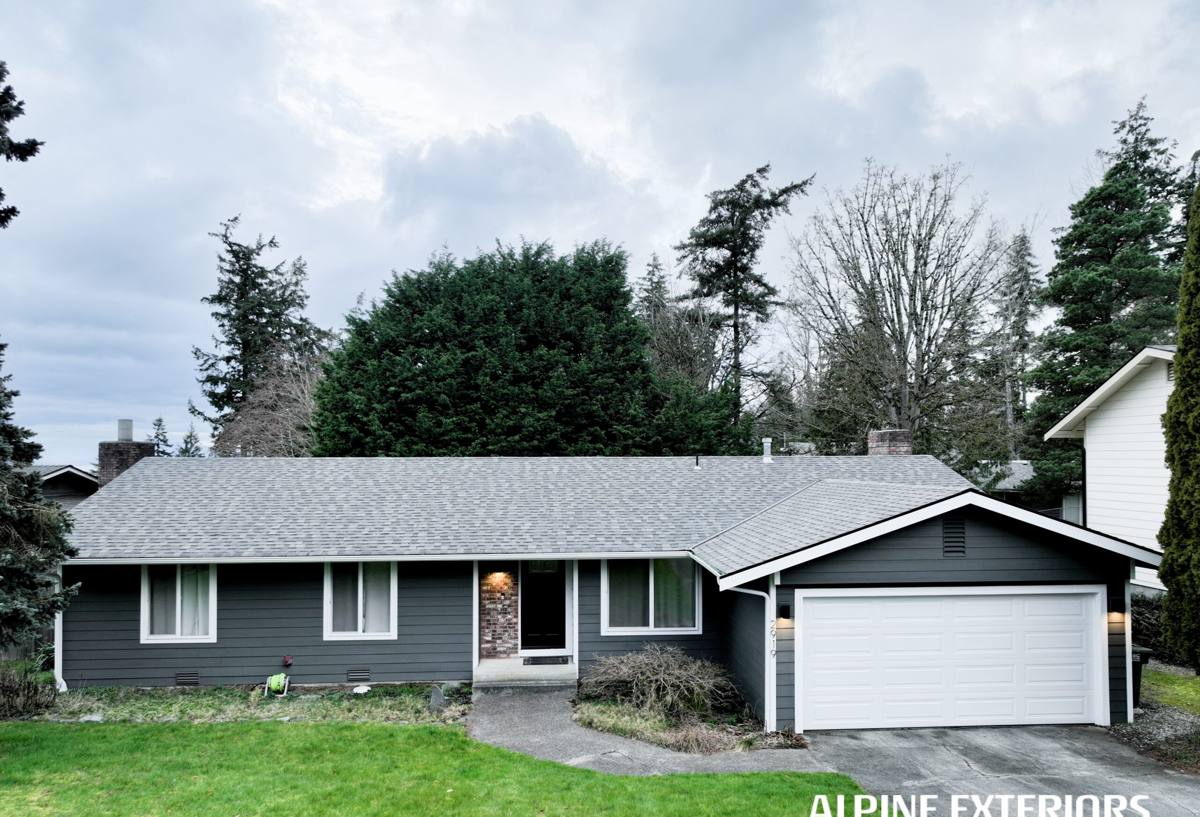
What James Hardie Siding Brings to a Lutz Home
James Hardie fiber cement siding is engineered from cement, sand, and cellulose fibers, which makes it non-combustible and dimensionally stable in ways wood and vinyl simply aren't. For a Lutz homeowner, that translates into a few concrete advantages:
- Moisture resistance: Fiber cement doesn't absorb water the way wood does, which matters when wind-driven rain is a regular feature of the local weather.
- UV stability: Hardie's ColorPlus factory finish is baked on and formulated to resist fading under sustained sun exposure, rather than relying on field-applied paint that breaks down faster.
- Impact and wind resistance: Properly installed Hardie panels and lap siding hold up to wind-driven debris and sustained gusts far better than lighter-weight materials.
- Pest resistance: Termites and wood-boring insects, common concerns in this part of Florida, have nothing to feed on in cement-based siding.
James Hardie also makes climate-specific product lines, including HZ5 formulations engineered for humid, high-moisture regions like ours. That's not a marketing detail — it affects how the product is manufactured and how it performs over decades of Florida summers.
Salt Air and the Hillsborough County Factor
While Lutz is farther from the immediate coastline than some Tampa Bay communities, Hillsborough County as a whole still deals with salt-laden air carried inland on Gulf breezes, especially during storm season. Salt air accelerates corrosion on fasteners, trim, and any metal components involved in a siding system. This is one of the reasons fastener selection and flashing details matter so much in our installations — we're not just protecting against rain, we're protecting against a slow, corrosive process that shortens the life of a poorly built system.
What a Correct Hardie Installation Actually Involves
The siding material is only part of the equation. Most siding failures we see on inspection aren't caused by the product — they're caused by installation shortcuts. A correct James Hardie installation in a climate like ours includes:
- Proper water-resistive barrier: A continuous, correctly lapped weather barrier behind the siding, with all penetrations sealed, so any moisture that gets past the cladding has somewhere to go besides your sheathing.
- Correct fastener spacing and type: James Hardie specifies fastener types, spacing, and embedment depth for a reason. Under-fastened or over-driven panels are one of the most common causes of premature failure.
- Proper clearances: Siding needs clearance from the roofline, grade, and any horizontal surfaces like decks or patios so water doesn't wick into the bottom edge of the panels.
- Correct joint and seam treatment: Butt joints, corners, and panel seams need to be flashed or caulked per manufacturer spec, not just butted together and painted over.
- Flashing at every penetration: Windows, doors, hose bibs, vents, and light fixtures all need proper flashing integration with the siding, not just a bead of sealant.
- Rinse the siding periodically to remove pollen, dust, and salt residue carried in on Gulf breezes.
- Inspect caulking around windows, doors, and trim once a year and touch up as needed.
- Check for any gaps at penetrations (vents, fixtures, hose bibs) after major storms.
- Keep sprinklers and irrigation from spraying directly on the siding long-term, which can accelerate wear at the bottom edge.
- Trim back vegetation that holds moisture against the siding surface.
Skipping any one of these steps doesn't necessarily show up right away. It shows up two, five, or ten years later as a moisture problem behind the siding — which is far more expensive to fix than it would have been to install correctly the first time.
Our Process for a Lutz Siding Project
1. On-Site Assessment
We start with a walk-around of the home to evaluate the current siding condition, look for existing moisture damage, check trim and flashing details, and understand the home's specific exposure — how much direct sun it gets, which sides take the brunt of wind-driven rain, and whether there are drainage issues at the foundation that could affect the new siding's bottom clearance.
2. Product and Color Selection
We walk homeowners through the relevant James Hardie product lines and ColorPlus finish options so the choice fits both the home's style and the practical demands of the site — for example, homes with more sun exposure benefit from certain finish considerations, while homes closer to mature tree cover have different maintenance needs.
3. Tear-Off and Substrate Check
Old siding comes off and we inspect the sheathing underneath for rot, water damage, or pest issues before anything new goes up. This step gets skipped by crews trying to move fast, and it's the single biggest predictor of whether a new siding job will actually last.
4. Water Barrier and Flashing Installation
We install a continuous weather-resistive barrier and integrate flashing at every window, door, and penetration before a single piece of siding goes on.
5. Siding Installation to Manufacturer Spec
Panels and lap siding go up following James Hardie's fastening, spacing, and clearance requirements, not shortcuts that speed up the job at the expense of long-term performance.
6. Final Inspection and Walkthrough
We walk the finished job with the homeowner, checking seams, trim, and caulking, and go over basic care so the siding performs the way it's designed to for decades.
Cost Factors for a Lutz Siding Project
Every home is different, but the factors that drive cost on a Hardie siding job are fairly consistent. Rather than quote a number that won't apply to your specific home, here's what actually moves the price:
| Factor | Why It Matters |
|---|---|
| Home size and stories | More square footage and multi-story access both increase labor and equipment needs. |
| Current siding removal | Tear-off of old wood, vinyl, or damaged siding adds labor and disposal cost. |
| Substrate repair | Rot or moisture damage found underneath existing siding needs to be fixed before new siding goes on. |
| Product line and profile | HardiePlank lap siding, HardiePanel, and HardieShingle carry different material and labor costs. |
| Trim and detail work | Homes with more corners, windows, and architectural detail take more time to flash and finish correctly. |
| Color and finish | Factory-applied ColorPlus finishes versus field-painted options affect both cost and long-term maintenance. |
We provide a detailed, itemized estimate after the on-site assessment so homeowners know exactly what they're paying for and why.
Why Hiring a Crew That Already Works Lutz Matters
Siding installation isn't a one-size-fits-all process, and a crew that primarily works in a different climate — or that installs whatever product a homeowner asks for — doesn't build the same institutional knowledge as a crew that works this specific area day in and day out. A local crew that already understands Hillsborough County's building requirements, the practical realities of Florida's humidity and storm patterns, and how homes in this area tend to be built knows where the failure points typically show up before they happen. That translates into fewer callbacks, fewer surprises, and a siding job that's built for the conditions it will actually face rather than generic conditions from a different market.
It also means faster response if something does come up after the job is done — warranty questions, minor touch-ups, or just a homeowner wanting a second opinion on a maintenance question years down the road.
Maintenance: What Lutz Homeowners Should Actually Expect
One advantage of fiber cement over wood or vinyl is how little ongoing maintenance it demands, but "low maintenance" doesn't mean "no maintenance." A simple annual routine keeps a Hardie installation performing the way it's designed to:
None of this is labor-intensive, but skipping it entirely shortens the life of even a well-installed system.
Get a Straight Answer for Your Home
Every Lutz property has its own exposure, sun angle, drainage pattern, and existing siding condition, and that's exactly what a free, no-pressure estimate is for. We'll walk your home, tell you honestly what we see, and explain what a correct James Hardie installation would involve for your specific situation — no obligation, no pressure to sign anything on the spot.