 Tampa Window
 Clearwater's Climate Is Hard on Siding — Here's Why
Homes in Clearwater sit close enough to the Gulf that salt air is a daily fact of life, not an occasional nuisance. Add in Tampa Bay's intense, nearly year-round UV exposure, the wind-driven rain that comes with our summer storms, and the real possibility of hurricane-force winds during the season, and you have one of the more demanding climates in the country for exterior siding. Products that hold up fine in a drier, milder region often don't hold up the same way here.
Salt-laden air accelerates corrosion of fasteners and trim hardware and can degrade some siding finishes faster than manufacturers' national warranty language anticipates. UV breaks down pigments and plastics, which is why so many vinyl and painted wood-look products in Hillsborough and Pinellas counties fade, chalk, or warp well before their expected lifespan. And wind-driven rain doesn't just hit siding head-on — it gets pushed sideways and upward under laps and around openings, which means the water management behind the siding matters as much as the siding itself.
This is the backdrop for every recommendation on this page. Siding for a Clearwater home isn't a cosmetic decision — it's a system that has to perform against sun, salt, wind, and water at the same time, for decades, without repainting or replacing panels every few years.
Why We Install James Hardie and Nothing Else
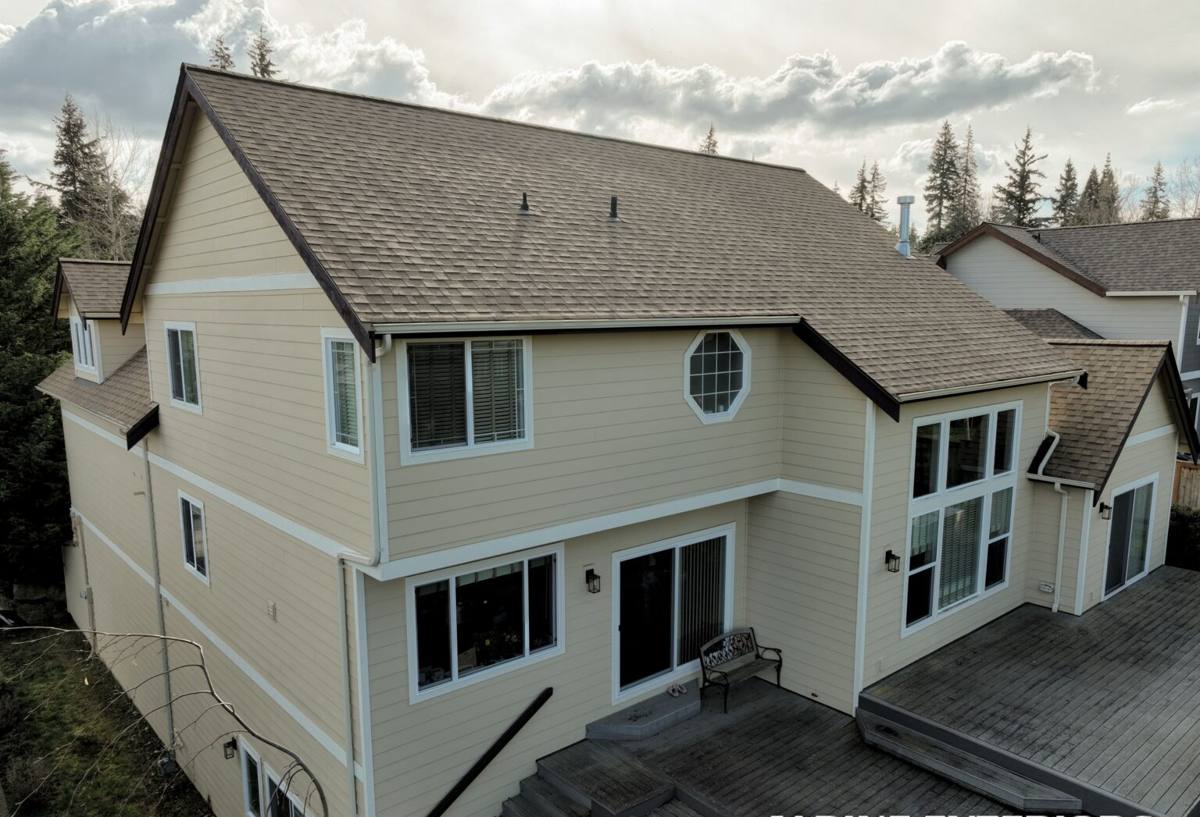
We standardized on James Hardie fiber cement siding for every home we side, including here in Clearwater, and we don't install vinyl, LP SmartSide, Cemplank, Allura, or primed wood siding. That's a deliberate professional standard, not a sales pitch. Fiber cement resists the things that hurt siding in this climate — it's non-combustible, it doesn't soften or sag in heat, and it holds its shape and finish through repeated wet-dry cycles far better than wood-based or vinyl alternatives. James Hardie's ColorPlus factory-applied finish is baked on and UV-cured under controlled conditions, which gives it meaningfully better color retention under Florida sun than field-applied paint, and its HZ5 product line is specifically engineered for high-humidity, storm-prone climates like ours.
That doesn't mean every other product is without merit — vinyl is inexpensive and low-maintenance in mild climates, and engineered wood has real fans for its lighter weight. But when we weigh moisture behavior, wind performance, fastener corrosion resistance, and long-term appearance in a coastal Tampa Bay climate specifically, fiber cement is the product we're willing to put our name behind. We'd rather install one product correctly and stand behind it than offer several and let cost pressure make the decision.
What James Hardie Brings to a Clearwater Home Specifically
A few characteristics matter more here than in most parts of the country:
- Wind and impact resistance: Properly installed fiber cement holds up to wind-driven debris and sustained high winds far better than thin vinyl panels, which can crack, deform, or blow off in a storm.
- Moisture stability: Fiber cement doesn't absorb and swell the way engineered wood products can when repeatedly soaked by wind-driven rain, then baked by sun.
- Color retention in high UV: ColorPlus finishes are formulated and tested for sun exposure well beyond what most field-applied paints are rated for.
- Non-combustibility: Fiber cement doesn't contribute fuel to a fire, which matters for insurance considerations as much as safety.
- Salt air tolerance: The cement-based composition doesn't corrode or pit the way some metal trims and lower-grade composites can near the coast.
None of that matters, though, if the installation doesn't respect how the product is designed to be flashed, fastened, and finished. That's where most siding failures actually originate — not in the product, but in the install.
What a Correct James Hardie Installation Actually Involves
Water Management Comes Before the Siding Goes Up
The single biggest factor in how well siding performs long-term isn't the siding — it's what's behind it. A correct install starts with a continuous water-resistive barrier, properly lapped and taped seams, and flashing at every window, door, and roof-to-wall transition. In a climate where wind can drive rain sideways and upward, gaps in this layer are where water gets behind the cladding and causes rot, mold, and structural damage that isn't visible until it's serious.
Fastening and Clearances
James Hardie publishes specific fastener types, spacing, and penetration requirements, along with minimum clearances from roof lines, decks, and grade. Skipping these — using the wrong fastener, spacing nails too far apart, or running siding too close to the ground where it can wick moisture — voids warranty protection and shortens the real-world lifespan of the job, even though the siding will look fine on installation day.
Joints, Caulking, and Field-Painted Edges
Cut ends and field joints need to be primed and sealed correctly, and the caulking used at joints and penetrations has to be a product compatible with fiber cement and Gulf Coast humidity swings. A rushed crew that skips priming cut edges or uses the wrong sealant is setting up a callback in a year or two, even on a premium product.
Ventilation and Rainscreen Considerations
On homes where moisture management is a concern — older homes, homes with a history of humidity issues, or homes getting a full re-side — a rainscreen gap behind the siding gives any incidental moisture a path to drain and dry instead of sitting against the sheathing. This is a detail worth discussing case by case rather than assuming it's needed everywhere.
Our Process for a Clearwater Siding Project
- On-site assessment: We walk the exterior, check existing sheathing and water barrier condition, and look for signs of past moisture intrusion around windows, corners, and the roofline.
- Scope and product selection: We discuss which James Hardie line and profile fit the home's style and exposure, and lay out a written scope covering trim, flashing details, and color.
- Prep and tear-off: Old siding comes off, sheathing is inspected and repaired where needed, and any rot or hidden damage is addressed before anything new goes on — not covered up.
- Water barrier and flashing: A continuous, properly lapped weather-resistive barrier goes on first, with flashing integrated at every penetration and transition.
- Installation to manufacturer spec: Siding is fastened, spaced, and finished according to James Hardie's published installation requirements for our climate zone.
- Final detailing: Caulking, touch-up, and trim work are finished, and we walk the job with the homeowner before calling it complete.
James Hardie Product Lines for This Area
James Hardie offers several profiles, and the right one depends on the home's architecture and exposure. Here's how the common options compare for a Clearwater application:
| Product | Best Use | Local Consideration |
|---|---|---|
| HardiePlank lap siding | Traditional horizontal siding, most home styles | Most common choice; wide color and texture range |
| HardiePanel vertical siding | Modern or accent applications, gable ends | Pairs well with board-and-batten detailing on coastal-style homes |
| HardieShingle siding | Cottage or coastal aesthetic, accent areas | Popular for a Gulf Coast look on porches and gables |
| HardieTrim boards | Corners, fascia, window and door trim | Should always be paired with Hardie siding for consistent expansion behavior |
All of these are available in the HZ5 formulation engineered for our humidity and storm exposure, and in ColorPlus factory finishes that hold color far longer than field-painted alternatives in direct Florida sun.
What Drives Cost on a Clearwater Siding Job
Every home is different, but the following factors are what actually move the price on a fiber cement siding project in this area:
| Factor | Why It Matters |
|---|---|
| Home size and wall complexity | More corners, gables, and dormers mean more cuts, trim, and labor |
| Existing wall condition | Rot or moisture damage found during tear-off adds repair scope |
| Siding profile and texture | Shingle and specialty profiles take longer to install than standard lap |
| Trim scope | Full trim replacement vs. reusing sound existing trim changes labor and material cost |
| Access and site conditions | Two-story sections, tight lot lines, and landscaping affect staging and labor time |
We don't quote broad numbers on a page like this because it would either be misleading or meaningless — every home's condition and scope is different. A site visit gives an honest, specific number.
Why a Crew That Already Works Clearwater Matters
Installation quality depends on judgment calls that a crew only gets good at by doing the work repeatedly in the same conditions. A crew that regularly works Clearwater and the broader Tampa Bay area already knows how local wind exposure and humidity affect flashing decisions, understands the moisture patterns typical of homes near the water, and has relationships with suppliers who stock the HZ5 product and colors that actually move here — instead of waiting on special orders. That familiarity shows up in fewer surprises during tear-off and fewer callbacks after the job is done.
It also matters for permitting and wind-load requirements. Hillsborough and Pinellas county jurisdictions have their own permitting expectations for exterior work, and a crew that pulls permits in this area regularly moves through that process without it becoming the homeowner's problem.
Living With James Hardie Siding in a Salt Air, High-UV Climate
One advantage of fiber cement over other siding types is how little ongoing maintenance it actually needs when installed correctly. That said, a coastal climate still calls for some basic upkeep:
- Rinse siding periodically to remove salt residue and airborne grit, especially on homes closer to the water.
- Inspect caulking at joints and penetrations annually and re-caulk if it's cracked or pulling away.
- Check that gutters and downspouts are directing water away from the base of the siding, not saturating it.
- Keep sprinklers and irrigation from spraying directly onto siding, which accelerates staining and mineral buildup.
- Trim landscaping back from the wall so siding can dry fully after rain instead of staying damp.
None of this is heavy maintenance — it's the kind of light upkeep that keeps a correctly installed system performing the way it's supposed to for decades.
Warranty: What's Actually Covered
James Hardie backs its siding with a non-prorated limited product warranty, and ColorPlus finishes carry their own finish warranty covering color fade and adhesion for a specified term. These warranties are transferable to a subsequent homeowner within a set window, which is a real selling point if the home changes hands. What's worth understanding upfront is that manufacturer warranties generally cover the product itself, while installation-related failures are the installer's responsibility — which is exactly why correct installation to manufacturer specification isn't optional if you want the coverage to mean anything when you need it.
If you're weighing a siding project for a Clearwater home, we're happy to take a look and give you a straightforward, no-pressure estimate — just fill out the form below.