 Tampa Window
 Fiber Cement Siding for Hyde Park Homes
Hyde Park's mix of historic bungalows, revival-style homes, and newer infill construction sits close to Tampa Bay, which means every exterior surface takes a harder hit than it would a few miles inland. Salt-laden air, intense sun, and the wind-driven rain that comes with Gulf storms all work against ordinary siding materials year-round. When a Hyde Park homeowner calls us about siding, the first conversation is usually about a specific symptom — bubbling paint, soft spots near the ground, seams that have opened up — and the underlying cause is almost always water and UV exposure that the original material wasn't built to handle in this climate.
We install James Hardie fiber cement siding exclusively, and this page focuses on what that means specifically for a Hyde Park property: what the climate demands, what a correct installation actually involves, and why local experience with this neighborhood's housing stock matters as much as the product itself.
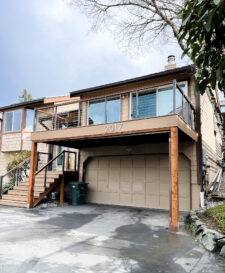
What Hyde Park's Climate Actually Does to Siding
Wind and Storm Exposure
Hillsborough County sits in a hurricane-prone corridor, and Hyde Park's proximity to the water means wind-driven rain doesn't just fall on a home — it gets pushed sideways into every seam, joint, and fastener point. Siding that isn't rated for high wind pressure, or that isn't installed with the correct fastening pattern, can loosen or lift well before a storm ever reaches hurricane strength. Over time, repeated wind loading is often what turns a marginal installation into a visible problem.
Year-Round UV
Tampa gets strong, direct sun for most of the year, and siding facing south and west on a Hyde Park lot takes the brunt of it. UV breaks down pigments and resins in coatings, which is why unpainted or field-painted materials tend to chalk, fade unevenly, or need repainting far sooner here than they would in a milder climate.
Salt Air and Humidity
Being close to the bay means airborne salt settles on exterior surfaces and accelerates corrosion of fasteners and trim hardware, while Tampa's humidity keeps moisture in play against the siding surface even on days without rain. Materials that absorb moisture or don't manage it well are working against a near-constant load here, not an occasional one.
Combined Effect
None of these stressors act alone. A hot, humid afternoon followed by a wind-driven evening storm is a routine Tampa weather pattern, and it's exactly the combination that exposes weak seams, poor coatings, and marginal fastening all at once. Siding chosen for this neighborhood needs to hold up to all three factors simultaneously, not just survive one in isolation.
Why We Only Install James Hardie
We don't install vinyl siding, LP SmartSide, Cemplank, Allura, or primed wood species like spruce or cedar. That's a deliberate standard, not a matter of availability, and it's worth explaining honestly rather than just asserting it.
- Vinyl is lightweight and affordable, but it can warp or soften in sustained high heat and is limited in the wind pressure it can resist without proper backing — both relevant in a Tampa summer and storm season.
- Engineered wood products like LP SmartSide use a wood-strand substrate that performs well when the factory coating and flashing details stay intact, but any breach in that coating exposes wood fiber to the kind of sustained humidity Hyde Park sees most of the year.
- Primed spruce or cedar requires a field-applied finish that Tampa's UV and moisture cycle will break down faster than in drier climates, meaning a maintenance schedule most homeowners don't want to keep up with.
- Other fiber cement brands (Cemplank, Allura) are legitimate cement-based products, but we've standardized on one manufacturer's engineered system, factory finish, and warranty structure so every home we touch gets the same known performance and support — rather than us managing installation specs and warranty terms across multiple product lines.
James Hardie fiber cement is non-combustible, dimensionally stable in heat and humidity, and available in HardieZone HZ10 formulations engineered for exactly this kind of hot, humid, storm-exposed climate. The factory-applied ColorPlus finish is baked on under controlled conditions rather than brushed on outdoors, which is a meaningful difference in a place where field-applied paint has a shortened lifespan.
Material Comparison for This Climate
| Material | UV/Fade Resistance | Moisture Behavior | Wind/Impact Durability | Maintenance Burden Here |
|---|---|---|---|---|
| James Hardie fiber cement | Factory ColorPlus finish, engineered for sun exposure | Cement-based, doesn't absorb and swell like wood | Rated for high wind zones when installed to spec | Low — periodic cleaning, no repainting for years |
| Vinyl | Can chalk/fade; heat can distort panels | Doesn't rot but seams can allow water behind panel | Can crack or blow off in high wind if underlayment is weak | Low, but panel replacement if damaged is common |
| LP SmartSide / engineered wood | Good while factory coating is intact | Wood-strand core vulnerable if coating fails | Solid when installed correctly | Moderate — coating integrity must be monitored |
| Primed spruce/cedar | Field finish fades faster in high UV | Wood absorbs moisture; prone to swelling/rot here | Adequate but fasteners loosen with wood movement | High — repainting and moisture checks needed regularly |
What a Correct Fiber Cement Installation Involves in Hyde Park
The product is only half the equation. Fiber cement siding fails prematurely far more often from installation shortcuts than from the material itself, and that's especially true in a climate that punishes any gap in the moisture management system.
Water Management Behind the Siding
Correct installation starts with a weather-resistive barrier and properly integrated flashing at every window, door, and penetration — not caulk used as a substitute for flashing. In a neighborhood that sees regular wind-driven rain, any point where water can get behind the cladding and not drain back out becomes a slow, hidden problem long before it's visible from the street.
Fastening for Wind Exposure
James Hardie's installation instructions specify fastener type, spacing, and embedment depending on wind zone and substrate. Hillsborough County's wind exposure means these specs aren't optional details — they're what keeps siding attached during the wind events this area actually experiences.
Clearances and Joint Treatment
Proper ground clearance, gaps at trim and joints, and correctly caulked or capped seams keep bulk water from wicking into the board ends, which is where fiber cement siding is most vulnerable if left unprotected. On older Hyde Park homes with mature landscaping close to the foundation, we also check that grading and plantings aren't holding moisture against the lower courses.
Matching Existing Architecture
Many Hyde Park homes have distinct trim profiles, board reveals, or historic-style detailing. Hardie's lap, shingle, and panel product lines can be matched to reveal and profile so the replacement reads correctly with the home's existing character rather than looking like an obvious retrofit.
Installation Checklist We Follow on Every Job
- Inspect and repair sheathing before any new siding goes up — covering rot or damage is never acceptable
- Install a continuous weather-resistive barrier with properly lapped and taped seams
- Integrate flashing at every window, door, and penetration before siding placement
- Follow manufacturer-specified fastener type, spacing, and embedment for our wind zone
- Maintain proper ground clearance and gaps at trim, corners, and butt joints
- Prime and caulk cut edges per manufacturer spec to protect exposed board ends
- Final walkthrough checking reveal consistency, fastener pattern, and sealant lines
Our Process for a Hyde Park Project
We start with an on-site inspection of the existing siding, sheathing, and any trouble spots the homeowner has already noticed — soft areas, staining, or gaps are usually the first sign of a moisture problem worth addressing before new siding goes up. From there we walk through product line, color, and profile options, provide a written scope and cost breakdown, and schedule the work around Tampa's rainy season where possible to reduce exposure during the install itself. Once work begins, we handle sheathing repair, barrier and flashing installation, and the siding itself as one continuous process rather than splitting it across separate crews, since the water-management layers underneath are what actually determine how the siding performs over time.
Why Local Experience in This Neighborhood Matters
A crew that already works in Hyde Park has seen how this specific housing stock — older wood-frame construction alongside newer builds, close-set lots, mature tree canopy — interacts with Tampa's climate. That matters for practical things like knowing which elevations take the worst UV exposure, how close neighboring structures affect drainage and airflow around a house, and what detailing questions come up with older trim and window openings that a crew unfamiliar with the area might not anticipate. It also means faster response for inspections, estimates, and any follow-up once the job is done, since we're not routing a project through a distant office.
Cost Factors to Expect
Fiber cement siding costs more up front than vinyl and is comparable to or somewhat above engineered wood products, largely reflecting the material's density, the factory finish, and the labor involved in correct installation. Specific pricing depends on the scope of your project, so we won't quote a number without seeing the home, but the factors below are what typically move a project's cost up or down.
| Factor | Effect on Cost |
|---|---|
| Amount of sheathing repair needed | Hidden water damage found during tear-off adds labor and material |
| Siding profile (lap, shingle, panel) | Shingle and detailed profiles take more labor per square foot than plain lap |
| Trim and architectural detail | Homes with more corners, gables, and trim require more cutting and fitting |
| Color (ColorPlus vs. field-painted) | Factory-finished ColorPlus avoids a paint line item but has its own material cost |
| Access and site conditions | Close lot lines, mature landscaping, or multi-story sections affect labor time |
If you're weighing your options for a Hyde Park home, we're happy to come take a look and walk you through what we'd actually recommend for your specific house — no pressure, no obligation. Fill out the form below to schedule a free estimate.