 Tampa Window
 Board & Batten Siding in Hyde Park: What Makes This Neighborhood Different
Hyde Park is one of Tampa's older, more architecturally distinct neighborhoods, and that shows up the moment you start talking about exterior work. Homes here run the gamut from bungalows and Craftsman-style houses to colonial revivals and newer infill construction built to match the surrounding streetscape. Board and batten siding shows up often in this mix because it has always paired well with the vertical lines and porch-forward facades common to the area's older housing stock, and it reads just as well on newer builds that are trying to echo that character.
The catch is that Hyde Park's charm doesn't exempt it from Tampa Bay's climate. Hillsborough County sits in a zone where board and batten siding has to survive intense UV exposure nearly year-round, sudden hurricane-force wind events, wind-driven rain that gets forced sideways into wall assemblies, and a steady dose of salt-laden air carried in off Tampa Bay. A siding choice and installation method that would hold up fine in a drier, milder climate can fail here in ways that aren't obvious until years later — cupping boards, soft spots at the base, paint that won't hold, or moisture trapped behind the cladding.
Why Board & Batten Is a Good Fit for Hyde Park — When It's Built Right
Board and batten's vertical board-and-strip pattern isn't just a style choice; it has functional advantages when the substrate and fasteners are correct. Water sheds down the face of the boards rather than pooling on a flat plane, and the pattern conceals seams more effectively than lap siding when installed with the right overlap and flashing details. On a lot of Hyde Park homes, it's used as an accent on gables, dormers, or porch areas alongside horizontal lap siding elsewhere on the house — a combination that works visually and helps control cost by reserving the more labor-intensive pattern for smaller sections.
The material behind the pattern matters as much as the pattern itself. This is why we install board and batten exclusively in James Hardie fiber cement. We don't install LP SmartSide, vinyl, Cemplank, Allura, or raw wood species like primed spruce or cedar in this profile, and homeowners deserve the real reasons why, not just a brand preference stated as fact.
What We're Not Installing, and Why
- Vinyl board and batten: It's affordable and low-maintenance in mild climates, but vinyl softens and can deform under sustained high heat, and it's more prone to cracking or blowing off in wind events than fiber cement — a real concern given Hillsborough County's hurricane exposure.
- LP SmartSide and other engineered wood products: These are wood-based composites, and wood-based products are inherently more sensitive to moisture intrusion than fiber cement. In a climate with this much humidity and wind-driven rain, any gap in the finish or flashing becomes an entry point for swelling and rot over time.
- Primed spruce or cedar: Real wood looks great on day one, but it demands a maintenance schedule — recoating, caulking, and inspection — that most homeowners underestimate, and Tampa's UV and moisture combination accelerates the wear.
- Cemplank and Allura: These are also fiber cement products and share some of the same core advantages as James Hardie. Our decision to standardize on Hardie comes down to their ColorPlus factory-applied finish, their HZ5 product engineering for high-humidity climates, and the strength and structure of their transferable warranty — not a claim that the category itself is flawed.
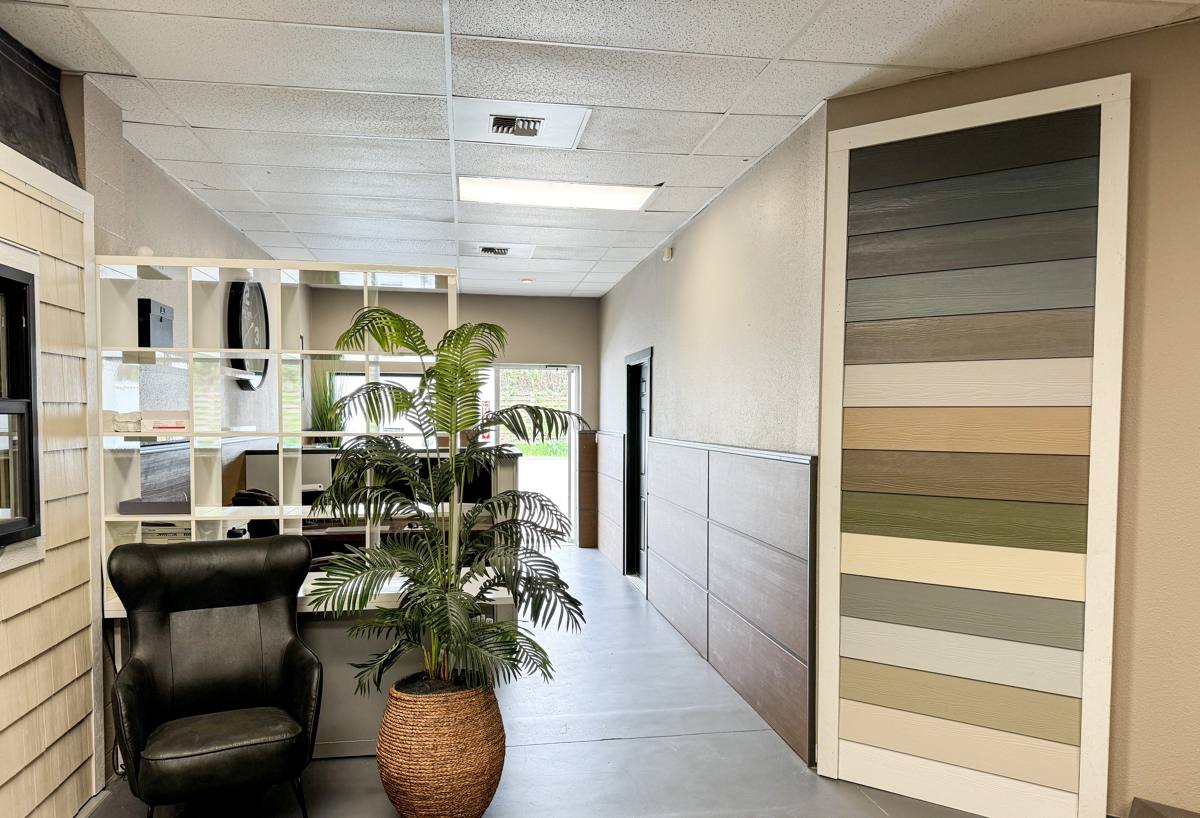
James Hardie's HZ5 line is engineered specifically for climates like ours — Gulf Coast humidity, salt exposure, and heavy seasonal rain. The ColorPlus finish is baked on at the factory under controlled conditions, which gives it better fade and chip resistance than field-applied paint, and it carries a substantial finish warranty separate from the product warranty itself. For a neighborhood like Hyde Park, where a lot of homes are visible from the street and curb appeal carries real weight, that finish durability matters as much as the underlying performance.
What a Correct Board & Batten Installation Involves
Board and batten siding fails less often because of the material and more often because of installation shortcuts. The pattern has more seams, more fastener penetrations, and more opportunities for water to find a way behind the cladding than a simple lap siding job, so the prep and flashing work carries extra weight.
The non-negotiables on every job
- A code-compliant weather-resistant barrier installed and lapped correctly before any siding goes up, with special attention to how it integrates with existing window and door flashing.
- Proper furring or direct-to-stud fastening per Hardie's published installation instructions — board and batten is sometimes installed over a rainscreen gap, which helps the assembly dry out after wind-driven rain events.
- Correct fastener type, spacing, and penetration depth. Under-driven or over-driven nails are one of the most common causes of premature Hardie siding failure, and it's an installer error, not a product flaw.
- Flashing at every horizontal transition — window heads, doors, roof-to-wall intersections, and the base of the wall — sized and lapped to shed water down and out, not into the wall cavity.
- Batten spacing and reveal consistent with the home's proportions, especially important on older Hyde Park facades where matching the visual rhythm of the original design matters for resale and neighborhood consistency.
- Caulking and sealant only where Hardie's instructions call for it — over-caulking a fiber cement assembly can trap moisture just as easily as under-caulking exposes it.
Climate Factors That Should Drive Your Decisions
| Climate Factor | Effect on Board & Batten Siding | What to Specify |
|---|---|---|
| Hurricane-force wind | Loosens poorly fastened boards, drives rain sideways under laps and seams | Correct fastener schedule, proper flashing at every seam |
| Year-round intense UV | Fades and chalks field-applied paint faster than a factory finish | ColorPlus factory-baked finish over site-painted alternatives |
| Wind-driven rain | Forces water into gaps that would stay dry in calmer climates | Weather-resistant barrier, rainscreen detailing where appropriate |
| Salt air proximity to the bay | Accelerates corrosion of low-quality fasteners and trim | Corrosion-resistant fasteners rated for coastal exposure |
| High humidity | Wood-based products swell and are slower to dry than fiber cement | Fiber cement over engineered wood or untreated wood siding |
Our Process for Hyde Park Board & Batten Projects
1. On-site assessment
We walk the exterior, check the condition of the existing substrate and any underlying sheathing, and look at how water currently moves around the house — where gutters discharge, where the grade slopes toward or away from the foundation, and where past moisture damage may already exist behind the current siding.
2. Design and material plan
We talk through board width, batten spacing, and reveal to match the home's existing lines, whether that's a full board and batten treatment or an accent application on gables and porch elements. We spec the specific James Hardie HZ5 products and ColorPlus color that fit the home and the neighborhood's overall look.
3. Substrate prep and flashing
Any compromised sheathing gets addressed before new siding goes up — covering it up doesn't fix it, it just hides the problem for a few more years. We install or replace the weather-resistant barrier and flash every penetration and transition according to Hardie's specifications.
4. Installation to manufacturer spec
Boards and battens go up with the correct fastener type, spacing, and clearance from grade and roofing, following James Hardie's published fastening and clearance requirements — the requirements that keep the manufacturer's warranty intact.
5. Final walkthrough
We review the finished work with the homeowner, check caulking and paint touch-up at cut ends, and confirm warranty registration paperwork.
Why Local Experience in Hyde Park Matters
A crew that regularly works in Hyde Park already understands the practical realities of the neighborhood — narrower lots, mature landscaping close to the house, on-street parking constraints during a project, and, in some cases, historic district or neighborhood association guidelines that affect exterior changes. Knowing those constraints ahead of time means fewer surprises mid-project and a smoother permitting process where applicable.
Just as important is understanding how Hyde Park homes are built. Older homes in this part of Tampa may have wood sheathing, balloon framing, or prior renovation work that isn't obvious until the old siding comes off. A contractor unfamiliar with this housing stock can miss those conditions; a crew that's done this work in the neighborhood before knows what to check for and budgets time for it rather than being caught off guard.
What to Check Before Hiring Anyone for This Work
- Ask whether they are a James Hardie-certified or preferred installer, and ask them to explain their fastening and flashing approach in plain terms — a contractor who can't explain it clearly probably isn't following it closely.
- Confirm they carry proper licensing and insurance for exterior work in Hillsborough County.
- Ask how they handle substrate issues discovered mid-project rather than assuming there won't be any.
- Get a clear, written scope that specifies the exact Hardie product line, color, and installation details — not just "board and batten siding" as a line item.
- Ask about warranty terms for both the material and the labor, and get them in writing.
If you're weighing board and batten siding for a home in Hyde Park, we're happy to walk the property, talk through what the house actually needs given its age and construction, and provide a free, no-pressure estimate using James Hardie materials built for Tampa's climate. There's a form below to get that conversation started.