 Tampa Window
 Siding That Has to Work in Westchase's Climate, Not Just Look Good on Day One
Westchase sits in unincorporated northwest Hillsborough County, and like the rest of the Tampa Bay area, it deals with a climate that is hard on exterior building materials. Long, humid summers, intense UV exposure nearly year-round, wind-driven rain during afternoon storms, and the real possibility of hurricane-force winds during the June-through-November storm season all combine to stress siding in ways that homeowners further inland rarely experience. Add in the salt-tinged air that drifts across the greater Tampa Bay region, and you have a set of conditions that will find every weakness in a siding product or an installation shortcut, usually within a few years rather than a few decades.
This page is about one job, done right, in one community: fiber cement siding installed on a Westchase home. We install exclusively James Hardie fiber cement products, and we want to walk through what that actually means for a home in this specific area — what the climate does to siding over time, what a correct installation looks like, and why local, hands-on experience in Westchase makes a measurable difference in how the job holds up.
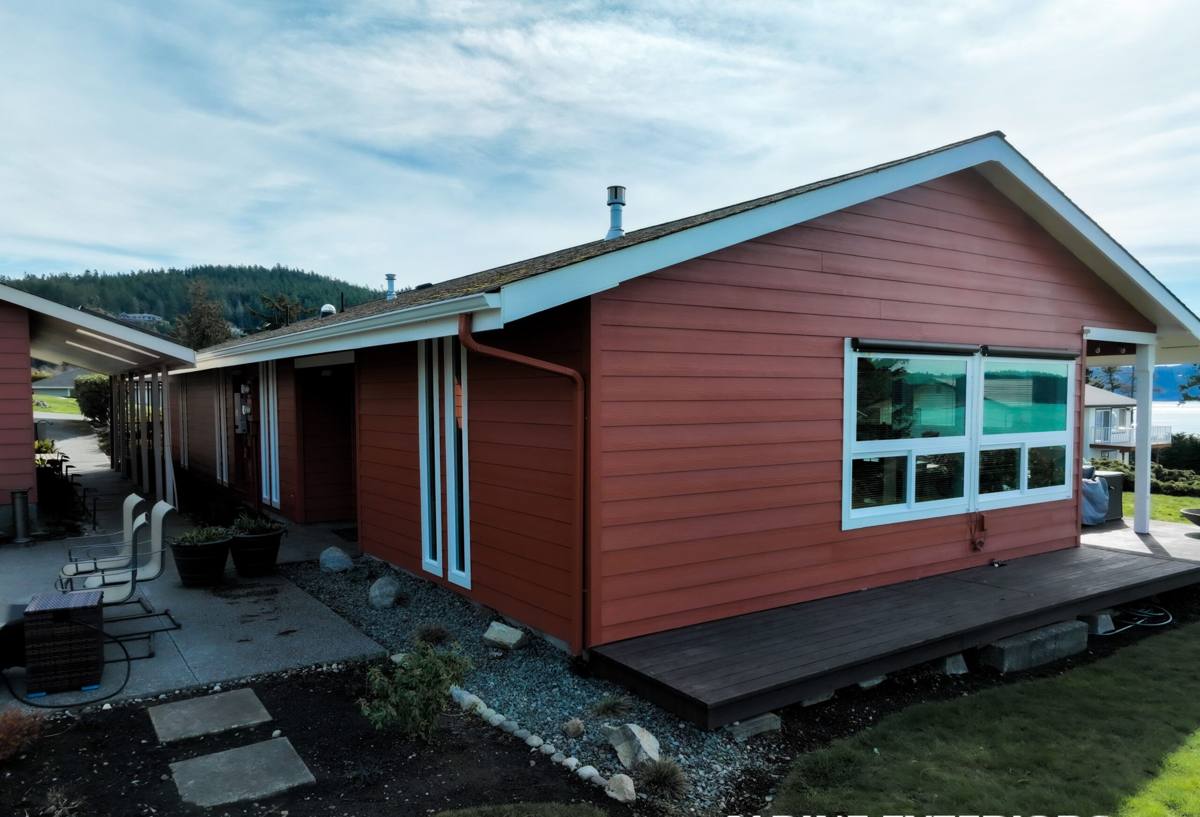
What Tampa's Climate Actually Does to Siding Over Time
UV and Heat
Florida sun is relentless. Painted wood and many composite siding products chalk, fade, and lose adhesion faster here than in almost any other region of the country because UV breaks down pigment and surface resin year-round, not just in summer. Dark colors absorb more heat, which accelerates expansion and contraction cycles in the material itself.
Humidity and Moisture
Hillsborough County's humidity rarely lets up. Siding that traps moisture behind it, or that swells and doesn't fully dry between rain events, becomes a long-term home for rot and mold. This is less about a single storm and more about the cumulative effect of hundreds of humid days per year.
Wind-Driven Rain
Tampa's summer storm pattern isn't gentle, straight-down rain. Wind pushes water sideways and up under laps, trim, and penetrations. Siding systems that rely on caulk alone to keep water out, rather than proper flashing and drainage behind the cladding, tend to fail at exactly these joints.
Hurricane-Force Wind Events
Even homes that never take a direct hit from a named storm still see repeated high-wind events over their lifetime. Fastening pattern, panel overlap, and structural attachment matter enormously here — this is where a rushed installation shows up first, often as loose or blown-off panels after a storm that a correctly installed system would have shrugged off.
Salt-Influenced Air
Westchase isn't beachfront, but it's part of a coastal metro area, and the broader Tampa Bay air carries more salt and moisture than an inland climate. Over years, that accelerates corrosion on fasteners and hardware that aren't rated for it, and it's part of why product and installation choices that work fine in, say, Georgia or the Carolinas don't always hold up the same way here.
Why Fiber Cement Fits Westchase Homes Specifically
Westchase is a planned community built primarily from the 1990s through the 2000s, with a mix of traditional and Mediterranean-influenced architecture — a lot of stucco, tile roofs, and gabled facades, often with siding used as an accent material on gables, dormers, or as full cladding on certain home styles within the community. Because much of Westchase is governed by a homeowners' association with architectural review requirements, siding decisions here often involve more than just picking a product — color, profile, and trim details typically need to fit within community standards before work begins.
Fiber cement works well in this setting for a few reasons. It holds paint and factory finish far longer than wood or many composite products under Florida sun, so homes maintain a uniform, HOA-compliant appearance for years rather than fading unevenly. It's dimensionally stable in humidity, so it doesn't swell, cup, or telegraph moisture damage the way engineered wood products can in this climate. And it's available in profiles and textures that closely match the traditional lap and shake looks common throughout the neighborhood, so a siding replacement doesn't have to look out of place next to original stucco or trim.
What a Correct Fiber Cement Installation Actually Involves
Fiber cement siding is only as good as the installation behind it. Most of the problems we get called out to fix on other contractors' work in this area trace back to shortcuts in a handful of specific steps:
- Weather-resistive barrier and flashing first. A correctly lapped water-resistive barrier and properly integrated flashing at windows, doors, and roof intersections has to go on before a single piece of siding, since this is what actually keeps wind-driven rain out — the siding is the second line of defense, not the first.
- Proper clearance from grade, roofs, and decks. James Hardie specifies minimum clearances from the ground, roof lines, and decking to keep the bottom edge of the siding from sitting in standing water or splash-back, which matters through Tampa's rainy season.
- Correct fastening pattern and fastener material. Fasteners need to be corrosion-resistant and driven at the spacing and depth James Hardie specifies for the local wind zone — this is directly tied to how well the siding performs in a hurricane-force wind event, not just a cosmetic detail.
- Proper joint treatment. Butt joints need to be correctly flashed or treated per manufacturer specification rather than simply caulked and left, since caulk alone degrades under UV and will eventually let water behind the panel.
- Correct nailing and hem alignment on laps. Each course needs consistent overlap and a tight, properly aligned hem — inconsistent laps are one of the most common signs of a rushed installation and a common point of water entry.
- Painted cut edges. Any field-cut edge of a ColorPlus panel needs to be sealed with the manufacturer-specified touch-up product, since an unsealed cut edge is a direct path for moisture into the substrate.
None of these steps are visible once the job is finished, which is exactly why they get skipped by crews trying to move fast. They're also exactly the steps that determine whether the siding is still performing well in fifteen years or starting to fail in five.
The James Hardie Product Lines We Work With
James Hardie engineers its fiber cement products by climate zone, and Tampa Bay falls within the HZ10 zone, which is formulated for high-moisture, high-humidity environments. We install HZ10-engineered products on Westchase homes rather than a generic formulation, because the difference shows up over time in how the material handles constant humidity exposure.
| Product | Typical Use | Why It Fits This Climate |
|---|---|---|
| HardiePlank Lap Siding | Primary wall cladding | Traditional lap profile, HZ10 moisture engineering, holds ColorPlus finish through UV exposure |
| HardiePanel Vertical Siding | Gables, accent walls, modern facades | Clean vertical lines with the same moisture and impact resistance as lap siding |
| HardieTrim Boards | Window and door trim, fascia, corners | Won't rot or absorb water at high-exposure edges where wind-driven rain concentrates |
| HardieSoffit Panels | Eaves and overhangs | Resists humidity and pest damage in shaded, poorly ventilated areas |
ColorPlus factory finish matters as much as the substrate itself. It's baked on in a controlled environment and backed by its own finish warranty, which holds up far better against Florida's UV load than a field-applied paint job would, and it means recoating isn't a recurring maintenance item the way it is with painted wood siding.
Our Process for a Westchase Siding Project
Every job starts with an on-site assessment, not a generic quote. We look at the current siding condition, check for moisture damage or rot at the sheathing level (which is common to find once old siding comes off, even when the surface looked fine), evaluate flashing at windows and rooflines, and confirm what HOA architectural approval will require before any material is ordered.
- On-site inspection and measurement, including a check of sheathing condition once we can see behind the existing siding
- Product and color selection, including guidance on what typically clears Westchase's architectural review process
- Permitting through Hillsborough County for the scope of work
- Removal of existing siding and repair of any damaged sheathing or framing found underneath
- Installation of weather-resistive barrier, flashing, and James Hardie HZ10 products to manufacturer specification
- Final inspection, cleanup, and warranty registration
We don't cover damaged sheathing with new siding and hope it doesn't matter. If we find rot or moisture intrusion during tear-off, we address it before anything new goes on the wall — putting new siding over a compromised substrate just guarantees a bigger problem later.
Why Hiring a Crew That Already Works in Westchase Matters
A siding contractor who has done work in Westchase before already understands the HOA's architectural approval process, knows what documentation the review board typically wants to see, and isn't guessing at how long that step will add to the timeline. That alone can save weeks compared to a contractor learning the process for the first time on your project.
Local experience also means familiarity with how homes in this specific area were originally built. Westchase's housing stock spans a fairly consistent construction era, and a crew that has already opened up walls on similar homes in the neighborhood has a good sense of what to expect underneath the existing exterior — original flashing details, common trouble spots, and typical sheathing condition for homes of that age in this climate.
Finally, storm readiness isn't theoretical here. A crew that regularly works Tampa Bay's hurricane season understands why fastening schedules, panel overlap, and clearances aren't optional details — they're the difference between siding that stays on the house during a high-wind event and siding that doesn't.
What to Ask Before You Hire Anyone for This Job
- Are they installing manufacturer-specified HZ10 product for this climate zone, or a generic fiber cement formulation?
- Will they check and repair sheathing condition during tear-off, not just install over it?
- Do they carry James Hardie installer training or documented manufacturer alignment?
- Can they explain their fastening and flashing approach in plain terms, not just "we follow code"?
- Are they familiar with Westchase HOA architectural review requirements?
- Is their bid itemized enough that you know what's included — tear-off, sheathing repair, trim, paint, cleanup?
- Do they carry proper licensing and insurance for exterior work in Hillsborough County?
Get a Straightforward Estimate
If your Westchase home's siding is showing UV fading, cracking, soft spots, or storm damage, or you're simply planning ahead of the next hurricane season, we're happy to take a look and give you a straightforward assessment of what's going on and what it would take to fix it right. There's no pressure and no obligation — just a clear look at your options using a product line we stand behind. Fill out the form below to request a free estimate.