 Tampa Window
 Why Decks in Lutz Wear Out Faster Than the Manual Says
Lutz sits inland from Tampa Bay but still gets the full weather package Hillsborough County is known for: long, humid summers, intense UV exposure nearly year-round, sudden afternoon downpours, and the outer bands of hurricane-season wind events. A deck built to a generic national spec doesn't account for any of that. Fasteners rust faster in our humidity, wood dries and cracks under UV even when it's not directly coastal, and standing water from fast tropical rain finds every low spot in a ledger board or joist that wasn't flashed correctly the first time.
Lutz's mix of lakefront lots, wooded properties, and newer subdivisions means deck problems here show up in a few predictable ways: shaded decks that stay damp longer after rain and develop rot in framing, sun-exposed decks that gray, split, and loosen their fastener heads, and decks near ponds or canals that deal with both moisture and higher humidity at ground level. Repairing a deck correctly means understanding which of these situations you're actually dealing with, not just replacing whatever board looks bad on top.
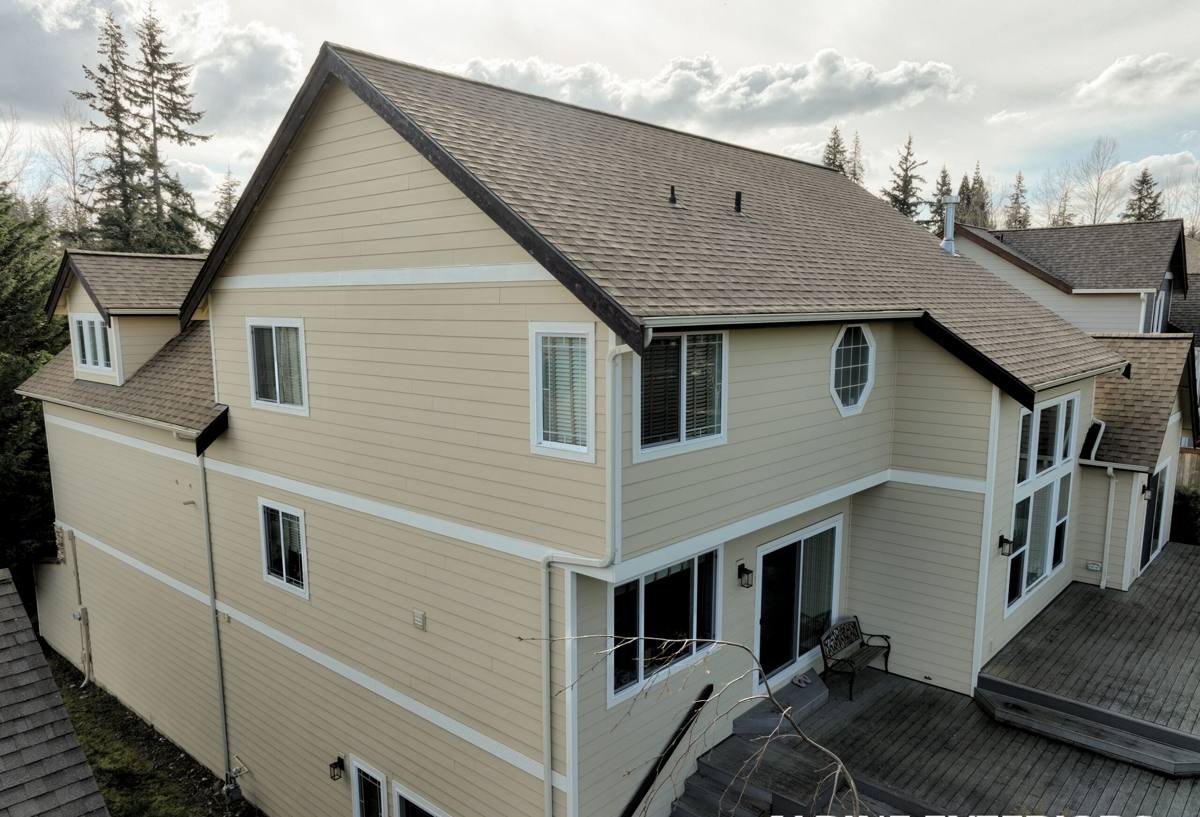
Signs Your Lutz Deck Needs Repair — Not Just a Facelift
Cosmetic wear and structural trouble can look similar from a distance. A few checks homeowners can do before calling anyone:
- Press a screwdriver or awl into the wood near ledger boards, posts, and stair stringers — if it sinks in easily, you're likely looking at rot, not just surface weathering
- Check if the deck feels springy, bouncy, or shifts slightly when you walk across it
- Look underneath for rust streaks below joist hangers or fasteners, which usually means moisture has been sitting there a while
- Inspect where the deck attaches to the house — this ledger connection is the single most common failure point on older decks
- Check railing posts for wobble; a loose post is a safety issue, not a maintenance item to put off
- Note any boards that have cupped, split lengthwise, or have popped fastener heads sticking up
Surface graying, minor splinter, and faded finish are normal weathering and don't mean the deck is unsafe. Soft wood at connection points, a bouncy structure, or a leaning post mean the repair needs to go past the top boards and into the framing.
What an Actual Correct Repair Involves
It Starts Below the Deck Boards
Replacing a few gray or cracked boards is the easy, visible part of deck repair — and it's also the part that gets oversold. A repair that only touches the top surface without checking the framing underneath just delays the real problem. Before we touch a single decking board, we get underneath and check the ledger board attachment, joist condition, post bases, and any flashing (or lack of it) at the point where the deck meets the house.
The Ledger Connection
This is where the deck bolts to the house framing, and in our climate it's the spot most likely to trap moisture if it wasn't flashed with proper deck-ledger flashing when built. A ledger that's been leaking slowly for years can look fine from the outside while the rim joist behind it is soft. Any deck repair worth doing includes actually checking this connection, not assuming it's fine because the deck "looks solid."
Fasteners and Hardware
Humidity and rain cycles corrode standard fasteners over time, which is why we use stainless steel or hot-dip galvanized fasteners and code-rated joist hangers rated for exterior/treated lumber contact — not whatever matches the hardware store's cheapest box. Mismatched or corroded hardware is one of the most common things we find on decks that "just need a few boards."
Framing and Structural Members
Rotted joists, posts, or beams get sistered or replaced — never just covered over. A deck can look freshly refinished on top and still have a structurally compromised joist underneath if the repair only addressed the surface.
Repair vs. Replacement: How We Decide
Not every deck problem calls for tearing the whole thing out, and not every deck is worth patching. Here's roughly how the decision breaks down:
| Condition | Usually Repairable | Usually Needs Replacement |
|---|---|---|
| Framing / structure | Isolated soft or rotted joists, one bad post | Widespread rot through multiple framing members |
| Ledger connection | Re-flashed and re-bolted if rim joist is sound | Rim joist itself is rotted or compromised |
| Decking boards | Scattered cracked, cupped, or splintering boards | Majority of boards failing or a mismatched patchwork already exists |
| Railings / posts | Loose or wobbly but wood is solid | Posts rotted at the base or undersized for current code |
| Age / history | Under 15-20 years, built to code originally | Older deck with no permit history or unknown original build quality |
We'll tell you honestly which category your deck falls into. A deck that needs full replacement disguised as a "repair" just means paying twice — once now and again in a few years.
Our Process on a Lutz Deck Repair
- On-site inspection — we get underneath the deck, not just walk the surface, and check ledger, framing, posts, and hardware
- Written scope — what's being repaired, what's being replaced, and why, so there's no guesswork about what you're paying for
- Structural repairs first — framing, ledger, and hardware corrected before any cosmetic work happens
- Decking and railing work — matched materials where possible, proper fastener spacing, and attention to drainage gaps between boards
- Final check — we walk the deck with you and point out what we did and what to watch going forward
Materials: What We Use and Why
Deck repair material choice matters more in Hillsborough County's climate than in drier, cooler regions. A few honest trade-offs:
| Material | Strengths Here | Trade-Offs |
|---|---|---|
| Pressure-treated pine | Affordable, widely available, easy to match to existing framing | Needs periodic sealing; UV and moisture cycles will still wear it over years |
| Composite decking | Resists rot and UV fading better on the surface | Still needs sound, properly ventilated framing underneath — it doesn't fix structural issues |
| Cedar or other hardwoods | Naturally more rot-resistant, good appearance | Higher cost, still needs regular maintenance in our humidity |
| Stainless/galvanized hardware | Holds up to humidity and rain cycles without early corrosion | Costs more than standard hardware — we consider it non-negotiable regardless |
We're upfront that no decking material is maintenance-free in this climate. The framing, flashing, and fastener choices underneath matter as much as what you see on top — sometimes more.
Hillsborough County Permits and Code
Structural deck repairs — anything touching framing, the ledger connection, or railings — typically fall under Hillsborough County building code requirements, even when it's a repair rather than new construction. Purely cosmetic work like refinishing or swapping a handful of boards usually doesn't trigger a permit, but structural repairs often do. We'll tell you plainly whether your specific repair needs a permit rather than quietly skipping the question — it protects you if you ever sell the home and a buyer's inspector looks at the deck.
Why a Crew That Already Works Lutz Matters
A local Tampa Bay crew that regularly works Lutz and the surrounding Hillsborough County area has already seen how the local mix of soil moisture, tree cover, and storm exposure plays out on real decks in this area — not a generic checklist. That means faster, more accurate diagnosis of whether a soft spot is isolated or spreading, which fastener and flashing choices actually hold up here, and realistic timelines that account for our rainy-season scheduling. It also means someone who's still local and reachable if a repair needs a follow-up check after the next storm season.
Keeping a Repaired Deck in Good Shape
- Rinse off pollen, leaf litter, and debris regularly — trapped organic matter holds moisture against the wood
- Keep gutters and downspouts near the deck clear so runoff isn't dumping directly onto framing or posts
- Reseal or refinish wood decking on a regular schedule rather than waiting until it visibly fails
- Walk the deck a couple times a year and check for soft spots, loose railings, or popped fasteners
- After any major storm, do a quick visual check of posts and the ledger connection before assuming everything's fine
A repaired deck that's maintained this way will hold up far longer than one that's ignored until the next problem shows up.
If you've got a deck in Lutz that's showing soft spots, wobble, or just doesn't feel right underfoot, we're happy to take a look. Fill out the form below for a free, no-pressure estimate — we'll tell you honestly what needs fixing and what can wait.