 Tampa Window
 What Clearwater Homes Need From Their Siding
Clearwater sits on a barrier peninsula between Tampa Bay and the Gulf of Mexico, which means homes here take a harder beating than siding was ever designed for in most parts of the country. Salt-laden air moves inland off the water almost daily, hurricane-force winds and wind-driven rain arrive every storm season, and the sun is intense and nearly constant for most of the year. Any siding product installed on a Clearwater home has to hold up to all three at once, not just one or two.
Wind-driven rain is the one homeowners underestimate most. In a normal rainstorm, water falls straight down and sheds off a wall easily. In a Gulf Coast storm, rain gets pushed sideways into the siding at real pressure, which means the water management behind the siding — the house wrap, flashing, and drainage plane — matters as much as the siding itself. Salt air accelerates corrosion of fasteners and metal trim, and it degrades cheap coatings and caulk faster than it would in a drier, inland climate. UV exposure breaks down pigments and plastics over years of relentless sun, which is why so many vinyl and low-grade painted products fade, warp, or chalk out within a decade in this part of Florida.
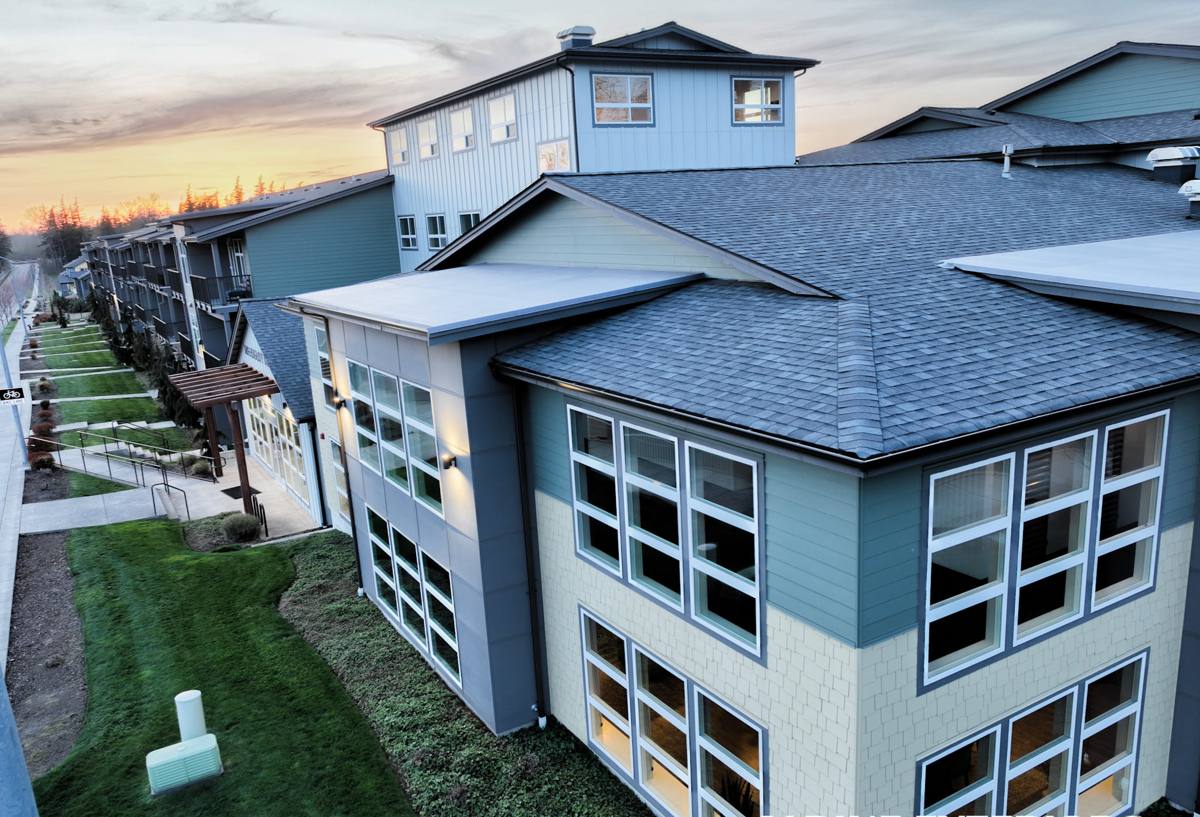
Why We Install Only James Hardie Fiber Cement Siding
We made a decision as a company to install one siding system on Clearwater homes: James Hardie fiber cement. We don't offer vinyl, LP SmartSide, Cemplank, Allura, or unfinished wood siding, and that's worth explaining honestly rather than just stating as policy.
Vinyl siding is inexpensive and easy to install, but it's a petroleum-based plastic that softens, warps, and becomes brittle under sustained heat and UV — a real problem in a market where roof and wall surface temperatures regularly climb well above ambient air temperature. It also has a lower wind rating than fiber cement in most published product comparisons, which matters directly in a hurricane-exposed coastal city. LP SmartSide and other wood-based composite products perform reasonably well when installed and maintained correctly, but they're wood at their core — meaning they're more sensitive to sustained moisture exposure and require diligent caulking and paint maintenance to keep water out of cut edges and seams. Primed spruce and cedar are honest, attractive materials, but raw wood siding demands the most maintenance of any option and is the least forgiving of the three climate stresses we listed above — sun, salt, and wind-driven moisture.
James Hardie fiber cement is cement, sand, and cellulose fiber. It doesn't rot, it isn't fuel for pests, and it's non-combustible. Hardie's HZ5 product line is engineered specifically for hot, humid, high-moisture climates like ours, and the ColorPlus factory finish is baked on in a controlled environment rather than field-painted, which gives it far better fade and chip resistance than a job-site paint job exposed to Florida UV from day one. It carries a strong transferable limited warranty when installed to Hardie's specifications. That combination — non-combustible, engineered for our climate zone, factory-finished, and backed by a real warranty — is why we standardized on it rather than offering a menu of products with very different long-term outcomes.
How the Options Compare
| Material | Moisture behavior | UV/fade resistance | Wind performance | Ongoing maintenance |
|---|---|---|---|---|
| James Hardie fiber cement | Does not rot or absorb water like wood; engineered HZ5 formulation for humid climates | Factory ColorPlus finish resists fading and chalking | Rated for high-wind installations when installed to spec | Occasional rinsing; repaint only if not using ColorPlus finish |
| Vinyl | Doesn't rot, but seams and J-channels can trap moisture behind panels | Prone to fading, chalking, and heat warping over time | Generally lower wind ratings than fiber cement | Low, but panels crack and can't be spot-repaired invisibly |
| LP SmartSide / wood composite | Wood-based; sensitive to moisture at cut edges and seams | Holds paint reasonably well if maintained | Solid when installed correctly | Requires diligent caulk and paint upkeep |
| Primed spruce / cedar | Most moisture-sensitive option; needs consistent sealing | Fades and grays without regular refinishing | Performance depends heavily on fastening and finish | Highest — regular painting and inspection required |
What a Correct Siding Installation Actually Involves
Siding failures in this climate are almost never about the siding material itself — they're about what happened underneath it, or how it was cut, fastened, and sealed. A correct installation on a Clearwater home means getting several things right that aren't visible once the job is done:
Water management behind the siding
Every wall needs a continuous drainage plane — a properly lapped water-resistive barrier, correctly integrated flashing at windows, doors, and any penetration, and a way for incidental moisture that gets behind the siding to drain back out rather than sit against the sheathing. This is the layer that actually keeps wind-driven rain from becoming a rot or mold problem, and it's also the layer that's easiest to shortcut because nobody sees it once the siding goes up.
Fastening to spec, not to habit
Hardie siding has published fastener spacing, type, and placement requirements, and those requirements exist for wind resistance. Under-fastening or using the wrong fastener type is one of the most common causes of siding blow-off in a storm, and it's not something a homeowner can easily inspect after the fact.
Correct clearances and gaps
Fiber cement needs proper clearance from the roofline, grade, and any abutting surfaces, along with expansion gaps at butt joints and trim. Installed too tight, the material has nowhere to move with temperature and humidity changes, which shows up later as cracking or paint failure at the joints.
Sealed and caulked correctly at penetrations
Every point where siding meets a window, door, vent, or fixture is a place water can find its way in. Hardie's own installation guidance is specific about where caulk is required and where it isn't — over-caulking can trap moisture just as badly as under-caulking.
Our Installation Process
We walk every Clearwater project through the same sequence, because skipping steps is where problems start:
- On-site assessment: we look at the existing siding, sheathing condition, and any signs of past moisture intrusion before quoting anything.
- Tear-off and inspection: old siding comes off and we inspect the sheathing underneath. Soft or water-damaged sheathing gets addressed before anything new goes on — covering a problem is not an option.
- Water-resistive barrier and flashing: a new drainage plane goes on with proper laps and integrated flashing at every window, door, and penetration.
- Hardie installation to manufacturer spec: correct fastener type and spacing, proper clearances, and correct joint treatment throughout.
- Trim, caulk, and finish detailing: corners, trim boards, and penetrations are finished and sealed according to Hardie's guidelines, not generic caulk-everything habits.
- Final walkthrough: we go over the finished job with the homeowner before calling it complete.
Why Hiring a Crew That Already Works in Clearwater Matters
Siding installation isn't the same job in every part of the country, and it isn't even the same job in every part of the Tampa Bay area. A crew that regularly works Clearwater and the surrounding coastal communities in Hillsborough and Pinellas Counties already knows how to detail a wall for wind-driven rain, which flashing details actually hold up to salt air over years rather than months, and how local wind exposure affects fastening decisions on different sides of a house. That's the kind of judgment that comes from repetition in this specific climate, not from a general contracting background applied to a coastal job as an afterthought.
It also matters for permitting and inspection. Coastal Florida jurisdictions pay close attention to exterior work because of wind-load and building code requirements tied to hurricane exposure, and a crew that regularly pulls permits in this area moves through that process without surprises.
What Drives the Cost of a Siding Project
Every home is different, so we don't quote broad numbers without seeing the property, but the factors below are what actually move a project's cost up or down:
| Factor | Why it matters |
|---|---|
| Sheathing condition | Rot or water damage found during tear-off has to be repaired before new siding goes on |
| Home size and wall complexity | More corners, dormers, and trim details mean more labor and material cuts |
| Siding profile chosen | Lap siding, shingle-style, board-and-batten, and panel systems carry different material and labor costs |
| Finish selection | Factory ColorPlus finishes cost more up front than primed-for-paint options but avoid a future paint job |
| Existing siding removal | Multiple layers of old siding or extensive prep work add time |
| Access and height | Two-story sections, tight lot lines, or limited equipment access affect labor time |
Maintaining Hardie Siding in a Coastal Climate
Fiber cement is low-maintenance, not no-maintenance. A few habits keep it performing the way it's designed to in Clearwater's climate:
- Rinse the exterior periodically to clear salt residue and airborne grime, especially on sides of the house facing prevailing winds off the water
- Inspect caulk lines at trim, windows, and penetrations once a year and touch up as needed — this is the first line of defense against wind-driven rain intrusion
- Keep irrigation heads and sprinklers from spraying directly on siding, which causes localized staining and accelerates wear at the bottom courses
- Trim landscaping back from exterior walls so siding can dry properly after rain and stays free of trapped debris
- After any major storm, do a visual check for loose boards, cracked caulk, or displaced trim rather than waiting for the next inspection cycle
What to Ask Before Hiring a Siding Contractor in Clearwater
Siding is a long-term investment on the most exposed part of a coastal home, so it's worth vetting a contractor the same way you'd vet a roofer. A few questions that separate a serious crew from a general handyman operation:
- Are they a certified or factory-trained James Hardie installer, and can they explain the fastening and clearance requirements without hesitation?
- Do they inspect and address sheathing condition before installing new siding, or do they cover whatever is underneath?
- Will they pull the required local permits for the work, and are they familiar with coastal wind-load requirements in this area?
- What does their warranty cover — material only, or workmanship too — and for how long?
- Can they walk through their water management approach at windows, doors, and other penetrations before work starts?
Get a Free Estimate
If your Clearwater home's siding is showing its age — fading, warping, soft spots, or failing caulk lines — we're happy to take a look and give you an honest read on what it needs. There's no pressure and no obligation. Fill out the form below and we'll schedule a free estimate.