 Tampa Window
 Why Composite Decking Makes Sense in Clearwater
Homeowners in Clearwater who are replacing a tired wood deck usually gravitate toward composite decking for a simple reason: they don't want to spend another summer sanding, staining, and chasing splinters on a surface that's baking in direct Florida sun most of the year. That instinct holds up. Composite boards resist rot, splintering, and moisture absorption in ways solid wood simply can't match. But composite decking is not a material you drop in place of wood and expect to automatically outperform it — the framing underneath, the hardware holding it together, and the way the whole structure is tied down still have to be built for this specific stretch of the Gulf coast, or the deck will have problems long before the boards themselves wear out.
This part of the Tampa Bay area asks a lot of anything built outdoors. Hurricane-force winds are a real seasonal possibility, not a rare event. The sun is intense nearly every month of the year, not just in summer. Rain during storms rarely falls straight down — it comes in sideways, driven by wind, reaching places a deck built for calmer weather was never designed to shed water from. And salt air off the Gulf and the bay works on metal hardware steadily, year-round, whether a home is waterfront or several miles inland. Composite decking handles the surface side of that punishment well. Everything below the surface has to be built with the same conditions in mind.
What "Low Maintenance" Really Means Here
Composite decking gets marketed as maintenance-free, and in a climate like this that claim needs a caveat. It's genuinely low maintenance compared to wood — no annual sealing, no restaining, no sanding down splinters — but a Clearwater deck sitting under intense UV and occasional heavy rain will still need periodic washing to keep pollen, mildew, and organic buildup off the surface. The material shifts the maintenance burden from structural upkeep to simple surface cleaning. That's a real advantage, but it's not a reason to ignore the deck entirely once it's installed.
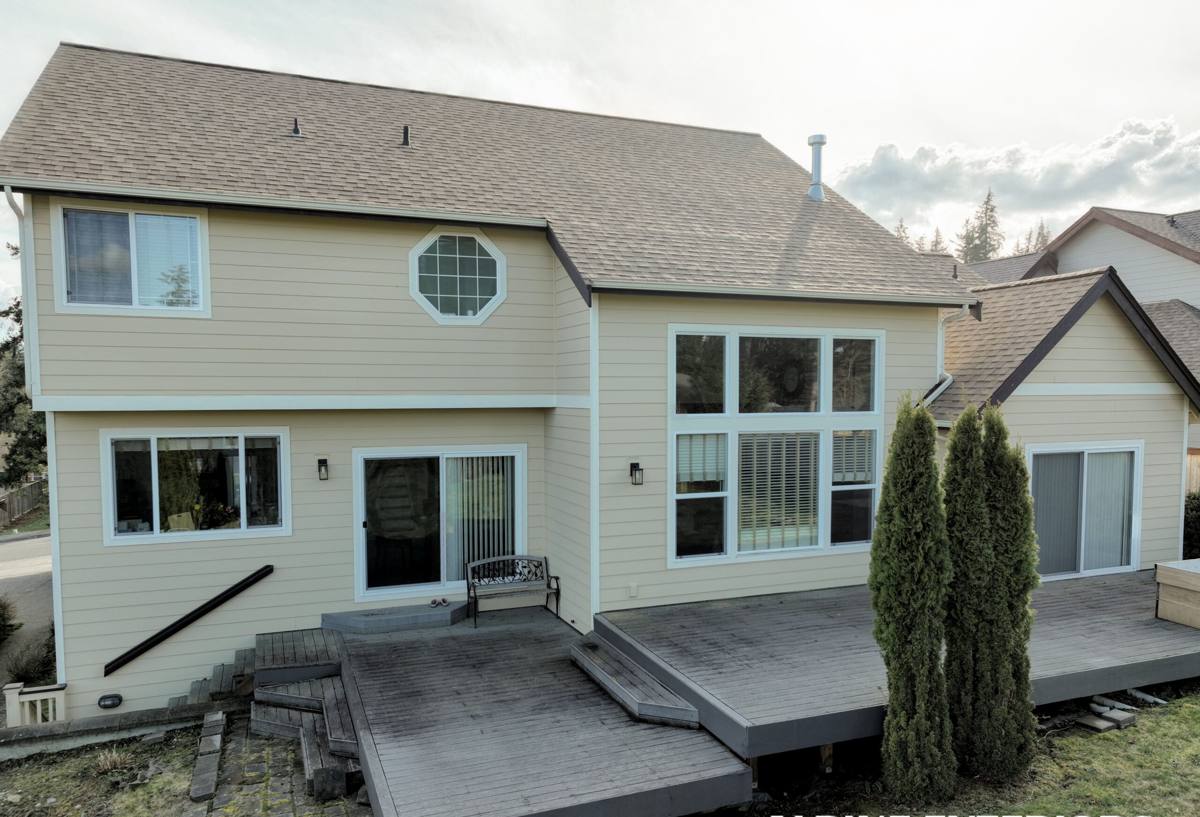
What Hurricane Winds, Year-Round UV, and Salt Air Do to a Deck
Wind Uplift and Structural Attachment
The biggest structural risk to any deck in this region isn't the composite boards themselves — it's wind getting underneath a railing, a stair section, or the deck frame and lifting or racking it. Composite decking doesn't change the wind-load math; the framing, post connections, and ledger attachment still have to be engineered and fastened to handle sustained high wind and gusts, with hardware and connectors rated for the wind-load requirements that apply in this part of Florida. A deck that looks solid in calm weather can still have connection points that were never built for a real wind event.
Intense, Year-Round UV Exposure
Clearwater doesn't get much of a break from strong sun the way northern climates do. UV exposure here is a twelve-month condition, not a summer one, and it affects decking materials differently depending on quality. Lower-grade composite boards can fade, chalk, or lose surface consistency faster under this level of sustained sun than boards built with UV-stable resin and a proper capped layer. Railing systems and fascia trim need the same UV resistance, since a deck that fades unevenly between the walking surface and the trim looks worse over time even if nothing has actually failed structurally.
Wind-Driven Rain
During real storms, rain in this area gets pushed sideways and upward rather than falling straight down, which means it reaches spots a fair-weather deck design wouldn't account for — under railing caps, into fastener heads, and behind the ledger board where the deck meets the house. Composite boards shed surface water well on their own, but the flashing and drainage details underneath need to assume wind-driven rain as the normal case here, not the exception.
Salt Air and Metal Hardware
Whether a Clearwater property sits directly on the water or several miles inland, the air carries a steady dose of salt that reaches well beyond the immediate waterfront. Composite boards aren't affected by this directly, but the screws, hidden fastener clips, joist hangers, and structural connectors underneath the decking are metal, and standard-grade hardware corrodes noticeably faster under sustained coastal salt exposure. A deck can look flawless on the surface for years while the connectors holding it together underneath are quietly weakening — which is exactly why hardware grade deserves as much attention as board selection.
What "Composite" Actually Means — And Why the Differences Matter Here
Composite decking isn't one uniform product, and the differences between tiers matter more under intense Florida sun and salt air than they would in a milder climate. Most composite boards blend wood fiber with recycled plastic, which improves moisture resistance over solid wood but doesn't make every board equally durable.
Capped vs. Uncapped Composite
Capped composite has a protective polymer shell bonded around the wood-plastic core, and that cap is what actually blocks UV degradation, moisture absorption, and staining at the surface. Uncapped composite still outperforms wood, but it can fade and absorb some surface moisture faster under year-round intense sun, and it's more prone to visible mildew in shaded, humid corners of a lot. Given how much UV exposure a Clearwater deck sees across a full year, we generally recommend fully capped boards, especially for any surface that gets direct afternoon sun for most of the day.
PVC Decking as an Alternative
Cellular PVC decking is a related but distinct product — fully synthetic, with no wood fiber content, which makes it essentially immune to moisture absorption and rot regardless of sun or humidity exposure. It costs more than most composite boards and has a different underfoot feel and appearance, but it's worth discussing for pool decks, shaded areas with constant moisture, or homeowners who want the lowest possible long-term maintenance no matter the upfront cost. We'll walk through that trade-off honestly rather than assuming composite is the automatic right call for every part of every deck.
What a Correct Composite Deck Installation Actually Involves
The boards get most of the attention when homeowners picture a new deck, but the structure underneath is what determines whether the deck survives hurricane season after hurricane season. A correct installation treats the substructure with the same seriousness as the visible decking surface.
Framing, Footings, and Wind-Resistant Connections
Footings need to be sized for local soil conditions and set with the depth and spacing this region's wind-load requirements call for. Framing lumber under composite decking is still wood, still needs to be pressure-treated, and still needs post-to-beam and beam-to-ledger connections built with rated structural hardware — not just nails or undersized brackets — since those connections are what keep the deck attached to the house and to the ground when wind loads spike during a storm.
Joist Protection
Composite decking puts sustained moisture stress on the joists beneath it, since the boards don't wick water away the way some wood decking naturally does. Joist tape — a self-adhering membrane applied to the top of each joist before boards go down — is easy to skip and impossible to inspect once the deck is finished, but it meaningfully slows moisture penetration at exactly the points where fasteners are driven through the joist thousands of times across a deck's surface.
Fastening Systems
Most quality composite decking today uses a hidden fastener clip system rather than face-screwing through the board, which gives a cleaner surface and avoids creating thousands of small penetration points for water to collect in. Whatever fastening system is used, the clips and screws need to be corrosion-resistant hardware rated for coastal exposure — standard-grade hardware that would be fine in a drier, inland climate corrodes early under this region's salt air.
Board Spacing and Drainage
Gap spacing between composite boards is set differently than wood, since composite doesn't shrink and swell with moisture the same way, but it still needs enough space to drain water and let air move underneath. Boards installed too tight for a seamless look end up trapping debris and moisture at the gaps instead, which undermines the material's low-maintenance advantage right from the start.
Where Composite Decks Still Fail in This Climate
- The ledger-to-house connection — the highest-risk joint on any deck, since a failure here can send wind-driven rain behind the home's exterior rather than just into the deck structure.
- Undersized or under-rated post connections — hardware not sized for real wind-uplift forces is the most common reason a deck racks or separates during a serious storm.
- Standard-grade fasteners and clips — hardware not rated for coastal salt exposure corrodes faster than the composite boards it's holding down, eventually loosening the whole surface.
- Unprotected joists — framing without joist tape or proper flashing absorbs moisture through fastener penetrations over time, even with premium boards installed on top.
- Uncapped composite in full-sun exposure — visible fading and surface degradation show up faster on uncapped products under Clearwater's near-constant UV load.
What Drives the Cost of a Composite Deck Built to Last
Composite decking costs more upfront than pressure-treated wood, and homeowners often assume the board brand is the main thing moving the price. In practice, several structural decisions affect both the total cost and the long-term durability just as much — and they're the details most likely to get quietly cut when a bid needs to look lower.
| Cost Factor | Why It Matters Here | Relative Impact |
|---|---|---|
| Board tier (capped vs. uncapped composite, or PVC) | Directly affects UV fading, moisture resistance, and long-term appearance under intense Florida sun | High |
| Post and ledger connection hardware | Rated structural connectors resist wind uplift and racking during hurricane-season wind events | High |
| Fastener and clip grade | Corrosion-resistant hardware holds up under sustained salt air; standard hardware fails early and out of sight | Moderate |
| Joist protection (tape or membrane) | Protects framing under thousands of fastener penetrations; invisible once finished but drives long-term durability | Low to moderate |
| Footing depth and placement | Sized for local soil and the wind-load requirements that apply in this region | Moderate to high |
| Railing and fascia material | Composite or aluminum railing systems match the decking's low-maintenance, UV-resistant profile | Low to moderate |
We go through this table with every homeowner before a number ever goes on a proposal, so the estimate reflects real decisions instead of a total you're just asked to accept.
Composite vs. Other Decking Materials, Honestly
Composite isn't automatically the right call for every homeowner or every section of every deck, and we'd rather lay out the real trade-offs than steer everyone toward the same recommendation regardless of their situation.
| Material | Upfront Cost | Ongoing Maintenance | Performance Under Florida Sun and Storms |
|---|---|---|---|
| Pressure-treated wood | Lowest | Highest — regular sealing and staining | Weakest; fades, splinters, and warps fastest under intense UV and humidity |
| Cedar | Moderate | Similar to treated wood | Better natural rot resistance, still needs regular care in this climate |
| Uncapped composite | Moderate to high | Low — occasional washing | Good, though more prone to fading and surface moisture than capped |
| Capped composite | High | Low — occasional washing | Strong; the capped shell resists UV fading and moisture best among composites |
| Cellular PVC | Highest | Lowest | Best; fully synthetic with essentially no moisture absorption or UV-driven fading |
How Our Installation Process Works
- Site walk and design — we look at sun exposure, drainage across the lot, and how the deck connects to the house before any material gets ordered.
- Material selection — we discuss capped composite, uncapped composite, and PVC options against your budget and how much direct sun the specific location gets.
- Permit submission to the applicable local jurisdiction, with the structure sized and documented to meet the wind-load requirements that apply in this area.
- Footings and framing, placed for local soil conditions and built with rated structural connectors and corrosion-resistant fasteners throughout, not just at the visible joints.
- Joist protection and ledger flashing, applied before a single composite board goes down, since these details can't be corrected once the decking is installed.
- Composite board installation, with hidden fastening and gap spacing set for drainage and airflow rather than the tightest possible look.
- Railing, stairs, and trim, completed with post connections detailed to resist wind uplift, not just support weight.
- Final walkthrough, covering the specific cleaning and care schedule for the composite product installed on your deck.
Keeping a Composite Deck Looking Right in Clearwater
Composite decking removes the sanding-and-staining cycle that wood demands, but it isn't a walk-away material here. A few consistent habits keep a composite deck performing the way it should under this region's sun and storm exposure.
- Rinse or sweep board gaps regularly to clear pollen, leaves, and debris before it packs into the grooves.
- Wash the surface with a soft-bristle brush and mild soap a few times a year to keep mildew and organic buildup from taking hold in humid stretches.
- Avoid pressure washers on the highest settings, which can damage the capped surface layer on some composite products.
- Check railing post bases and stair connections once or twice a year, since these lower structural points take the most wind stress during storm season.
- Inspect visible hardware for early corrosion after major storms, since salt-driven rain can accelerate wear on fasteners that were already marginal.
Why a Crew That Already Works Clearwater Matters
A composite deck built to a generic national spec sheet can still underperform here, because that spec usually assumes a climate without real hurricane exposure and without twelve months of intense UV. A crew that already works Clearwater and the broader Tampa Bay area knows how far salt air actually reaches inland, which connection points take the most load during a real wind event, and which fastener and flashing details hold up through a full storm season rather than just looking good on installation day. That local knowledge shows up in the substructure decisions nobody sees once the deck is finished — but that determine whether it's still solid after the next major storm or needs real repair within a few years.
We also treat the ledger connection and any wall penetration as part of the home's broader exterior water management, since that's the same discipline we apply across our exterior work in this area. That standard carries through every composite deck we build in Clearwater, whether the project stands on its own or runs alongside other exterior work on the home.
Ready to Talk Through Your Composite Deck?
If you're weighing composite decking for a new build or a wood deck that's showing its age, we're glad to walk your site, talk through capped composite versus PVC for your specific location, and give you a straightforward read on what it'll take to build it right for Clearwater's wind, sun, and salt air. Reach out for a free, no-pressure estimate using the form below.