 Tampa Window
 Why Decks in Carrollwood Wear Out Faster Than Homeowners Expect
Carrollwood sits inland from Tampa Bay, but it doesn't escape the climate stress that wears down outdoor structures across Hillsborough County. Between the intense year-round UV exposure, the daily humidity swings, wind-driven rain from summer storms, and the periodic hurricane-force winds that pass through the region, a deck here works harder than the same structure would in almost any other part of the country. Add in the mature tree canopy common to many Carrollwood neighborhoods — which keeps decks shaded, damp, and slower to dry after rain — and you have a recipe for accelerated rot, fastener corrosion, and framing failure long before a homeowner expects it.
Most decks are engineered assuming reasonably dry conditions and moderate wind loads. Tampa's climate doesn't offer either. That's why a deck that looks fine on the surface can be structurally compromised underneath, and why "just replace the boards" is often the wrong fix for a Carrollwood deck that's more than 12-15 years old.
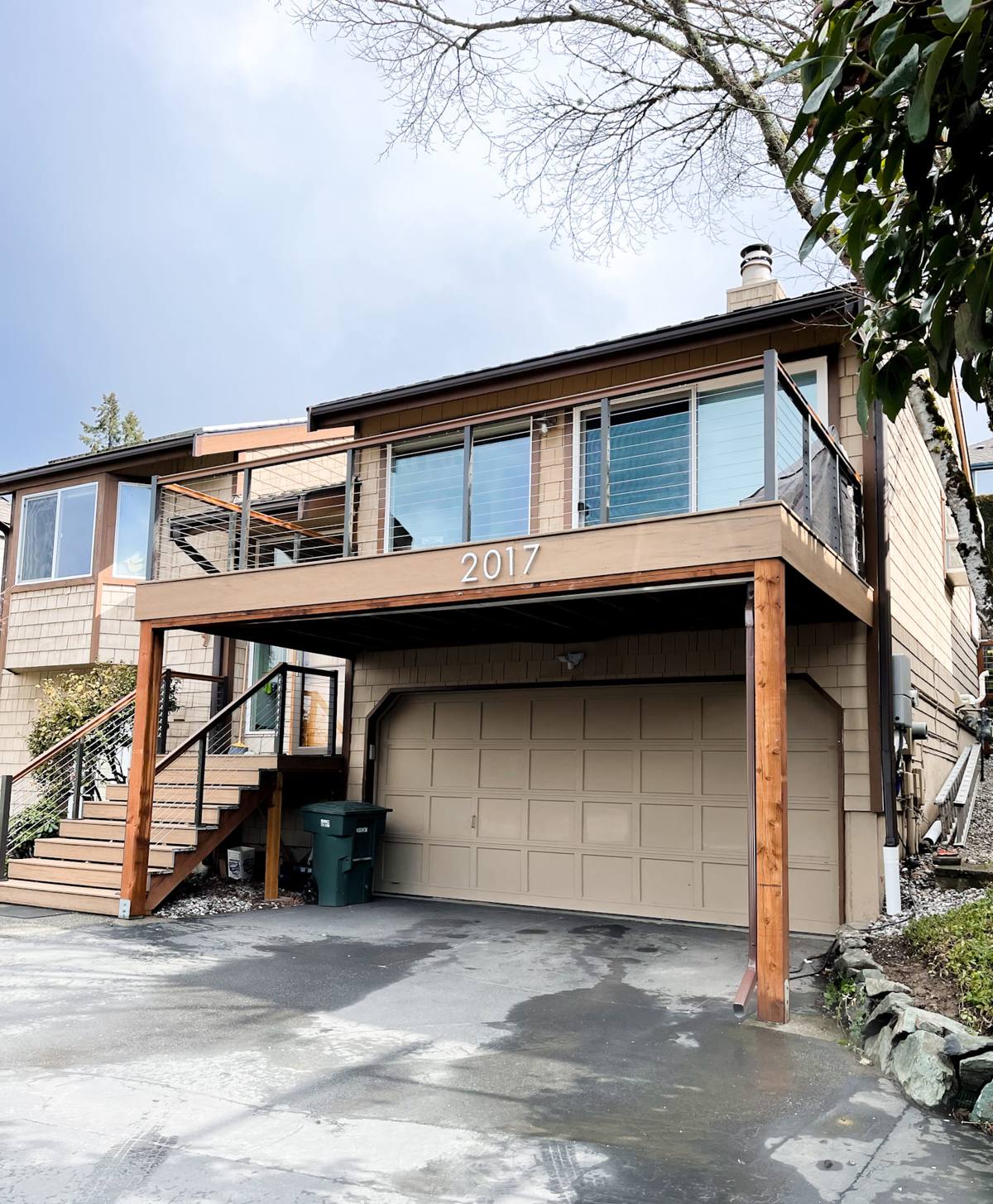
Repair or Replace? Signs That Point to Full Replacement
Not every aging deck needs a full teardown. But when the damage has reached the structural framing — ledger board, joists, posts, or footings — patching the surface just delays a more expensive problem. Here's how to tell which situation you're in.
- Boards feel spongy, spring back slowly, or show soft spots when pressed with a screwdriver
- Visible gaps, cracks, or separation where the deck attaches to the house (the ledger board)
- Rust streaking around fasteners, or fasteners that are loose, popped, or missing
- Posts that wobble, lean, or show rot near the base where they meet the ground or footing
- A noticeable bounce or flex when walking across the deck, especially near the center
- Mold, mildew, or persistent dampness underneath the deck that never fully dries out
- The deck was built without a permit or doesn't meet current attachment and railing standards
If you're only seeing surface graying, minor splintering, or cosmetic wear on boards that are still solid, refinishing or targeted board replacement may be enough. If you're seeing two or more of the structural signs above, replacement is the more honest recommendation — and the safer one.
What a Correct Deck Replacement Actually Involves
A deck replacement done right isn't just swapping old boards for new ones on the existing frame. It starts underneath.
Structural Foundation First
Footings need to reach stable, load-bearing soil below grade — not just be set in loose fill dirt, which is a common shortcut on older or DIY-built decks. Posts should be rated for ground contact and properly anchored, not simply set in a hole and backfilled. In a region that sees hurricane-force wind events, undersized or poorly anchored framing is one of the first things to fail.
The Ledger Connection
Where the deck attaches to the house is the single most important structural connection on the entire project. It has to be properly flashed to keep water from getting behind the siding, and it has to be lag-bolted (not just nailed) into solid framing. A poorly flashed ledger is one of the most common causes of hidden rot in Florida decks — the damage happens where you can't see it, against the house itself.
Joists, Beams, and Spacing
Joist spacing and beam sizing need to match the actual span and load of the deck, not a generic assumption. Decks that will carry furniture, grills, hot tubs, or larger gatherings need framing sized for that use, not the minimum.
Railings and Stairs
Railing height, baluster spacing, and stair geometry are governed by code for a reason — they're the components most tied to injury prevention. A replacement is the right time to bring an older deck up to current standards if it was built before those requirements existed.
Choosing Materials That Hold Up in a Humid, Sun-Heavy Climate
Material choice matters more in Tampa than in drier climates, because UV and moisture are working against the deck simultaneously, year-round. There isn't a single "best" material for every homeowner — it depends on budget, maintenance tolerance, and how the deck will be used.
| Material | How It Handles Tampa's Climate | Maintenance | Typical Lifespan |
|---|---|---|---|
| Pressure-treated pine | Affordable, but prone to warping, cupping, and checking under intense UV and humidity cycles if not sealed regularly | Needs sealing/staining every 1-2 years | 10-15 years with upkeep |
| Composite decking | Resists moisture and UV fading better than wood; performance varies by brand and product line | Occasional cleaning; no sealing/staining | 20-25+ years |
| PVC/capped polymer | Fully sealed surface resists moisture intrusion and salt-air exposure well; among the most stable in humid coastal climates | Low; periodic cleaning | 25-30+ years |
| Tropical hardwoods (e.g., ipe) | Naturally dense and rot-resistant, but can check or gray without regular oiling in high UV | Requires regular oiling to maintain appearance | 25+ years if maintained |
We're honest with clients about trade-offs rather than pushing one product. Pressure-treated wood costs less up front but demands ongoing maintenance to survive Tampa's UV and rain cycles. Composite and PVC cost more initially but reduce the long-term labor and repainting burden — which matters if the deck sees direct sun most of the day, as many Carrollwood lots do once mature trees are removed or thinned for the project.
Permits and Building Code in Hillsborough County
Most deck replacement projects in Hillsborough County require a permit, particularly when the deck is attached to the house, elevated, or being rebuilt from the framing up. Permitted work means the footings, ledger attachment, and framing get inspected against current wind-load and structural requirements before the decking goes down — not just at final walk-through. Skipping this step is common with unlicensed or handshake-deal contractors, and it's one of the most frequent causes of problems at resale, when a home inspector or appraiser flags an unpermitted structure.
We pull permits as part of the project and build to the load and connection standards that apply in this wind zone, not the minimums that might pass in a calmer climate.
Our Deck Replacement Process
- On-site assessment — We inspect the existing deck's framing, footings, and ledger connection to determine what's salvageable versus what needs full replacement, and check for any code issues from the original build.
- Design and material selection — We walk through material options based on your budget, sun exposure, and how the deck will be used, and finalize a layout including railings and stairs.
- Permitting — We handle the Hillsborough County permit submission and schedule the required inspections.
- Demolition and disposal — The old deck comes out, including footings that don't meet current standards, with the site cleaned up as we go.
- Framing and inspection — New footings, posts, ledger, and joists go in and pass structural inspection before decking begins.
- Decking, railings, and finish work — Surface materials, railings, stairs, and any lighting or fascia details are completed.
- Final walkthrough — We review the finished deck with you, cover maintenance expectations for the material chosen, and close out the permit.
What Affects the Cost of a Deck Replacement
| Factor | Why It Matters |
|---|---|
| Deck size and shape | Larger square footage and multi-level or angled designs require more material and labor |
| Material choice | Pressure-treated wood is the lowest up-front cost; composite and PVC cost more but reduce future maintenance spending |
| Foundation condition | Footings and posts that don't meet current standards add cost but are not optional to skip |
| Height and stairs | Elevated decks need more substantial railings, stair runs, and structural bracing |
| Site access | Tree cover, fencing, or tight side-yard access in established Carrollwood lots can affect equipment and labor time |
We give homeowners a real range up front based on the actual condition of their deck, not a low-ball number designed to get a signature and change later.
Protecting Your Investment After Installation
A new deck's lifespan depends heavily on what happens after installation, especially in a climate that doesn't let up. Basic upkeep goes a long way:
- Keep gutters and downspouts directed away from the deck's footings and posts
- Trim back overhanging tree limbs to reduce moisture retention and debris buildup on the surface
- Sweep debris out of gaps between boards regularly so water can drain and air can circulate underneath
- Reseal or restain wood decking on the schedule appropriate to the product — don't wait until it's visibly gray or dry
- Rinse composite and PVC decking periodically to remove pollen, salt residue, and organic buildup
- Have railings and stair connections checked periodically, since these see the most repeated stress
Why a Crew That Already Works Carrollwood Matters
Deck framing standards that work fine in a low-humidity, low-wind region can fall short here. A crew that regularly works in Carrollwood and the broader Tampa area already knows how the local wind exposure, tree cover, and humidity levels affect material selection, footing depth, and fastener choice — and knows the Hillsborough County permitting process from experience, not from looking it up mid-project. That familiarity shows up in fewer surprises during inspection, fewer callbacks for premature wear, and a deck that's actually built for the conditions it has to survive, not just the conditions on a spec sheet.
If your deck is showing signs of age, or you're not sure whether repair or replacement is the right call, we're happy to take a look and give you a straight answer. Reach out for a free, no-pressure estimate using the form below — we'll assess the structure, walk you through material options, and give you a real number before any work begins.