 Tampa Window
 Deck Replacement in Brandon: Built for Tampa Bay Conditions
Brandon sits inland from the bay but still takes the full brunt of Hillsborough County's climate: long, humid summers, intense UV exposure nearly year-round, sudden downpours, and the periodic threat of hurricane-force wind and wind-driven rain. A deck that was built to a generic national spec, or one that's simply aged out after 15-20 years of Florida sun, rarely fails gracefully. It fails at the fasteners, the ledger board, or the footings — the parts you don't see until they've already been compromised. Replacing a deck here isn't just a cosmetic upgrade. It's a chance to correct whatever the original build got wrong for this climate.
We work Brandon regularly as part of our Tampa-area service area, which means we're not learning the local permitting process or soil conditions on your job. We already know what inspectors here look for and what tends to go wrong with decks in this part of the county.
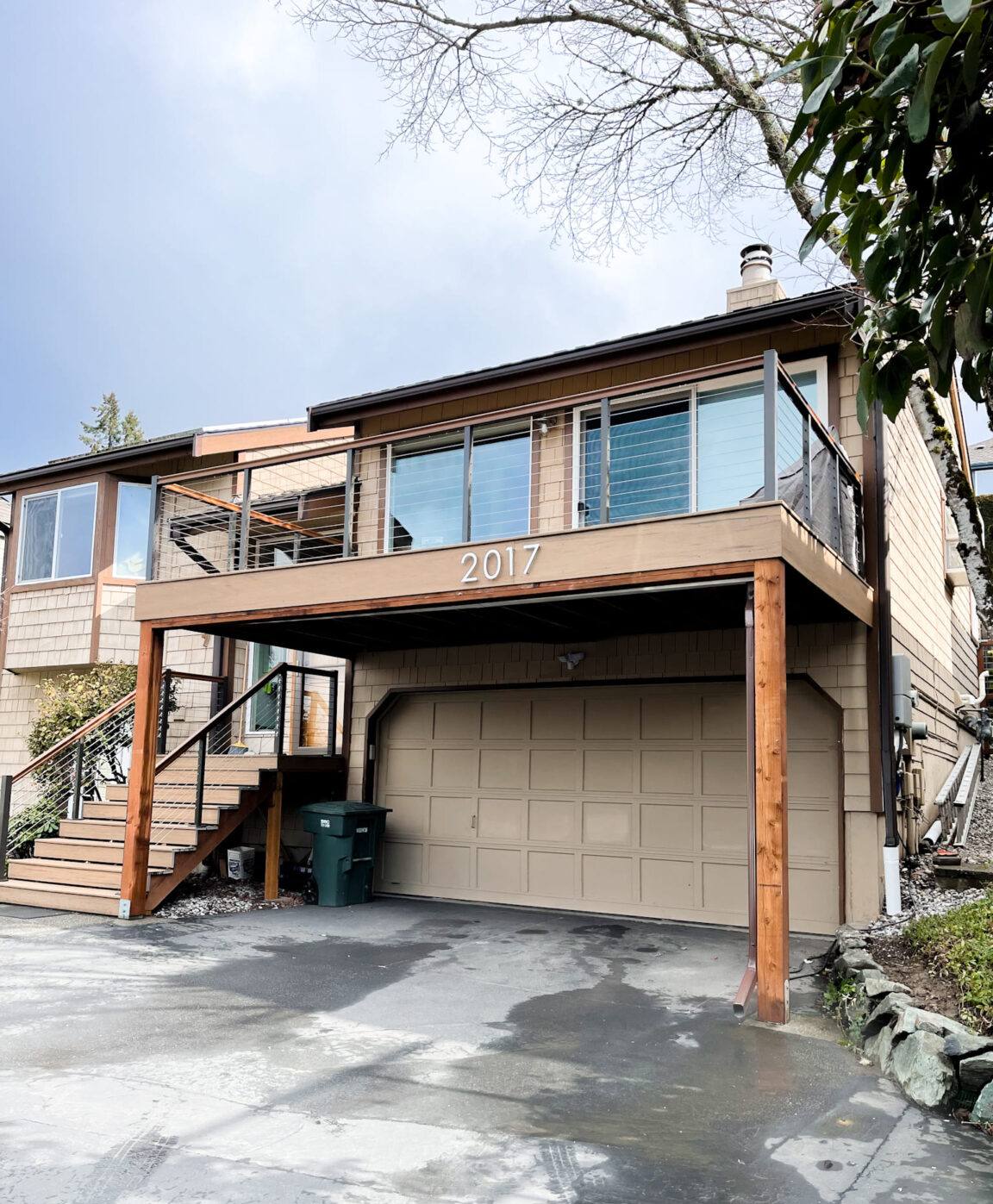
Why Decks Wear Out Faster in the Tampa Bay Climate
Every deck material has a lifespan, but that lifespan gets compressed in West Central Florida. A few reasons why:
- UV degradation: Tampa gets some of the most intense year-round sun exposure in the continental U.S. Wood fibers break down, composite surfaces can fade unevenly, and finishes that would last a decade up north may need attention in half that time here.
- Humidity and wood movement: Constant moisture in the air, combined with afternoon storms, keeps wood decking in a cycle of swelling and drying. That movement loosens fasteners, opens up cracks, and accelerates rot at joints and end grain.
- Wind-driven rain: During storm season, rain doesn't just fall — it drives sideways into ledger connections, stair stringers, and any spot where water can collect against the house.
- Hurricane-force wind loading: Even homes that never take a direct hit still see repeated high-wind events that stress railings, post connections, and ledger attachment over time.
- Salt air influence: Brandon is inland, but Tampa Bay's salt-laden air still reaches this far, quietly accelerating corrosion on lower-grade fasteners and hardware over the years.
None of this means a deck can't last in this climate — it means the materials and details have to be chosen with these conditions in mind, not against them.
Signs Your Brandon Deck Needs Replacing, Not Patching
Homeowners often ask us whether a deck can be repaired instead of replaced. Sometimes it can. But there are signs that point to full replacement being the more honest recommendation:
- Soft, spongy, or spring-feeling boards in multiple areas, not just one spot
- Visible rot or insect damage at the ledger board (where the deck attaches to the house)
- Rusted, bent, or pulling fasteners across large sections of the frame
- Wobbly railings or posts that move when pushed
- Footings that have shifted, cracked, or show signs of settling
- A structure that's simply outdated relative to current Florida Building Code wind and railing requirements
When damage is isolated to a board or two and the frame underneath is sound, repair makes sense. When the problems show up in the structural bones — ledger, joists, footings — replacement is usually the more cost-effective and safer path, even if it's the less appealing answer in the moment.
What a Correct Deck Replacement Involves
1. Removal and Structural Inspection
We don't just tear off decking boards and build over the same frame. Full replacement means removing the structure down to (and including, when needed) the ledger connection and footings, so we can actually see what condition the framing and hardware are in. This is often where hidden rot or undersized original construction gets discovered.
2. Ledger Board and Flashing
The ledger board — where the deck bolts into the house — is the single most common failure point on any deck, anywhere, but especially in humid climates. A correct installation uses proper structural fasteners (not deck screws), flashing that sheds water away from the house framing, and a connection that meets current code, not whatever was standard when the original deck went in.
3. Framing and Fasteners
Joists, beams, and posts should be sized for the actual span and load, using fasteners and connectors rated for exterior and, ideally, coastal-influenced use. Galvanized or stainless hardware costs more up front and pays for itself by not rusting out in five years.
4. Footings
Footings need to be sized and set to local code depth, on soil that can actually support them. This matters more in areas with variable drainage, which describes a lot of Hillsborough County.
5. Decking Surface
This is the visible layer, and the one homeowners spend the most time deciding on. We'll walk through the honest tradeoffs below.
6. Railings and Stairs
Railing height, baluster spacing, and stair geometry are all governed by code for a reason — these are the parts of a deck most likely to matter in an actual fall. Replacement is the right time to bring these up to current standard if the old deck predates it.
Decking Material Options: Honest Tradeoffs for This Climate
There's no single "best" decking material — there's the right material for your budget, maintenance appetite, and how you use the space. Here's how the common options stack up under Tampa Bay conditions specifically.
| Material | Upfront Cost | Maintenance | How It Handles This Climate |
|---|---|---|---|
| Pressure-treated pine | Lowest | Regular sealing/staining needed | Prone to warping and checking under intense UV and humidity cycling if not maintained consistently |
| Tropical hardwoods (e.g., ipe) | High | Periodic oiling to maintain color | Naturally dense and rot-resistant; performs well but requires installer experience with hardness and movement |
| Capped composite | Mid-to-high | Low — occasional washing | Resists moisture and fading well; quality varies significantly by manufacturer |
| PVC decking | High | Lowest | Fully moisture-proof, holds up well to humidity; can run hotter underfoot in direct sun |
Our standard is to steer homeowners away from uncapped, budget composite products in this specific climate — not because the category is bad everywhere, but because sustained humidity and UV exposure here punish weaker capping and core materials faster than in drier regions, and warranty language on lower-tier products tends to have more exclusions for exactly these conditions. That's a maintenance-and-warranty judgment call, not a knock on any single brand.
Our Process for a Brandon Deck Replacement
- On-site assessment: We inspect the existing deck, ledger connection, and footings in person, and talk through how you actually use the space.
- Honest scope and quote: You get a clear breakdown of what needs replacing structurally versus what's a material or design choice, with pricing tied to real scope — not a vague estimate.
- Permitting: Deck replacement in Hillsborough County typically requires a permit, especially for structural work. We handle the paperwork and inspections so it's not on you to navigate.
- Demolition and disposal: Old decking, framing, and hardware are removed and hauled off.
- Structural rebuild: Ledger, framing, footings, and hardware are installed to current code with climate-appropriate materials.
- Decking, railing, and finish work: Your chosen surface material and railing system are installed and detailed.
- Final walkthrough and inspection: We review the finished deck with you and coordinate final inspection sign-off.
Why a Crew That Already Works Brandon Matters
Deck replacement done wrong isn't usually obvious on day one — it shows up two or three years later as a soft spot, a rusted bolt, or a railing that's started to wobble. A crew that's already familiar with Brandon and the greater Tampa area brings a few practical advantages:
- Familiarity with Hillsborough County permitting requirements and inspection expectations, so there are fewer surprises mid-project
- Knowledge of how local soil and drainage patterns affect footing placement
- A track record of choosing hardware and fasteners that hold up to Tampa Bay's humidity and salt air, rather than defaulting to whatever's cheapest
- The ability to schedule efficiently because we're already routing crews through the area, which often means a shorter timeline than bringing in an outside contractor
Maintaining Your New Deck in a Florida Climate
Whatever material you choose, a few habits extend its life meaningfully in this climate:
- Rinse off pollen, salt residue, and organic debris a few times a year, especially after storms
- Check fastener heads and railing connections annually for rust or loosening
- Keep gutters and downspouts near the deck clear so water isn't dumping directly onto or under it
- For wood decking, re-seal or re-stain on the schedule the manufacturer recommends — UV exposure here shortens the interval compared to cooler climates
- Trim back vegetation touching the deck to reduce trapped moisture and improve airflow underneath
What Affects the Cost of a Deck Replacement
Every project is different, but the main cost drivers are consistent: square footage, decking material choice, the condition of the existing structure (a full rebuild costs more than a resurface over sound framing), railing and stair complexity, and any permitting or engineering requirements tied to size or attachment method. We'll walk through these factors specifically for your deck during the estimate, rather than quoting a number that isn't tied to your actual project.
If your deck in Brandon is showing its age — or if you're not sure whether it needs a repair or a full replacement — we're happy to take a look and give you a straight answer. Request a free, no-pressure estimate using the form below.