 Tampa Window
 Why Brandon Decks Wear Out Faster Than the Manuals Say
Most decking products are rated and tested with a generic climate in mind. Brandon isn't a generic climate. Sitting inland from Tampa Bay in Hillsborough County, homes here get the full package: long stretches of intense, nearly year-round UV exposure, heavy summer humidity that keeps wood and fasteners damp for hours after every afternoon storm, and periodic hurricane-force wind events that test every connection in a deck's frame. None of that is exotic information to a local contractor, but it matters enormously when you're deciding how to repair a deck instead of just patching what's visible.
A deck built or repaired the same way it would be in a dry, mild climate tends to fail at the connections first — not because the materials are bad, but because the assumptions baked into a "standard" repair don't hold up under Central Florida conditions. Understanding why your deck is failing is the first step to fixing it correctly instead of temporarily.
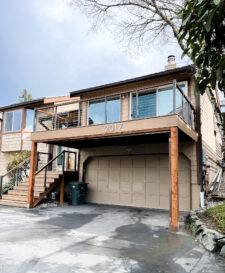
How Local Climate Actually Damages a Deck
UV and Heat
Constant sun exposure breaks down the lignin in wood fibers and degrades the surface finish or sealant on composite boards over time. This shows up as graying, splintering, and surface checking on wood, or fading and chalking on composites. It's cosmetic at first, but once the protective layer is compromised, moisture gets in underneath.
Wind-Driven Rain and Humidity
Tampa-area storms don't just fall straight down — wind pushes rain sideways, into joints, under railings, and behind ledger boards where it doesn't dry out quickly. That trapped moisture is what causes rot in framing, corrosion in fasteners, and softening in the wood around post bases long before the surface boards look obviously bad.
Wind Load
Even homes that never take a direct hurricane hit still see repeated high-wind events over the years. Every one of those loads a deck's railing posts, guard connections, and ledger attachment. Fasteners that were adequate on day one can work loose over repeated cycles, and that's often invisible until someone leans on a railing.
Signs Your Deck Needs Repair, Not Just Cleaning
- Boards that feel spongy, bouncy, or noticeably flex underfoot
- Visible gaps, splitting, or cupping in individual boards
- Rust streaks around screws or nail heads
- A railing or post that wiggles or has visibly shifted from vertical
- Soft or discolored wood where the deck attaches to the house (the ledger board)
- Gaps opening up between the deck and the house wall
- Stair stringers that feel uneven or have visible cracking
- Standing water that doesn't drain between boards after rain
Any one of these on its own might be minor. Several together usually mean the underlying structure needs attention, not just the surface.
What an Honest Deck Repair Actually Involves
A repair that only replaces the boards you can see is, at best, a partial fix. A correct repair starts from the structure and works outward:
- Framing check — joists, beams, and posts are inspected for rot, splitting, or corrosion, especially anywhere moisture collects
- Ledger board and flashing — the connection to the house is one of the most common failure points in this climate and is checked for water intrusion behind the flashing
- Fastener condition — corroded or loosened hardware is replaced with fasteners rated for outdoor and coastal-influenced exposure, not whatever was on the shelf
- Post bases and footings — checked for movement, cracking, or contact with standing water
- Railings and guards — tested for the actual load they're supposed to hold, not just visual straightness
- Decking surface — damaged boards replaced, with attention to spacing that allows proper drainage and airflow underneath
Skipping steps 1 through 4 and going straight to new boards is the most common shortcut we see, and it's why some decks need the same repair again within a couple of years.
Decking Materials: Repair Considerations
What your deck is built from changes how it fails and what a repair should look like. Here's an honest comparison for our climate:
| Material | How It Typically Fails Here | Maintenance Burden | Repair Notes |
|---|---|---|---|
| Pressure-treated wood | Rot at fastener points, ledger, and ground contact; surface splintering from UV | Needs re-sealing every 1-2 years in this climate to perform well | Easiest to spot-repair board by board; framing beneath often needs equal attention |
| Composite decking | Surface fading/chalking; moisture intrusion at cut ends if not properly capped | Low — no sealing, but not zero-maintenance | Board replacement is straightforward; framing underneath is usually still wood and needs its own inspection |
| Cedar or other naturally durable wood | Graying and surface wear from UV; softens if sealant isn't maintained | Moderate — sealing recommended most years | Similar repair approach to pressure-treated framing but with more attention to matching appearance |
| PVC decking | Generally the most UV- and moisture-resistant surface option, but sensitive to installation temperature and fastening method | Low | We're selective about installation technique here — done wrong, PVC boards can buckle in our heat swings |
None of these materials is "bad" — each has trade-offs in maintenance, moisture behavior, and cost. Our job is matching the repair approach to what's actually on your deck now, not pushing a product switch you don't need.
Repair vs. Replace: How We Actually Decide
Homeowners often assume visible damage means the whole deck needs to come out. Usually it doesn't. We look at three things:
| Factor | Leans Toward Repair | Leans Toward Replacement |
|---|---|---|
| Framing condition | Solid joists/beams, isolated soft spots | Widespread rot or corrosion in structural members |
| Age vs. damage extent | Younger deck, damage limited to a few boards or connections | Older deck where multiple systems are failing at once |
| Ledger/attachment integrity | Ledger and flashing sound | Ledger compromised — this affects the whole structure's safety |
A localized repair — a few boards, a railing section, a post base — is typically a modest job, often in the low hundreds to low thousands of dollars depending on scope. Structural work involving framing, ledger replacement, or multiple sections climbs higher. We'll tell you plainly which category your deck falls into before any work starts, not after.
Our Process for Brandon Deck Repairs
- On-site inspection — we get under the deck where possible, not just walk the surface
- Written diagnosis — what's failing, why, and what caused it (usually moisture, UV, fastener wear, or a combination)
- Repair plan and honest estimate — scope, materials, and a clear range before work begins
- Permit check — structural repairs in Hillsborough County may require a permit; we handle that determination rather than leaving it to guesswork
- The repair itself — framing and connections addressed before surface materials
- Final walk-through — railings tested, drainage checked, everything reviewed with you before we consider the job done
Why It Matters That We Already Work in Brandon
A deck repair crew that regularly works in and around Brandon and the greater Tampa area isn't guessing at how the local climate treats outdoor structures — they've already seen it, repeatedly, on homes with the same sun exposure, the same humidity, and the same storm patterns as yours. That familiarity shows up in practical ways: knowing which fastener grades hold up here, knowing when Hillsborough County permitting applies to a given scope of repair, and being able to respond promptly after a storm rather than working from a distant service area with a long wait list.
It also means we're not experimenting on your deck. The repair approach we recommend is based on what's actually held up on similar decks in this region, not a generic checklist written for a different climate.
Keeping a Repaired Deck in Good Shape
- Reseal or re-stain wood decking on a regular schedule rather than waiting for visible graying
- Keep gutters and downspouts clear so runoff doesn't pool near posts or footings
- Sweep debris out from between boards to keep drainage gaps open
- After any major storm, do a quick visual check of railings and stair connections
- Address small issues — a loose board, a rust spot on a fastener — before the next rainy season, not after
A deck repaired correctly, with the framing and connections addressed alongside the visible surface, should hold up well against Tampa's heat, humidity, and storm season for years — but only if small maintenance items don't get ignored.
If your deck in Brandon has soft spots, a wobbly railing, or damage you're not sure how serious it is, we're happy to take a look and give you a straight answer. Use the form below to request a free, no-pressure estimate.