 Tampa Window
 Board & Batten Siding in Clearwater's Coastal Climate
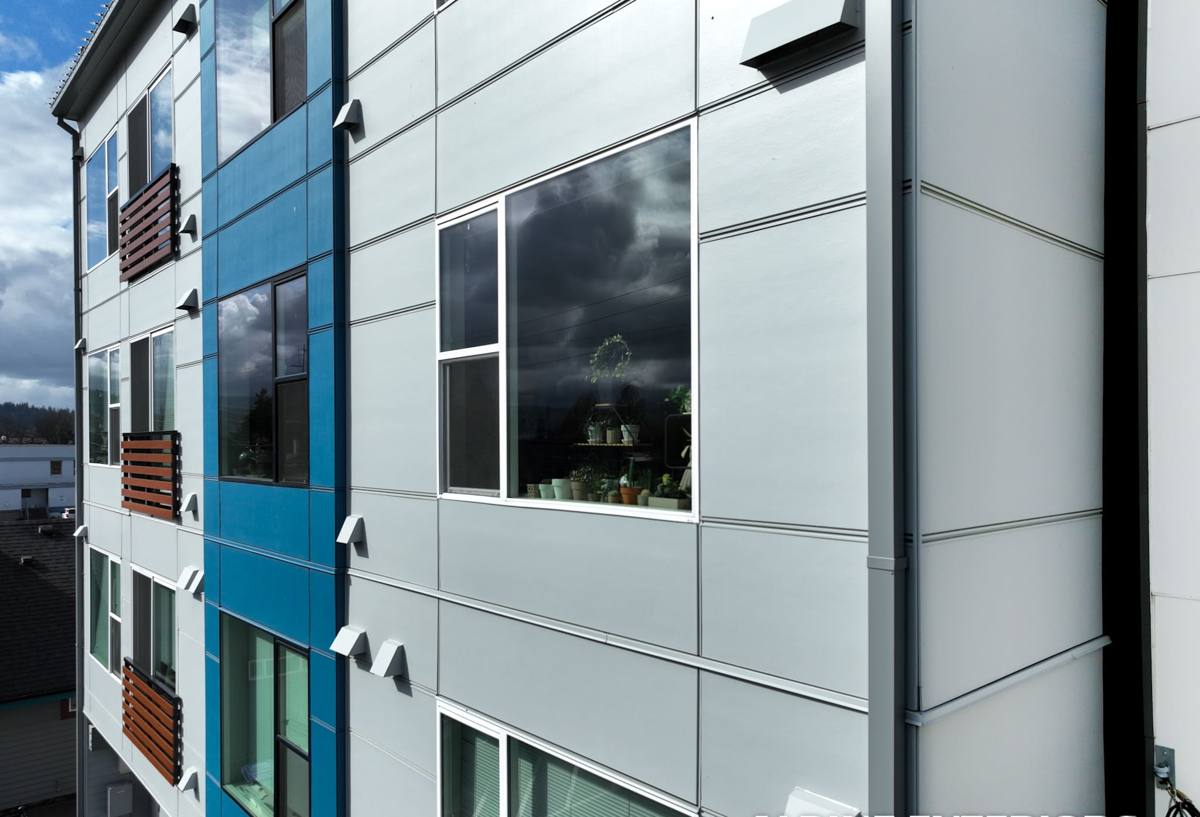
Board and batten siding has become one of the most requested exterior styles in Clearwater, and it's easy to see why. The vertical lines read as clean, modern, and a little coastal without tipping into a beach-cliché look, and it pairs well with the mix of ranch, Florida vernacular, and newer construction found throughout the area. But the look is only half the story. On a home a few miles from Tampa Bay and the Gulf, board and batten siding has to survive a punishing combination of intense UV exposure, wind-driven rain, salt-laden air, and the occasional hurricane-force wind event. Not every siding product, and not every installation, is built for that.
We install board and batten siding for homes throughout the Tampa Bay area, including Clearwater, and we do it with one material: James Hardie fiber cement. This page walks through what Clearwater's climate actually demands from a board and batten system, what correct installation looks like, and how we approach the job from first visit to final walkthrough.
What Clearwater's Climate Actually Does to Vertical Siding
Board and batten's vertical seams and repeated joint pattern make it more exposed to certain failure modes than horizontal lap siding, which matters a lot in a Gulf Coast climate like Clearwater's.
Salt Air and Humidity
Being close to the Gulf and Tampa Bay means airborne salt is a constant, low-level presence on exterior surfaces, even well inland from the immediate waterfront. Combined with Florida's year-round humidity, that salt accelerates corrosion on fasteners and metal trim, and it degrades cheap coatings faster than manufacturers' lab testing in drier climates would suggest. Any siding product installed here needs fastener hardware and a factory finish rated for coastal exposure, not just "exterior grade."
UV Exposure
Hillsborough and Pinellas County homes get sun almost every day of the year. UV breaks down pigments and resins in paint and in some composite sidings, leading to fading, chalking, and surface degradation well before a siding product's structural life is up. A board and batten wall with fading battens next to un-faded boards looks worse than a plain wall, because the pattern draws the eye directly to the inconsistency.
Wind-Driven Rain
Clearwater doesn't just get rain, it gets rain pushed sideways by onshore wind, which finds every gap, unsealed joint, and poorly lapped seam in an exterior wall. Board and batten's vertical battens create a lot of linear joint length compared to horizontal siding of the same wall area, so the quality of caulking, flashing, and batten spacing has an outsized effect on whether water actually stays out.
Hurricane-Force Wind
Tampa Bay sits squarely in a hurricane-exposed region, and even in years without a direct hit, tropical systems bring sustained high wind and gusts to Clearwater. Siding needs a fastening schedule and product rating that holds up to real wind load, not just enough nails to pass a quick visual inspection.
Why Product Choice Matters More on This Style
Because board and batten has more seams and more exposed board edges per square foot of wall than lap siding, the material itself has to be dimensionally stable and moisture-resistant at the core, not just on the surface.
- Wood-based composites and engineered wood can swell, delaminate, or take on moisture at cut edges and joints, which is a particular risk in a humid, storm-prone market like Clearwater.
- Vinyl board and batten profiles can warp or distort in sustained high heat and don't hold up structurally the way a rigid fiber cement panel does in wind events.
- Primed wood species need repainting on a cycle that most homeowners underestimate, and salt air shortens that cycle further.
This is why we standardized on James Hardie fiber cement for every board and batten job we do, including in Clearwater. It's a non-combustible, cement-based product that doesn't rely on paint film alone to keep moisture out, and Hardie's HZ5 product line is specifically engineered for high-humidity, storm-prone climates like ours.
What Correct Board & Batten Installation Involves
A board and batten wall looks simple from the street, but the assembly behind it is what determines whether it lasts. On every Clearwater job we build the wall system the same disciplined way:
Water-Resistive Barrier First
Before any board goes up, the wall gets a continuous water-resistive barrier, properly lapped and sealed at every penetration. This is the layer that actually stops bulk water from reaching the sheathing if wind-driven rain gets past the siding itself.
Proper Batten Spacing and Fastening
Battens need consistent spacing and a fastening pattern that matches Hardie's published installation instructions for our wind zone, not a generic nailing schedule. Fastener type matters too: in a salt-air environment, corrosion-resistant fasteners are not optional.
Flashing at Every Transition
Windows, doors, roof lines, and any other wall penetration need step flashing or head flashing detailed correctly before the siding closes over it. This is the single most common place we find prior installation failures on older Clearwater homes, and it's almost always invisible until a leak shows up inside.
Clearance and Drainage
Board and batten needs proper clearance from grade, roof lines, and hardscape, plus a drainage plane behind the siding so any incidental moisture can escape rather than sit against the wall assembly.
Factory-Finished Color
We install Hardie's ColorPlus factory-applied finish wherever possible, which is baked on under controlled conditions and holds color far more consistently under Florida UV than field-applied paint, especially across a wall with as many distinct board and batten surfaces as this style has.
Our Process for a Clearwater Board & Batten Project
- On-site assessment. We walk the exterior, check existing wall condition, look for prior water damage or flashing problems, and take measurements.
- Product and profile selection. We review Hardie board and batten profile and color options against the home's style and HOA or neighborhood expectations where applicable.
- Written scope and estimate. You get a clear, itemized scope before any work starts, including what's being removed, what substrate repairs (if any) are anticipated, and the fastening and flashing approach.
- Tear-off and substrate check. Old siding comes off and we inspect sheathing for hidden rot or moisture damage before closing the wall back up.
- Water-resistive barrier and flashing. Installed and sealed before a single board goes up.
- Board and batten installation. Installed to Hardie's specification for our wind zone and climate.
- Final walkthrough. We review the finished work with you and go over care and warranty documentation.
Why a Crew That Already Works Clearwater Matters
Installation quality is only part of getting board and batten siding right here. The other part is knowing the local conditions well enough to plan around them. A crew that regularly works Pinellas and Hillsborough County jobs already understands which wall orientations take the worst UV and wind-driven rain in this area, how local wind zone requirements affect fastening schedules, and how to sequence work around Florida's rain patterns so a wall doesn't sit open longer than it should. That local pattern recognition is difficult to replicate for a crew coming from outside the region, and it's the kind of thing that shows up years later as either a wall that's still tight or one that isn't.
Cost Factors for Board & Batten Siding in Clearwater
Every home is different, and we don't publish fixed prices because wall condition, square footage, trim complexity, and substrate repairs all move the number. The table below lays out the factors that most affect cost on a Clearwater board and batten project, in general terms.
| Factor | Why It Affects Cost |
|---|---|
| Existing substrate condition | Hidden rot or moisture damage found during tear-off requires repair before new siding goes on |
| Wall height and access | Multi-story sections and difficult access add labor time |
| Trim and detail complexity | Windows, corners, and roofline transitions each need individual flashing and fitting |
| Board and batten profile | Panel-and-batten versus individual board-and-batten assemblies differ in material and labor |
| Color selection | Factory ColorPlus finishes versus field-painted options affect material cost and long-term upkeep |
| Scope of replacement | Full exterior replacement versus a single wall or addition changes mobilization and total labor |
What to Ask Before You Hire Anyone for This Job
Board and batten's higher joint count makes installation quality more important than on most other siding styles. Before hiring a crew for this work in Clearwater, it's worth confirming:
- Are they installing to the manufacturer's written specification for our wind zone, or a generic nailing pattern?
- Will they inspect and document substrate condition before closing the wall?
- What flashing detail will they use at windows, doors, and roof transitions?
- Is the color a factory-applied finish or field-applied paint, and what's the difference in long-term maintenance?
- What's covered under the manufacturer's warranty versus the installer's workmanship warranty, and is either transferable?
If you're weighing board and batten siding for a Clearwater home, we're happy to walk the exterior with you, talk through what your walls actually need given their sun and wind exposure, and put together a straightforward, no-pressure estimate. There's a form below to get started.