 Tampa Window
 Tampa's Climate Doesn't Go Easy on Siding
Town 'n' Country sits close enough to Tampa Bay and the Gulf that homes here take on a rougher combination of weather than siding in most parts of the country ever has to survive. Hurricane-force winds test how well siding is fastened down. Intense, nearly year-round UV bakes paint and finishes until they chalk and fade. Wind-driven rain during summer storms finds every gap in flashing and trim. And salt-laden air drifting in off the water accelerates corrosion on fasteners and hardware that isn't rated for it. None of these are occasional stress tests — in Hillsborough County, they're the normal weather pattern siding has to shrug off, year after year.
That's the backdrop for every siding decision a Town 'n' Country homeowner makes. A product or installation detail that would be fine in a drier, calmer climate can fail here in a few years instead of a few decades.
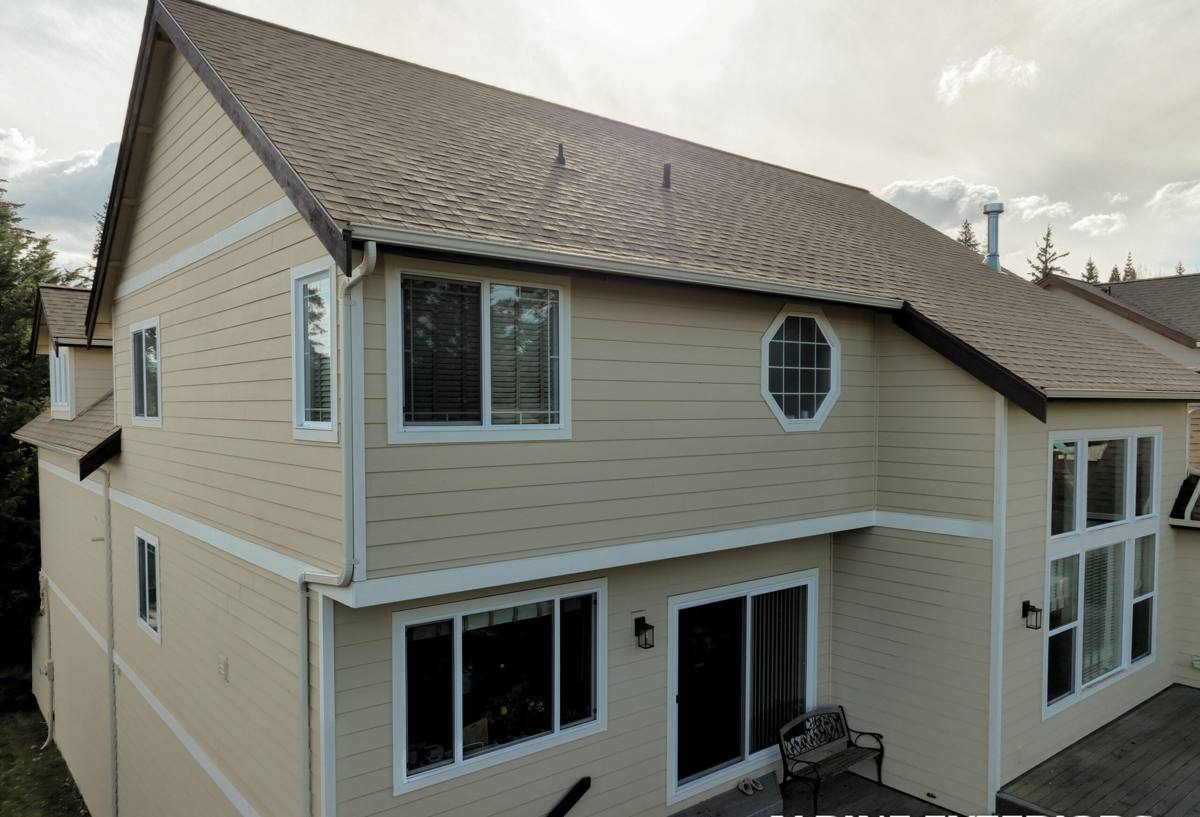
What Town 'n' Country Homes Actually Need From Their Siding
Wind Resistance That's Built In, Not Bolted On
Hillsborough County sits in a wind zone that assumes hurricanes are a matter of when, not if. Siding here needs a fastening pattern and a product rated to hold up under sustained high winds and the debris impact that comes with them — not just enough to pass a casual inspection on a calm day.
A Finish That Can Take the Sun
Florida's UV load is some of the harshest in the continental United States. Paint that isn't formulated for it fades unevenly, chalks, and needs recoating on a schedule most homeowners don't want to keep. Whatever goes on the outside of a Town 'n' Country home needs a factory finish engineered to hold color under that kind of sun exposure, not a job-site paint job hoping to keep up.
Moisture Management That Assumes Wind-Driven Rain
Straight-down rain is easy to shed. Wind-driven rain pushes water sideways, up under laps, and into any seam that isn't properly flashed and caulked. Siding systems and installation details both have to account for water moving in directions gravity alone wouldn't cause.
Corrosion Resistance for Salt Air
Even well inland of the immediate coastline, Tampa Bay's salt air travels. Fasteners, flashing, and trim hardware that aren't rated for coastal exposure corrode faster here, and once a fastener starts failing, it takes the surrounding siding's wind and water performance down with it.
Matching the Area's Mixed Construction
Homes throughout this part of Hillsborough County are a mix of concrete block construction with siding used on gables and accent walls, and fully frame-built homes sided top to bottom. Each situation calls for a different transition detail where siding meets stucco, brick, or trim, and getting that transition wrong is a common source of water intrusion down the line.
Why We Only Install James Hardie Fiber Cement Siding Here
We don't install vinyl, LP SmartSide, primed wood, or other fiber cement brands, and that's a deliberate call based on watching how products perform under Tampa Bay's specific mix of wind, sun, rain, and salt.
| Material | How It Handles Town 'n' Country's Climate |
|---|---|
| Vinyl siding | Lightweight panels can deform or blow off in high wind, and the material itself can soften and warp under sustained direct sun |
| Engineered wood (LP SmartSide and similar) | Wood-based core is more sensitive to prolonged moisture exposure than fiber cement, which matters where wind-driven rain is routine |
| Primed wood or cedar | Needs an ongoing paint and sealing schedule to keep moisture and insects out; upkeep demands are higher in humid coastal climates |
| Other fiber cement brands | Share fiber cement's core durability but vary in factory finish quality, climate-specific engineering, and warranty structure |
| James Hardie fiber cement | Non-combustible, engineered HZ5 product line for the Southeast, with a factory-applied ColorPlus finish built to hold color under intense UV |
James Hardie engineers its HZ product lines by climate zone, and Tampa Bay falls into the HZ5 zone — built around exactly this kind of humidity, heat, and storm exposure. The ColorPlus finish is baked on in a factory setting with a UV-resistant coating system, which is a meaningfully different proposition than field-applied paint trying to survive a Florida summer. Combined with a strong transferable warranty and a track record of holding up when installed correctly, it's the standard we're willing to put our name behind.
What a Correct Fiber Cement Siding Installation Actually Involves
Fiber cement siding is only as good as the details underneath it. A rushed or generic install can undercut even the best material. In Town 'n' Country, we pay particular attention to:
- Proper starter strip placement and consistent reveal so laps shed water the way they're designed to
- Correct fastener type, spacing, and embedment depth for the local wind zone — under-fastened siding is one of the most common causes of wind failure
- Weather-resistant barrier and flashing detail around every window, door, and penetration, sized for wind-driven rain rather than straight-down rain
- Ground clearance and proper clearance from roof lines, decks, and grade to keep moisture from wicking into the bottom courses
- Caulking only where Hardie's specifications call for it, using a sealant rated for sustained UV and humidity exposure
- Corrosion-resistant, coastal-rated fasteners and trim hardware given the area's salt-air exposure
Skipping any one of these doesn't show up on day one — it shows up two or three storm seasons later, as a callback for water intrusion, a fastener working loose, or paint failing at a seam that should have been sealed differently.
Choosing a Profile and Color That Fits the Neighborhood
Beyond performance, siding is a big part of how a house reads from the street. James Hardie offers a range of lap widths, panel and shake styles, and a broad ColorPlus palette, and the right choice depends on your home's age and style as much as personal taste. Lighter, heat-reflective tones are a popular choice in Tampa Bay for their ability to stay cooler under direct sun, though darker colors are available and hold up equally well thanks to the factory finish. We'll walk through samples and talk through what fits your specific house rather than steering you toward one default look.
Our Process for a Town 'n' Country Siding Project
1. On-Site Assessment
We look at your home's existing wall assembly, sheathing condition, and any moisture or wind damage under the current siding before quoting anything. Homes throughout Town 'n' Country range from older single-story construction to newer builds, and each substrate needs a different prep approach.
2. Product and Color Selection
We walk through Hardie's plank profiles, panel and shake options, and ColorPlus palette so the finished look fits the house and the neighborhood, not just the manufacturer's catalog.
3. Permitting and Code Compliance
Hillsborough County requires permits and inspections for siding replacement, and wind-load requirements factor into fastening specs. We handle that process rather than leaving it for the homeowner to navigate.
4. Tear-Off and Substrate Repair
Old siding comes off, and any water-damaged sheathing or framing gets addressed before a single new board goes up. Covering rot with new siding just hides a problem that keeps getting worse underneath.
5. Installation to Manufacturer Specification
Every fastener, flashing detail, and clearance follows James Hardie's published installation guidelines for the HZ5 zone — not a generic approach used everywhere regardless of climate.
6. Final Walkthrough
We review the finished work with you, including care and maintenance basics specific to this climate, before calling the job done.
What Drives the Cost of a Fiber Cement Siding Job Here
| Cost Factor | Why It Matters in Town 'n' Country |
|---|---|
| Home size and wall complexity | More square footage and more corners, gables, and trim details mean more material and labor |
| Condition of existing sheathing | Wind-driven rain and years of humidity can hide rot that needs repair before new siding goes on |
| Siding profile and finish selection | Lap width, panel style, and ColorPlus color all affect material cost |
| Trim and accessory work | Fascia, soffit, and trim replacement done alongside siding adds scope but avoids mismatched future repairs |
| Removal and disposal of old siding | Type and amount of existing material affects tear-off time and disposal cost |
| Access and site conditions | Two-story sections, tight lot lines, or landscaping close to the house can add labor time |
We give a written, itemized estimate so you can see exactly what's driving the number, rather than a single lump sum.
Maintaining Fiber Cement Siding in a Salt Air, High-UV Climate
One of the appeals of James Hardie siding in this climate is how little ongoing maintenance it asks for compared to wood-based alternatives, but low-maintenance isn't no-maintenance. A simple annual rinse-down removes salt residue and airborne grit before it builds up. Caulking at trim joints should get a visual check each year, since sealant is generally the first thing to show wear under sustained UV, well before the siding itself does. Keeping gutters clear and grading water away from the foundation protects the bottom courses of siding from prolonged moisture exposure, which matters more here than in drier climates.
Why Local Experience in Town 'n' Country Matters
A crew that only occasionally works in coastal Florida treats every job like a generic siding install. A crew that regularly works Town 'n' Country and the surrounding Tampa area already knows Hillsborough County's permitting process, the wind-load requirements that apply here, and the specific ways this climate attacks a wall assembly over time. That familiarity shows up in fewer surprises during the job and in an installation that's built for the storms this area actually gets, not an average of national conditions.
It also means we're positioned to stand behind the work. If a warranty question or a storm-related concern comes up years down the road, you're calling a company that's still working in your neighborhood, not chasing down a contractor who's moved on.
Questions Worth Asking Before You Hire Anyone for This Job
- Are they installing to the manufacturer's published specifications for our wind zone, or a generic install pattern?
- Do they inspect and repair sheathing before installing new siding, or just cover what's there?
- Can they show you the specific ColorPlus colors and profiles available, not just a generic sample board?
- Do they pull the required Hillsborough County permits themselves?
- What does the warranty actually cover, and is it transferable if you sell the home?
- Have they worked in Town 'n' Country or nearby West Tampa neighborhoods before?
If your siding is aging, showing storm damage, or you're planning ahead of the next hurricane season, we're happy to take a look and put together a free, no-pressure estimate for your Town 'n' Country home.