 Tampa Window
 Why Clearwater Homes Are Turning to Metal Roofs
Clearwater sits close enough to the Gulf that salt-laden air, sustained UV exposure, and the threat of hurricane-force wind are just part of owning a home here. Asphalt shingles do an adequate job in milder climates, but in this corner of the Tampa Bay area, a roof has to survive wind-driven rain that finds every gap, sun that bakes materials for ten-plus months a year, and gusts that don't just knock off shingles — they can peel back entire roof sections if the fastening and flashing weren't done right the first time. Metal roofing, installed correctly, handles all three of those stresses better than most alternatives, which is why we're seeing more Clearwater homeowners ask about it specifically instead of a like-for-like shingle replacement.
This page is about metal roofing as a service for Clearwater properties — what the climate actually demands from the system, what a correct installation involves, and how we run the job from first call to final walk-through.
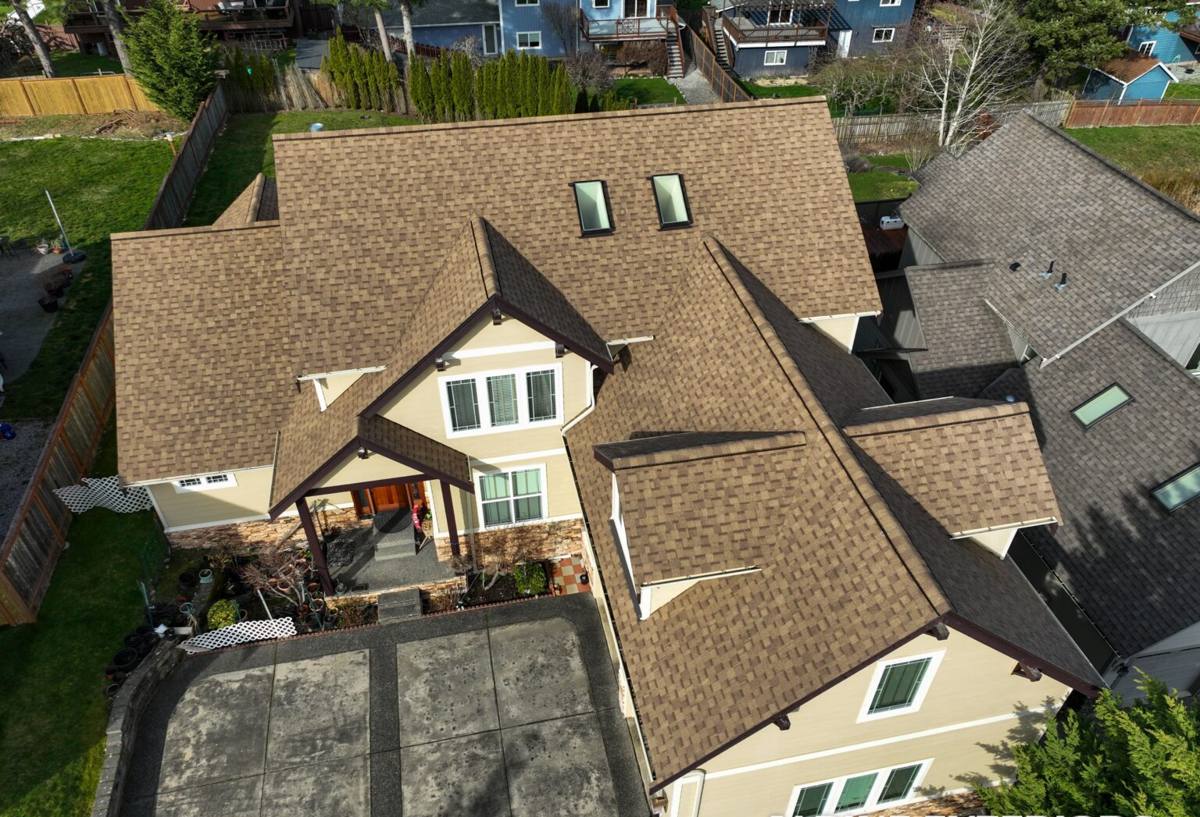
What Clearwater's Climate Actually Does to a Roof
Wind
Hillsborough and Pinellas County homes are built to Florida Building Code wind provisions, and a metal roof system rated for the right uplift pressure is one of the more resilient assemblies you can put over a house near the coast. The part that matters isn't just the panel — it's the fastening pattern, the underlayment, and how the edges and ridges are secured, since wind failures on any roof almost always start at an edge, a penetration, or a poorly fastened seam.
UV and heat
Year-round sun exposure breaks down organic roofing materials faster here than in most of the country. Asphalt shingle granules erode, oils dry out, and the shingle mat becomes brittle years ahead of its rated life. Metal doesn't have that failure mode — the coating system is engineered to resist UV degradation, and metal reflects a meaningful amount of solar heat rather than absorbing it, which also takes some load off attic temperatures and, in turn, cooling costs.
Wind-driven rain
Tropical systems and summer storms in this area rarely deliver rain straight down — it comes in sideways. That means the roof's water-shedding details (panel overlaps, flashing at valleys and penetrations, underlayment continuity) matter as much as the panel material itself. A metal roof with sloppy flashing work will leak just as fast as a shingle roof with the same mistake.
Salt air
Clearwater isn't oceanfront everywhere, but salt-laden air travels well inland along the Gulf coast, and it accelerates corrosion on unprotected or poorly coated metal. This is exactly why fastener quality and panel coating matter more here than they would fifty miles inland — cutting corners on either is where premature corrosion problems trace back to.
Metal Roofing Systems We Work With
"Metal roofing" isn't one product — it's a category, and the right choice depends on the home, the roof pitch, and the budget. Here's how the common options compare for a Clearwater property.
| System | How it's fastened | Best for | Trade-offs |
|---|---|---|---|
| Standing seam | Concealed clips, no exposed fasteners on the field of the panel | Homes wanting the longest service life and cleanest look | Higher material and labor cost; needs a skilled crew for tight seams |
| Exposed-fastener panel (5V, corrugated) | Screws through the panel face into decking or purlins | Budget-conscious projects, outbuildings, some ranch-style homes | Fasteners and washers age and need periodic inspection/replacement |
| Stone-coated steel | Interlocking panels, concealed and exposed fastener options depending on profile | Homeowners who want a shingle or tile look with metal's durability | Heavier than bare steel panels; profile choice affects wind performance |
| Aluminum standing seam | Concealed clips | Coastal-adjacent homes prioritizing corrosion resistance | Softer than steel — more susceptible to hail denting; higher material cost |
For most Clearwater homes within reach of salt air, we steer the conversation toward standing seam in steel or aluminum with a quality coating system, because the concealed-fastener design removes the long-term maintenance item that exposed screws create. That's our professional standard, not a knock on exposed-fastener panels — they have a legitimate place on lower-budget or secondary structures where the maintenance trade-off is acceptable.
Coatings and gauge — the part that's easy to overlook
- Panel gauge — thicker steel resists denting and holds fastener grip better over decades; thinner gauges cost less but flex more under wind load.
- Coating system — a quality paint/coating package (the kind rated for coastal exposure) resists chalking, fading, and corrosion far longer than a builder-grade finish.
- Fastener material — mismatched metals between fastener and panel cause galvanic corrosion; in salt air, this shows up years faster than inland.
- Underlayment — a synthetic or high-temp underlayment rated for metal roofing, not a generic felt, since metal panels run hotter than shingles in direct sun.
What a Correct Metal Roof Installation Involves
The panel itself is often the least likely thing to fail. Problems on metal roofs almost always trace back to the details around the panel:
- Deck inspection and prep. We check the existing decking for soft spots, rot, or prior water damage before anything goes down — covering a bad deck with a great roof just hides the problem.
- Underlayment. A continuous, properly lapped underlayment rated for high heat under metal, tight at every penetration.
- Flashing at valleys, walls, and penetrations. This is where the majority of roof leaks originate on any roof type — custom-formed flashing, not one-size-fits-all trim, at every transition.
- Panel layout and fastening. Panels run true, seams engaged fully (on standing seam) or fastened to the manufacturer's pattern and torque spec (on exposed-fastener systems), with attention to expansion allowance since metal moves with temperature swings.
- Edge and ridge detailing. Drip edges, rake trim, and ridge caps secured to resist uplift — this is the area most exposed to wind failure in a named storm.
- Final inspection and cleanup. Walk the roof, check every penetration and seam, and clear the site of metal shavings and debris (loose steel shavings left behind will rust and stain).
How We Approach a Clearwater Metal Roofing Job
We treat every roof as a system, not just a stack of panels. Our process on a Clearwater project generally runs like this:
1. On-site assessment
We look at the existing roof, the deck condition, roof pitch, and any specific exposure concerns (proximity to open water, tree cover, prior wind or water damage) before recommending a system.
2. Straight numbers
You get a written scope and price before work starts — what system, what gauge, what coating, what warranty terms apply to material versus labor. No surprise change orders for things we could have identified during the assessment.
3. Permitting
Roofing work in Hillsborough County requires permitting and inspection. We handle that process as part of the job rather than leaving it on the homeowner.
4. Installation
Our crews follow manufacturer fastening and flashing specs — not a generic approach applied to every panel type — because that's what keeps the wind and water warranties valid.
5. Final walk-through
We walk the finished roof with you, cover maintenance basics, and make sure you know what documentation you have for warranty purposes.
What to Check Before You Hire Anyone for Metal Roofing Here
- Do they hold active Florida roofing licensure and carry insurance you can verify?
- Will they pull the required Hillsborough County permit, or ask you to skip it?
- Do they specify panel gauge and coating system in writing, not just "metal roof" as a line item?
- Can they explain their flashing approach at valleys and penetrations, not just the panel brand?
- Do they have experience with the wind-uplift and fastening requirements specific to this coastal-adjacent area?
- Is the warranty structure — material versus workmanship — spelled out clearly and separately?
Maintenance: What Actually Matters Long-Term
Metal roofing is low-maintenance, not no-maintenance. In this climate, a periodic look at a few specific things goes a long way:
- Check exposed fasteners (if that system type was used) for backing out or washer degradation every couple of years.
- Clear debris from valleys and around penetrations after storm season — trapped organic material holds moisture against the panel.
- Watch for scratches in the coating near foot traffic areas (satellite dish work, gutter cleaning) — exposed bare metal is where corrosion starts.
- After any major wind event, a quick visual check of ridge caps and edge trim is worth the ten minutes.
Why Local Experience on This Specific Job Matters
A crew that installs metal roofs in inland, drier climates isn't necessarily thinking about galvanic corrosion from salt exposure, or about the specific wind-uplift detailing that Gulf Coast Florida homes need. Working in and around Clearwater regularly means we're accounting for those factors as a default, not as an afterthought — the flashing details, fastener choices, and coating recommendations we make come out of what actually holds up in Hillsborough and Pinellas County conditions, not a generalized national spec sheet.
If you're weighing a metal roof for a Clearwater home — whether you're replacing storm-damaged shingles or planning ahead of the next one — we're happy to walk your roof, look at your specific exposure, and give you a straight, no-pressure estimate with real numbers for your situation. There's no cost or obligation to have us take a look.