 Tampa Window
 Hyde Park's Climate Puts Real Stress on Exterior Siding
Hyde Park sits close to Tampa Bay, which means the homes here take a harder hit from coastal weather than houses further inland. Hurricane-force wind gusts test every fastener and seam in a wall system. Year-round Florida sun bakes painted and coated surfaces from above, day after day, with no real off-season. Wind-driven rain forces water sideways into laps and joints that were never designed to handle it. And the salt-laden air rolling in off the bay corrodes metal trim, fasteners, and anything not built to resist it. None of these forces act alone — they compound. A siding product or installation detail that would hold up fine in a drier, calmer climate can fail years early here.
That's the backdrop for every siding decision in this neighborhood. The mature tree canopy and historic character that make Hyde Park distinctive don't change the physics of it — if anything, established landscaping means more shade-to-sun cycling on the walls, more debris collecting in gutters and against siding lines, and more moisture held against the house after a storm passes.
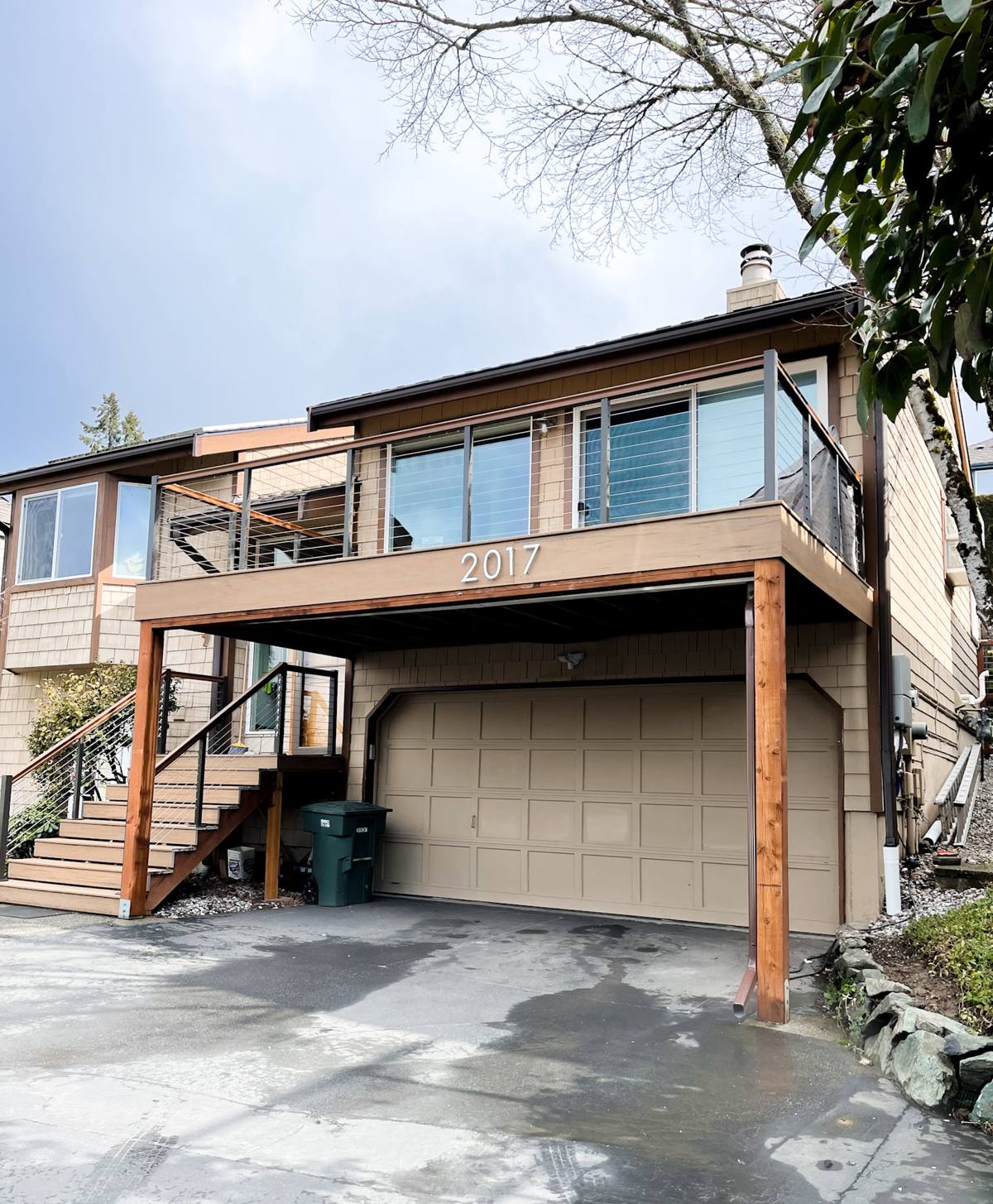
What "Correct" Siding Installation Actually Involves
Siding installation is not just nailing boards to a wall. In a coastal, hurricane-exposed county like Hillsborough, the installation details matter as much as the product itself. A correct job includes:
- A continuous water-resistive barrier behind the siding, lapped and sealed the right direction so any water that gets past the cladding drains back out instead of into the wall cavity
- Properly flashed windows, doors, and penetrations — the single most common source of hidden water damage behind siding
- Correct fastener type, spacing, and penetration depth, sized for wind uplift and pull-through resistance, not just whatever installs fastest
- Manufacturer-specified clearances at grade, roof lines, and decks so siding isn't sitting in standing water or trapped moisture
- Caulking and sealant used only where the manufacturer calls for it — over-caulking traps moisture just as badly as under-caulking lets it in
Skip any one of these and the siding can look fine for a season or two while real damage builds behind it, unseen, until paint fails, boards swell, or a section comes loose in a storm.
Why We Install Only James Hardie Fiber Cement Siding
We standardized on James Hardie fiber cement for every siding job we do, including here in Hyde Park, and we don't install vinyl, LP SmartSide, or other fiber cement brands. That's a deliberate professional standard, not a default:
- Non-combustible core — fiber cement won't ignite or contribute fuel to a fire the way vinyl or wood-based products can
- Engineered for this climate — Hardie's HZ product line is formulated specifically for hot, humid, high-moisture regions like the Gulf Coast, rather than a one-size-fits-all formula
- ColorPlus factory finish — baked-on color that resists Florida's UV exposure far better than field-applied paint, with touch-up product available instead of a full repaint down the road
- Dimensional stability — it doesn't expand, contract, or warp with humidity swings the way some engineered wood products can
- A strong, transferable warranty backed by a manufacturer with decades in the fiber cement business
We've written more detailed comparisons on why we passed on vinyl and LP SmartSide specifically, if you want the fuller picture. For this page, the short version is: in a neighborhood that sees hurricane wind, direct sun nearly every day of the year, and salt air, we don't want our name on a product we'd have to caveat.
Signs Your Hyde Park Home's Siding Needs Attention
Older homes in established Tampa neighborhoods often have siding that's due for a look, even if it seems fine from the street.
Exterior Warning Signs
- Soft or spongy spots when you press on the siding, especially near the bottom courses and around windows
- Visible warping, buckling, or boards pulling away from the wall
- Paint that's peeling, bubbling, or needs repainting more often than every several years
- Cracking or splitting along board edges and seams
- Rust streaks below fasteners or trim
Interior Warning Signs
- A musty smell along exterior walls
- Soft or discolored drywall backing up to exterior siding
- Visible daylight or gaps around window and door trim from the inside
Any one of these on its own isn't necessarily an emergency, but a few together usually mean water has been getting behind the siding for a while.
Our Siding Installation Process
Every job follows the same disciplined sequence, whether it's a small accent wall or a full re-side:
- On-site evaluation. We inspect the existing siding, sheathing, and framing for hidden moisture or rot before quoting anything, since damaged substrate has to be addressed, not covered up.
- Removal and substrate repair. Old siding comes off, and any compromised sheathing or framing gets replaced — this is where problems invisible from the outside usually show up.
- Water-resistive barrier installation. A new, continuous barrier goes on, properly lapped, taped, and flashed at every penetration.
- James Hardie installation to manufacturer spec. Correct fastener schedule, clearances, and joint treatment, following Hardie's published installation guidelines rather than shortcuts.
- Trim, caulking, and final detailing. Trim and transitions get finished, with sealant applied only where it belongs.
- Final walkthrough. We go over the finished work with you before calling the job done.
What Florida's Building Code Means for Siding Work Here
Florida's building code sets wind-load and fastening requirements for exterior wall coverings, and Hillsborough County enforces its own permitting and inspection process on top of that. In practice, this means a siding installation isn't just a materials question — the county wants documentation that the product and installation method meet the wind rating for the site. James Hardie products carry the engineering and testing data needed to satisfy this, but only when installed according to the manufacturer's specifications for fastener type, spacing, and pattern. A shortcut on fastening isn't just a workmanship issue here — it can be a code compliance issue.
We pull the required permits and coordinate inspections as part of the job, so you're not left tracking down paperwork or finding out after a storm that the installation wasn't done to code.
What Siding Installation Costs Depend On
There's no honest single price for siding installation — it depends on the specifics of the house. The main factors are below, in general terms, so you know what drives the number up or down before you get a quote.
| Factor | How it affects cost |
|---|---|
| Home size and number of stories | More square footage and taller walls mean more material, labor, and equipment (lift access, scaffolding) |
| Condition of existing sheathing | Rot or moisture damage found during removal adds repair work beyond the siding itself |
| Amount of trim, corners, and architectural detail | Bungalow and Craftsman-style homes common in older Tampa neighborhoods often carry more trim work than a simple rectangular wall |
| Full re-side vs. partial replacement | Partial work costs less up front but can leave a visible seam between old and new material and finish |
| James Hardie product line and profile chosen | Lap siding, shingle-style panels, and board-and-batten carry different material costs |
We give a firm, itemized quote after seeing the house in person — not a phone estimate — because two homes of the same square footage can have very different scopes of work once we're looking at the actual walls.
Why a Crew That Already Works in Hyde Park Matters
Siding work in an established neighborhood like Hyde Park isn't identical to a new-construction subdivision job. Homes here tend to be older, which means more variability in wall framing, more chance of substrate issues under the existing siding, and in some cases, exterior changes that may fall under historic or design review depending on where the property sits within Tampa. A crew that's worked in the area knows to check for these things up front instead of discovering them mid-project, and knows what the permitting and inspection process in Hillsborough County actually requires for a wind-rated exterior in a hurricane-prone region.
Familiarity also matters for something more basic: matching the character of the street. Hyde Park's mix of architectural styles means a siding profile and color that looks right on one house can look out of place on the one next to it. A crew that's installed Hardie siding across the neighborhood has a feel for what fits, rather than guessing from a catalog photo.
Maintaining Hardie Siding After Installation
Correctly installed James Hardie siding is low-maintenance, not no-maintenance. In this climate, that means:
- Rinsing salt residue and grime off the surface periodically, especially on sides of the house exposed to prevailing wind off the water
- Keeping gutters clear so water doesn't overflow and run down the face of the siding
- Trimming back vegetation and tree limbs that hold moisture against exterior walls
- Re-caulking control joints and trim seams as they age, rather than waiting for a visible gap
- Doing a walk-around inspection after major storms to catch impact damage early
None of this is heavy upkeep — it's the difference between siding that reaches its full service life and siding that starts showing problems a decade in.
If your Hyde Park home's siding is showing its age, or you're planning a renovation and want it done right the first time, we'd be glad to take a look. Fill out the form below for a free, no-pressure estimate.