 Tampa Window
 Building Decks for Seminole Heights' Older Homes and Florida's Climate
Seminole Heights is one of Tampa's older, established neighborhoods, known for its bungalow-style homes, mixed lot sizes, and mature oak canopy. A lot of the housing stock here predates modern building codes, which means when we add a deck to one of these homes, we're often tying new construction into older framing, uneven grading, or a foundation that was never designed with an attached structure in mind. That's a different job than building a deck onto a house that went up in 2015.
On top of the age factor, every deck we build in this part of Hillsborough County has to hold up to the same climate stress as anywhere else in the Tampa Bay area: intense UV exposure nearly year-round, sudden wind-driven rain, hurricane-force gusts during storm season, and salt-laden air that travels inland off Tampa Bay farther than most homeowners expect. None of that is unique to waterfront property. A deck built with the wrong fasteners, the wrong footing depth, or boards that weren't rated for our humidity will show problems within a few seasons, not decades.
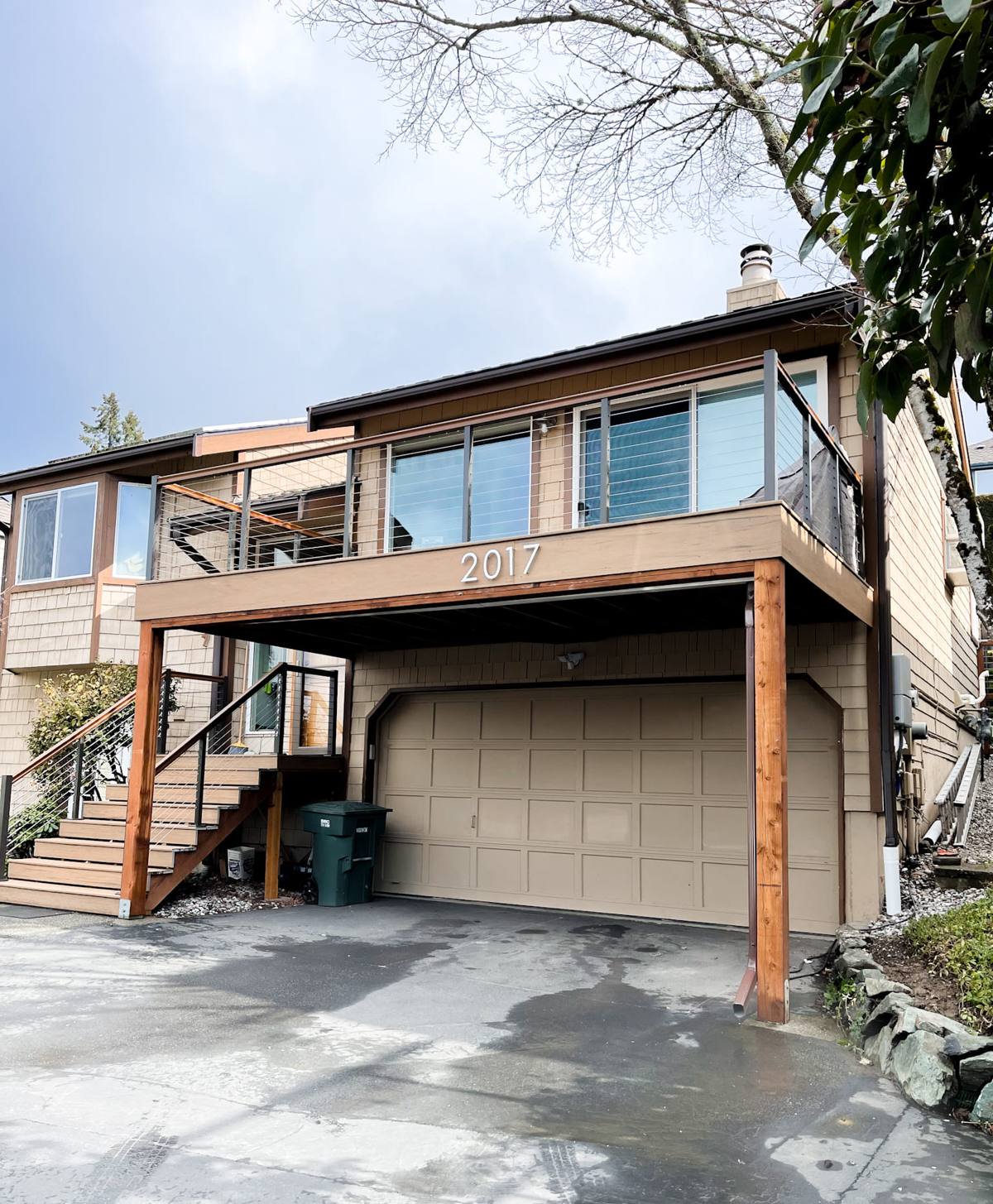
What Tampa's Climate Actually Does to a Deck
It helps to understand the specific ways our climate attacks a deck, because it changes almost every decision in the build.
UV and Heat
Direct Florida sun breaks down the surface fibers of wood decking and causes graying, splintering, and checking faster than in most other parts of the country. Composite and PVC boards resist this better, but even those products vary in how well their color and surface finish hold up under sustained UV.
Wind-Driven Rain and Humidity
Tampa doesn't just get rain, it gets rain pushed sideways under eaves and into board gaps and connection points. Combined with our humidity, that moisture sits in joints and framing longer than it would in a drier climate, which accelerates rot and corrosion if the wrong materials were used underneath the decking.
Storm-Season Wind Loads
A deck attached to a house has to resist uplift and lateral loads during tropical storms and hurricanes, not just support foot traffic. That affects how the ledger board is fastened to the house, how posts are anchored to footings, and how joists are hung.
Salt Air
Even inland neighborhoods like Seminole Heights see salt-laden air carried off Tampa Bay, especially during onshore wind events. Salt accelerates corrosion on any fastener, bracket, or hardware that isn't rated for it, which is why generic hardware-store screws are a common source of early deck failure here.
What a Correctly Built Deck Involves
A deck that's built right in this climate isn't complicated, but it does require getting several details correct that are easy to skip if a crew is used to building in a milder climate.
- Footings poured below the frost-irrelevant but locally required depth, sized for the soil conditions on the lot
- A ledger board properly flashed and lag-bolted or through-bolted into the home's rim joist, never just nailed
- Corrosion-resistant, code-rated fasteners and structural connectors throughout, not mixed hardware
- Joist spacing and beam sizing calculated for the actual span and load, not just "what looks right"
- Proper drainage and grading underneath the deck so water doesn't pool against posts or the house foundation
- Guardrails, stair stringers, and baluster spacing that meet current Florida Building Code requirements
- A permit pulled and inspected through Hillsborough County or the City of Tampa, depending on the property's jurisdiction
Skipping any one of these doesn't necessarily cause a problem the first year. It causes one three, five, or ten years down the road, usually right when a hurricane or a home sale forces the issue.
Choosing a Decking Material for This Climate
There's no single "best" decking material, there's a best material for your budget, your maintenance tolerance, and how much sun and moisture that specific spot on your property gets. Here's how the common options actually compare in a Tampa climate:
| Material | Sun/Heat Performance | Moisture Behavior | Maintenance | Typical Lifespan Here |
|---|---|---|---|---|
| Pressure-treated pine | Fades and checks with UV exposure | Absorbs moisture, needs sealing | Annual cleaning and re-sealing recommended | 10-15 years with upkeep |
| Tropical hardwood (e.g. ipe) | Naturally dense, holds up well | Low absorption when properly finished | Periodic oiling to maintain color | 20-25+ years |
| Capped composite | Strong UV resistance, stays cooler with lighter colors | Won't rot, resists moisture well | Occasional washing, no sealing | 25-30 years |
| PVC decking | Excellent UV and fade resistance | Fully moisture-resistant | Lowest maintenance of the group | 25-30+ years |
Pressure-treated pine is the lowest upfront cost but the highest long-term maintenance in our climate, since it's the material most affected by UV and humidity. Composite and PVC cost more initially but hold up with far less upkeep, which matters if you don't want to be resealing a deck every year in Florida heat. We'll walk through the real tradeoffs for your project rather than push whatever has the best margin.
Framing and Hardware: Where Most Failures Actually Start
Homeowners tend to focus on the decking boards because that's what they see, but most deck failures we get called out to inspect started underneath, in the framing and connections.
Fasteners and Connectors
In coastal and near-coastal Florida, hardware needs to be rated for the corrosion exposure it will actually face. That generally means hot-dip galvanized or stainless steel structural screws, joist hangers, and post bases, not standard zinc-coated hardware that starts rusting within a couple of seasons of salt air and humidity exposure.
The Ledger Board Connection
This is the single most important structural connection on an attached deck, and it's the one most often done wrong by crews unfamiliar with local code enforcement. It needs proper flashing to keep water from getting behind it and into the house's rim joist, and it needs mechanical fasteners sized for the load, not construction adhesive or a handful of nails.
Footings and Posts
Footing depth and diameter depend on the soil and the load path of the specific deck design. Undersized or shallow footings are one of the more common corners cut on lower-bid deck jobs, and they're also one of the hardest problems to fix after the deck is built and decked over.
Our Deck Building Process
1. On-Site Consultation and Design
We walk the property, look at how the deck will tie into the house, discuss material options and layout, and talk through your budget honestly, including what each material choice actually costs over time to maintain.
2. Permitting and Engineering
We handle the permit application through the appropriate local jurisdiction and provide the structural details needed for approval. This step gets skipped by some lower-cost operators, which leaves the homeowner holding the liability if there's ever an issue or an inspection during a sale.
3. Site Prep and Footings
We lay out the deck footprint, dig and pour footings to the required depth, and let them cure properly before framing begins. Rushing this stage is a common shortcut that shows up later as a shifting or squeaking deck.
4. Framing and Structural Inspection
Framing goes in with corrosion-resistant hardware sized for the span and load, and we schedule the required inspection before decking goes down, since it's the last point where the framing is fully visible.
5. Decking, Railing, and Finish Work
Decking, stairs, and railings are installed to code, with attention to fastener spacing and finish details that affect both appearance and how well the deck sheds water.
6. Final Walkthrough
We go over the finished deck with you, cover any material-specific maintenance, and make sure everything passed final inspection before we consider the job done.
Maintaining a Deck in Tampa's Sun and Humidity
Whatever material you choose, a little seasonal attention goes a long way in this climate. A basic maintenance routine looks like this:
- Sweep debris and standing water off the deck surface regularly, especially after storms
- Check and clear drainage gaps between boards so water isn't trapped against the frame
- Inspect fasteners and connectors annually for corrosion, especially near the ledger board and posts
- Re-seal or oil wood and hardwood decking on the schedule recommended for that species
- Wash composite or PVC decking periodically to prevent mildew buildup in our humidity
- Trim back nearby vegetation so leaves and moisture don't sit on the deck surface
- Have the structure looked at after any major storm, not just the surface boards
What a Seminole Heights Deck Typically Costs
Every project is different, but the biggest cost drivers on a Tampa deck project are consistent across most homes:
| Cost Factor | Why It Matters |
|---|---|
| Decking material | Pressure-treated pine is the lowest cost upfront; composite and PVC cost more but reduce long-term maintenance spending |
| Deck size and shape | Multiple levels, angles, or built-in features add labor and material beyond a simple rectangular footprint |
| Height above grade | Taller decks require more substantial framing, railings, and often stairs, which adds cost |
| Site access and grading | Sloped or hard-to-access lots, common in some parts of this older neighborhood, can add site prep costs |
| Permitting requirements | Jurisdiction-specific permit and inspection requirements are a fixed cost regardless of deck size |
| Railing and stair details | Custom railing styles or multiple stair sets add both material and labor |
We give straightforward written estimates broken down by these factors so you know what you're paying for, not a single lump number with no explanation behind it.
Why a Crew That Already Works Seminole Heights Matters
Building decks on Seminole Heights' older homes means dealing with existing framing, foundations, and grading that don't always match what's on paper. A crew that has worked in this neighborhood already knows what to expect from that housing stock, has a working relationship with the local permitting process, and understands how the mature tree canopy and lot layouts common here affect deck placement and drainage. That local experience shows up in fewer surprises during the build and a permit process that doesn't stall out over avoidable paperwork issues.
It also matters after the deck is built. A local crew is easy to reach if you have a maintenance question five years from now, or if you want a second opinion on damage after a storm rolls through Hillsborough County. That kind of accountability is harder to get from an out-of-area company that isn't going to be around the corner when you need them.
If you're considering a new deck for your Seminole Heights home, we're happy to walk the property, talk through material and design options honestly, and put together a written estimate with no pressure to sign anything on the spot. Use the form below to request your free estimate.