 Tampa Window
 Why Plant City Roofs Wear Differently Than You'd Expect
Plant City sits inland from the bay, but don't mistake that for an easy ride on a roof. The same Hillsborough County weather pattern that waters the strawberry fields — long stretches of intense summer sun broken up by fast-moving, hard-driving thunderstorms — is tough on asphalt shingles in ways that are easy to underestimate until you're up there looking at the damage yourself.
Three things do most of the work breaking a roof down out here. Year-round UV exposure bakes the asphalt and slowly cooks the oils out of the shingle mat, which is what eventually leads to granule loss and brittleness. Wind-driven rain during our summer storm season and any tropical system that comes through finds every weak seam, nail pop, or aging flashing detail and turns it into a leak. And even though Plant City is farther from the coast than a lot of Tampa Bay communities, hurricane-force winds don't care about that distance — a storm strong enough to matter will still get here at full strength, and salt-laden air still moves inland during those events and settles on roofing metal and fasteners.
None of that means a Plant City roof needs anything exotic. It means the ordinary stuff — nailing pattern, underlayment choice, flashing detail, ventilation — has to be done right the first time, because this climate finds every shortcut eventually.
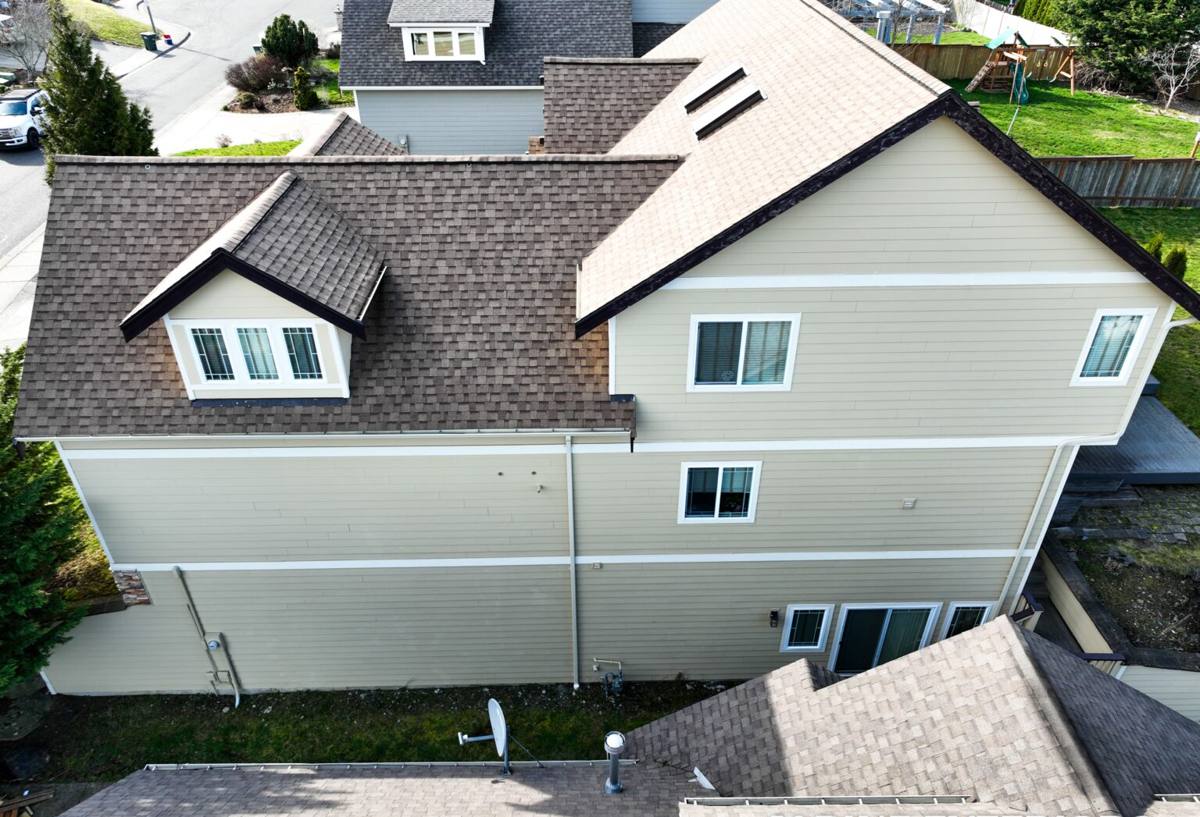
What a Correct Asphalt Shingle Roof Actually Involves
A shingle roof is a system, not a single product. Homeowners often assume the shingle itself is what determines how long a roof lasts, but in our experience the components underneath and around the shingles are just as responsible for whether a roof makes it to year 20 or starts leaking at year 8.
The layers that matter
- Decking: The plywood or OSB base has to be sound, properly fastened, and free of soft spots before anything goes on top of it.
- Underlayment: A synthetic or self-adhering underlayment is the backup waterproofing layer if wind ever lifts or damages a shingle — this matters more here than in drier climates.
- Starter strips and drip edge: These get skipped or done poorly more often than homeowners realize, and they're a big part of what keeps wind from getting under the first course of shingles.
- Flashing: Valleys, walls, chimneys, and any roof penetration need properly formed and sealed flashing — this is the single most common source of leaks on an otherwise good roof.
- Shingles: Installed with the correct nailing pattern (not staples, not underdriven or overdriven nails) and rated for the wind speeds required in Hillsborough County.
- Ventilation: Intake and exhaust venting that lets hot, moist attic air escape instead of cooking the underside of the decking and shortening shingle life from below.
Skip or shortcut any one of these and the shingle brand on the wrapper stops mattering much.
Signs a Plant City Roof Needs Attention
Most roof failures out here don't happen all at once — they show themselves gradually, and catching them early is the difference between a repair and a full replacement.
| What you see | What it usually means |
|---|---|
| Granules collecting in gutters or at downspouts | Normal in small amounts on a new roof; heavy or increasing loss means the shingles are aging out |
| Shingles curling or cupping at the edges | Heat and UV breakdown, often paired with poor attic ventilation |
| Dark streaking across the roof plane | Usually algae growth from humidity, more cosmetic than structural but worth addressing |
| Missing or lifted shingles after a storm | Wind got under the shingle or fastener line — needs prompt repair before the next rain |
| Ceiling stains or musty attic smell | Active or past leak, usually at a flashing point — needs inspection, not just a patch |
| Soft or spongy feel underfoot | Decking has taken on moisture damage, likely needs replacement in that area |
Shingle Options and How They Hold Up Locally
Not every asphalt shingle is built the same, and the differences matter more in a climate like ours than they would somewhere with milder weather.
| Shingle type | Strengths | Trade-offs |
|---|---|---|
| 3-tab shingles | Lowest upfront cost, simple flat profile | Lower wind rating, shorter lifespan, less impact resistance — we generally don't recommend these for this area |
| Architectural (laminate) shingles | Higher wind ratings, thicker construction, better UV and impact resistance, dimensional look | Higher material cost than 3-tab, but the added durability pays for itself here |
| Impact-rated (Class 4) shingles | Best resistance to wind-driven debris; can qualify for insurance discounts in Florida | Highest material cost; not always needed on every home, but worth pricing out |
For most Plant City homes, we steer people toward a good architectural shingle rated for Florida wind speeds. It's the point where cost, durability, and real-world performance line up best for this climate — and we'll walk you through the impact-rated option honestly, including whether the insurance savings make sense for your policy.
A note on lighter or reflective shingle colors
Lighter shingle colors reflect more heat than dark colors, which can take some load off your attic and cooling costs. It's not a dramatic difference, but on a roof that's already fighting Florida sun year-round, it's worth a conversation when you're choosing color.
How We Approach an Asphalt Shingle Job in Plant City
- On-site inspection: We look at the decking, existing flashing, attic ventilation, and any signs of moisture damage before we ever talk about shingles.
- Honest scope: You get a clear explanation of what's actually needed — full replacement, partial repair, or a maintenance fix — not an upsell.
- Written estimate: Materials, labor, and timeline spelled out, so there are no surprises once work starts.
- Tear-off and deck check: Old roofing comes off down to the deck, and any damaged plywood is identified and replaced before underlayment goes down.
- Proper install sequence: Drip edge, underlayment, flashing, starter strip, then shingles — nailed to manufacturer and local wind code specs.
- Ventilation check: We confirm intake and exhaust venting is adequate for the attic, adjusting where needed rather than just re-shingling over an existing problem.
- Final walkthrough: We go over the finished roof and cleanup with you directly.
Permits, Wind Codes, and Insurance in Hillsborough County
Roofing work in Hillsborough County requires a permit, and the installation has to meet current Florida Building Code wind requirements — this isn't optional paperwork, it's what protects you if there's ever a warranty or insurance question down the road. A legitimate local contractor pulls the permit, schedules the required inspections, and can produce the documentation your insurance carrier may ask for, including wind mitigation forms that can affect your premium.
This is one of the areas where hiring cheap out-of-town labor costs homeowners the most, even when the sticker price looks lower. A roof installed without a permit or to the wrong wind spec can create real problems at claim time or resale.
Cost factors to expect
- Roof size and pitch — steeper roofs take longer and cost more to work safely.
- Number of layers being removed — tear-off of existing layers adds labor.
- Decking condition — plywood replacement is priced separately once it's exposed.
- Shingle grade chosen — 3-tab, architectural, or impact-rated.
- Roof complexity — valleys, dormers, chimneys, and skylights all add flashing work.
- Ventilation upgrades — if the attic needs added intake or exhaust venting.
We're upfront that exact pricing only comes from seeing the roof in person — anyone who quotes a firm number over the phone without looking at your roof is guessing.
Why a Crew That Already Works Plant City Matters
Roofing crews that work Tampa and Hillsborough County regularly already know the wind code requirements the county inspectors check for, they know how our storm season behaves and plan installs around it, and they're not learning on your roof. That familiarity shows up in small decisions — how flashing gets tied into an existing wall detail, how a valley gets built to shed wind-driven rain instead of channel it, how ventilation gets balanced for our humidity — that a crew passing through town for one job is less likely to get right the first time.
It also matters after the job is done. A local company is still around next year if a question comes up, and stands behind the workmanship rather than being a name you can't reach once the check clears.
Simple Maintenance That Extends Roof Life Here
- Keep gutters clear so water isn't backing up under the eaves during heavy rain.
- Trim overhanging branches that drop debris or hold moisture against the shingles.
- After any significant storm, do a visual check from the ground for missing or lifted shingles.
- Have the roof looked at every couple of years, even with no visible problems — small flashing or sealant issues are cheap to fix early and expensive once they become a leak.
- Address dark algae streaking before it spreads, using methods that won't strip the shingle granules.
If your Plant City roof is showing its age, was damaged in a storm, or you just want an honest read on how much life it has left, we're happy to take a look. Fill out the form below for a free, no-pressure estimate.